
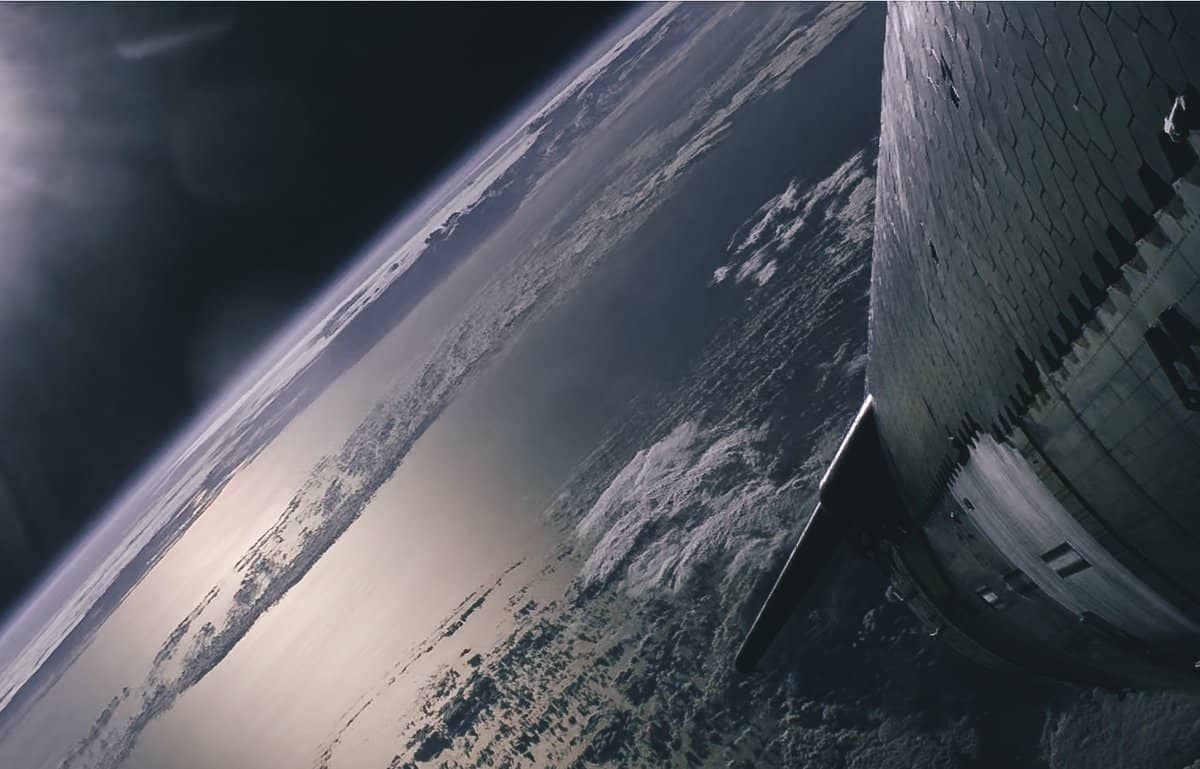
SpaceX is making significant strides in developing the in-orbit refueling technology necessary for its Starship spacecraft to support ambitious missions to the Moon and beyond. NASA recently acknowledged the success of a key in-flight propellant transfer test conducted during Starship's March 14, 2023, test flight. This achievement is a foundational step toward enabling the Human Landing System (HLS) variant of Starship to ferry astronauts to the lunar surface as part of NASA's Artemis program. Looking ahead, a critical demonstration involving two Starships docking and transferring propellant in orbit is planned for 2025, further advancing the technology needed for sustainable deep-space exploration.
Successful In-Flight Propellant Transfer Demonstration
On March 14, 2023, SpaceX performed a pivotal test involving the transfer of liquid oxygen propellant between tanks within the Starship upper stage during flight. This demonstration, conducted under a NASA Tipping Point contract awarded in 2020, aimed to validate the capability to move at least 10 metric tons of cryogenic propellant from a header tank to the main tank while in space.
Although SpaceX announced the test at the time, detailed results were not immediately disclosed. However, during the NASA Advisory Council’s Human Exploration and Operations Committee meeting on April 26, 2023, Amit Kshatriya, NASA’s deputy associate administrator for the Moon to Mars Program, confirmed the test was successful. He emphasized that ongoing analysis is further assessing the data gathered, but the initial outcome is promising.
This milestone is critical because transferring propellant in orbit is a complex process involving managing cryogenic fluids that tend to boil off or slosh inside tanks, especially in microgravity. The ability to perform such transfers reliably will enable Starship to be refueled in space, extending its range and payload capacity for missions beyond low Earth orbit.
Upcoming Two-Starship Docking and Refueling Demonstration
Building on the success of the in-flight transfer test, SpaceX and NASA have outlined plans for a more ambitious demonstration scheduled for 2025. This mission will involve two Starships launching separately and docking in orbit, where one vehicle—the “chaser”—will transfer propellant to the other—the “target.”
According to Kshatriya, the mission concept has passed a flight readiness review, indicating NASA’s confidence in the technical feasibility of the plan. The target Starship will launch first and enter orbit, followed three to four weeks later by the chaser Starship. After rendezvous and docking, the chaser will transfer propellant to the target. Once the transfer is complete, both spacecraft will undock and deorbit.
This demonstration will validate critical technologies such as docking mechanisms, propellant transfer plumbing, and the control of fluid dynamics during the transfer. Understanding the “slosh dynamics” of propellants and determining the appropriate “settling thrust” to maintain stable fluid flow during docking are among the key technical challenges to be addressed.
The mission’s success will be a decisive step toward operational in-orbit refueling, which is essential for enabling Starship to undertake long-duration missions to the Moon, Mars, and other destinations.
Significance for NASA’s Artemis Lunar Program
In-orbit refueling is a cornerstone technology for NASA’s Artemis program, which aims to return humans to the lunar surface and establish a sustainable presence. SpaceX’s Starship has been selected as the Human Landing System (HLS) vehicle for Artemis missions, including Artemis 3, currently targeted for no earlier than September 2026.
The mission architecture involves launching multiple Starships to low Earth orbit, where propellant will be transferred and stored in an orbital depot. This depot will then refuel the HLS Starship, enabling it to travel from Earth orbit to the Moon’s surface and back.
However, the exact number of refueling launches required remains uncertain, with estimates varying widely—some suggesting nearly 20 launches. NASA continues to study factors such as propellant boil-off, leakage, and transfer efficiency to refine these estimates and optimize mission planning.
The success of SpaceX’s refueling demonstrations will directly influence the feasibility and cost-effectiveness of lunar missions, potentially reducing the number of launches and increasing mission reliability.
Technical Challenges and Future Work
While progress has been promising, several technical challenges remain before in-orbit refueling can become routine. Managing cryogenic propellants in microgravity requires precise control of fluid behavior to prevent issues such as vapor formation and uneven flow.
SpaceX and NASA are collaborating closely to understand and mitigate these challenges. This includes studying propellant slosh dynamics, ullage management (the space above the liquid propellant), and the amount of thrust needed to settle fluids during docking and transfer operations.
Additionally, minimizing propellant boil-off and leakage during storage and transfer is critical to preserving fuel mass and ensuring mission success. These factors will influence the design of future Starship variants and mission profiles.
Elon Musk, SpaceX’s CEO, highlighted the importance of these technologies on social media, stating that rapid reusability of both the booster and Starship, along with orbital refueling, are the two key technologies needed to make life multiplanetary.
Looking Ahead: Uncrewed Lunar Demonstrations and Beyond
Following the in-orbit refueling demonstration, SpaceX plans an uncrewed mission of the HLS Starship to the Moon. This mission will include fueling the spacecraft in orbit and conducting a lunar landing and ascent demonstration to prove the vehicle’s capability to take off from the lunar surface.
This ascent demonstration was not part of the initial mission concept but has been added to validate the full operational profile of the lunar Starship. Success in this mission will pave the way for crewed Artemis missions and future exploration endeavors.
The development of in-orbit refueling and lunar landing technologies represents a significant leap toward sustainable human exploration of the Moon and Mars. These advances will also support SpaceX’s broader vision of establishing a multiplanetary civilization.
What this means
SpaceX’s progress in developing in-orbit refueling technology for Starship represents a pivotal advancement in space exploration capabilities. The successful propellant transfer test and the upcoming docking demonstration will lay the groundwork for sustainable lunar missions under NASA’s Artemis program and beyond. While technical challenges remain, ongoing collaboration between SpaceX and NASA is addressing these hurdles, bringing closer the vision of routine human missions to the Moon and eventually Mars. These developments not only enhance mission flexibility and reduce costs but also are essential steps toward making humanity a multiplanetary species.
This article was curated with AI assistance and reviewed according to Tamfis editorial settings.