
AI Trends & News
Surface Laptop Ultra Pre-orders Open: Price, Release Date and AI Features
Microsoft opens Surface Laptop Ultra pre-orders from US$2,599.99. Explore its launch date, NVIDIA RTX Spark features and implications for Nigerian businesses.
TAMFIS NIG LTDRC 8067447CAC ACTIVEFinima, Bonny Island, Rivers State

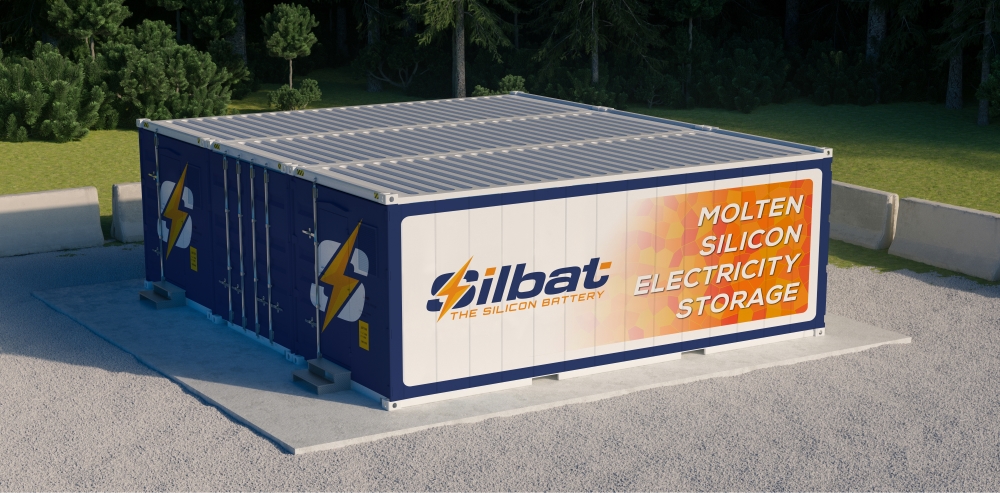
In an era where energy reliability is paramount, especially for critical infrastructures, Silbat, a pioneering Spanish startup, has developed a silicon-based battery technology that promises to revolutionize long-duration energy storage. By utilizing molten silicon’s unique thermal properties, Silbat batteries can guarantee an uninterrupted power supply for up to 14 days. This technology not only addresses the pressing need for energy resilience in military installations but also holds significant potential for civilian applications. This article delves into the mechanics of Silbat’s silicon batteries, their strategic importance, ongoing projects, and the future of energy storage.
Silbat’s battery technology is anchored in the use of metallic-grade silicon, a widely available and cost-effective material. Unlike conventional batteries that store energy chemically, Silbat’s design leverages silicon’s high latent heat of fusion. This means the battery stores electricity as thermal energy by melting silicon at extremely high temperatures, around 1,410 °C. The molten silicon retains this energy until it is needed, when it solidifies and releases heat that can be converted back into electricity.
The battery consists of a refractory container housed within a thermally insulated crucible. When charging, electricity is converted into heat through resistive (Joule) heating, raising the silicon’s temperature until it melts completely. This molten state represents the fully charged battery. During discharge, the stored thermal energy is extracted, allowing for a sustained power output over extended periods.
This approach bypasses many limitations of chemical batteries, such as degradation over time and sensitivity to environmental conditions. The use of silicon, which is abundant and inexpensive, also provides significant cost advantages, making Silbat’s batteries a promising candidate for scalable, long-duration energy storage.
Silbat is spearheading the Research and Analysis of Long-Duration Energy Storage for Operational Resilience in Critical Military Infrastructures (ARMIC) project. This initiative focuses on developing and validating silicon battery systems that meet the stringent energy demands of military installations. The ARMIC project aims to ensure these critical infrastructures maintain an uninterrupted power supply for at least 14 consecutive days, a benchmark aligned with military resilience standards.
Military bases often face vulnerabilities due to their reliance on civilian power grids, which can be susceptible to disruption during emergencies or attacks. The ARMIC project addresses this strategic challenge by providing a self-sufficient, resilient energy solution that enhances operational readiness and security. By integrating Silbat’s silicon batteries, military installations can reduce dependency on external power sources and mitigate risks associated with grid outages.
The project is designed to advance the technology readiness level (TRL) of Silbat’s batteries from 7 to 8, moving closer to full commercial deployment. This phase involves rigorous testing, validation, and optimization to ensure the batteries perform reliably under real-world conditions.
Silicon boasts the second-highest latent heat of fusion among all elements, surpassed only by the rare element boron. This unique property allows it to store vast amounts of thermal energy during phase change, making it an excellent medium for long-duration energy storage. The high melting point of silicon also ensures the battery can operate safely at elevated temperatures without degradation.
Compared to traditional chemical batteries, Silbat’s silicon batteries offer superior longevity and thermal stability. Since the energy storage mechanism relies on physical phase change rather than chemical reactions, the batteries experience less wear and tear, resulting in longer operational lifespans and reduced maintenance requirements.
Moreover, the use of metallic-grade silicon, which is inexpensive and abundant, makes the technology economically attractive. This cost efficiency, combined with the battery’s ability to provide continuous power for extended periods, positions Silbat’s solution as a compelling alternative in both military and civilian energy markets.
While the ARMIC project primarily targets military applications, Silbat’s silicon battery technology holds significant promise for civilian uses as well. Critical civilian infrastructures such as hospitals, data centers, and emergency services require reliable power sources to maintain operations during grid failures or natural disasters. Silbat’s batteries can provide uninterrupted energy to these facilities for up to 14 days, enhancing their resilience and operational continuity.
In addition to backup power, the technology supports integrated heating and cooling needs through cogeneration capabilities. By harnessing the thermal energy stored in molten silicon, facilities can meet their thermal management demands efficiently, reducing overall energy costs and carbon footprints.
Furthermore, the scalability of Silbat’s batteries makes them suitable for renewable energy integration. They can store excess electricity generated from solar or wind sources during peak production periods and discharge it when demand is high or generation is low, supporting grid stability and energy transition efforts.
Silbat’s silicon battery technology offers significant economic benefits by reducing energy storage costs compared to conventional solutions. The use of low-cost silicon and the battery’s extended operational lifespan translate into lower total cost of ownership. This makes the technology attractive for large-scale deployment where long-duration energy storage is critical.
Environmentally, the technology contributes to sustainability goals by enabling more effective use of renewable energy and reducing reliance on fossil-fuel-based backup generators. The thermal storage mechanism produces no harmful emissions during operation, and the materials used are abundant and recyclable.
By promoting national technological sovereignty, Silbat also supports economic independence in energy infrastructure, reducing reliance on foreign energy storage technologies and enhancing domestic innovation capabilities.
Despite its promising advantages, Silbat’s silicon battery technology faces challenges related to high operating temperatures and thermal management. Maintaining the silicon in a molten state requires robust insulation and refractory materials capable of withstanding extreme heat over long periods. Ongoing research aims to optimize these components to enhance efficiency and durability.
Scaling the technology from prototype to full commercial deployment involves addressing manufacturing complexities and ensuring consistent quality control. Achieving TRL 9 status requires extensive field testing and validation under diverse operational conditions.
Future developments may include integrating advanced thermal-to-electric conversion systems to improve round-trip efficiency and exploring hybrid configurations that combine silicon batteries with other energy storage technologies for enhanced performance and flexibility.
Silbat envisions its silicon battery technology as a cornerstone for national energy security, particularly in strategic sectors vulnerable to power disruptions. By providing a reliable, long-duration energy storage solution, the company aims to empower governments and industries to achieve energy autonomy and resilience.
The technology’s adaptability to both military and civilian contexts broadens its impact, supporting critical infrastructure protection, disaster preparedness, and sustainable energy transitions worldwide.
Through collaborations like the ARMIC project, Silbat is advancing the commercialization of its batteries, fostering innovation ecosystems, and contributing to a future where uninterrupted power supply is a standard, not a luxury.
Silbat’s innovative silicon battery technology represents a transformative advancement in long-duration energy storage, addressing critical needs for uninterrupted power supply in both military and civilian sectors. By harnessing the unique thermal properties of molten silicon, these batteries provide a reliable, cost-effective, and environmentally sustainable solution capable of powering critical infrastructures for up to 14 days without interruption. As the ARMIC project progresses toward commercialization, Silbat stands at the forefront of a new era in energy resilience and technological sovereignty, promising to reshape how societies secure and manage their energy futures.
Originally reported by pv-magazine.com. Adapted for our readers.
Keep reading
AI Trends & News
Microsoft opens Surface Laptop Ultra pre-orders from US$2,599.99. Explore its launch date, NVIDIA RTX Spark features and implications for Nigerian businesses.
Science & Technology
DJI’s IBC recognition puts pocket gimbal and panoramic capture in the spotlight. Here is how creators can assess framing, editing effort and recording workflows.
Business News
App store steering is about more than permission to add a link. Explore fees, renewal terms, customer experience and the UK consultation.
TAMFIS NIG LTD
Electrical and instrumentation engineering, bid preparation and consulting, IT and software.

