Shotwell Assures NASA SpaceX HLS is On Track for Moon Landing in 2027

NASA must complete Artemis 2 (a crewed lunar flyby, targeted for April 2026) to qualify Orion for deep space. Any slips in SLS production or Orion could indirectly impact Artemis 3.
NASA Administrator talks about Starship failure!
Sean Duffy responded to Space Orbit about NASA is concerned about recent Starship failures (especially after the ship 37 explosion).
Subtitled version very soon! pic.twitter.com/ycrlwafz29— Pedro Pallotta – Space Orbit (@PallottaPedro) July 31, 2025
Key details and schedule highlights for Artemis 3 and the Starship HLS include:
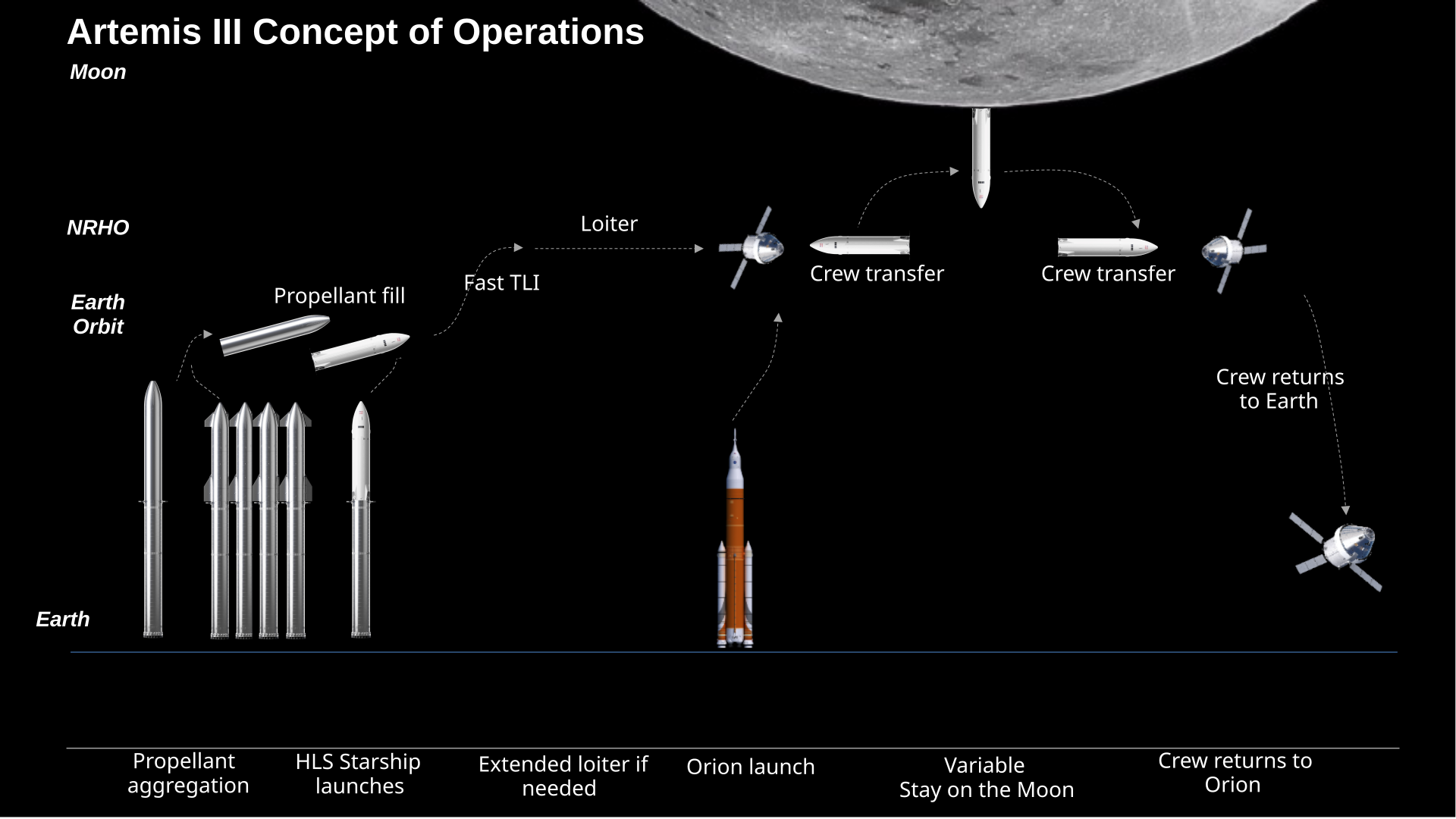
Artemis 3 will be launched using NASA’s SLS rocket carrying the Orion crew capsule. The launch sends the crew on a trajectory toward the Moon.
The Orion spacecraft will dock in lunar orbit with SpaceX’s Starship HLS, which will have been pre-positioned in near-rectilinear halo orbit (NRHO) around the Moon. This Starship variant is designed specifically for lunar landing and return to orbit.
The Starship HLS launch involves launching it on a Super Heavy booster, refueling in Earth orbit via a depot filled by multiple tanker flights before boosting to lunar orbit.
Once docked, two astronauts will transfer from Orion to Starship HLS, descend to the lunar surface near the Moon’s south pole for a stay of about 6.5 days with the potential for up to four moonwalks, and then return to Orion for the journey back to Earth.
Key technical milestones include a lunar orbit checkout review, which assesses the readiness of Starship HLS for Artemis 3.
The Starship HLS must be fully capable of rendezvous, docking, surface landing, surface operation, liftoff from the Moon, and rendezvous back to Orion in lunar orbit.
NASA’s HLS program baseline budget is about $4.9 billion covering development through post-mission assessment.
For NASA SLS and Orion:
Completion of heat shield fixes and integration verification. Orion heatshield has a known problem
Successful Artemis II uncrewed lunar mission to prove Orion and SLS systems. Artemis II, NASA’s first mission with crew aboard the SLS rocket and Orion spacecraft, is currently scheduled for a 10-day trip around the Moon no later than April 2026.
For SpaceX Starship HLS:
Complete in-orbit propellant transfer technology demonstration (critical for the refueling depot that fuels HLS).
Pass the HLS preliminary and critical design reviews.
Perform uncrewed lunar landing and ascent test flights.
Complete crew module environmental and life support system testing.
Establish launchpad infrastructure near Kennedy Space Center for HLS launches by late 2026.
Continue iterative Starship test flights to mature the full system.
NASA Administrator Sean Duffy also said a nuclear reactor would be launched to the moon by 2030.
Duffy: We’re going to bring fission to the moon’s surface to power our base pic.twitter.com/FKvQUXSV9m
– Acyn (@acyn) August 6, 2025

Brian Wang is a Futurist Thought Leader and a popular Science blogger with 1 million readers per month. His blog Nextbigfuture.com is ranked #1 Science News Blog. It covers many disruptive technology and trends including Space, Robotics, Artificial Intelligence, Medicine, Anti-aging Biotechnology, and Nanotechnology.
Known for identifying cutting edge technologies, he is currently a Co-Founder of a startup and fundraiser for high potential early-stage companies. He is the Head of Research for Allocations for deep technology investments and an Angel Investor at Space Angels.
A frequent speaker at corporations, he has been a TEDx speaker, a Singularity University speaker and guest at numerous interviews for radio and podcasts. He is open to public speaking and advising engagements.