
AI Trends & News
Surface Laptop Ultra Pre-orders Open: Price, Release Date and AI Features
Microsoft opens Surface Laptop Ultra pre-orders from US$2,599.99. Explore its launch date, NVIDIA RTX Spark features and implications for Nigerian businesses.
TAMFIS NIG LTDRC 8067447CAC ACTIVEFinima, Bonny Island, Rivers State

Technology tamfitronics
While wind mills and solar panels multiply across the Brazilian dry forests, Tião Alves insists on tin windmills and PET bottle-based heaters. “Backcountry technology,” as he defines it, arguing that the best solutions to sustain life in the Caatinga semiarid region are those born from traditional knowledge. “Those who sprout like a seed you plant in the ground.”
This, and the realization that, to continue to exist in a thought-provoking biome like the Caatinga, you must learn from plant life and animals: Hundreds of species that have found ways to adapt to the shortage of rainfall, to the point of making this one of the most biodiverse semiarid regions in the area. That’s why he calls the Caatinga an “invisible university.”
Sebastião (nicknamed Tião) Alves dos Santos says he’s an “animal of the Caatinga” — born, raised and still living in the heart of the Brazilian dry forests. Now settled in the town of Arcoverde, Pernambuco state, he has been since 1989 one of the mentors of Serta — Change Know-how Provider, one of the best agroecology teaching centers in the Brazilian Northeast region.
Tião himself says he has helped educate more than 2,000 technicians at Serta. Rural workers coming from in each place the Northeast to 1 among the 2 campuses — in Ibimirim and Glória make Goitá, both in Pernambuco — searching for stepped forward knowledge to guarantee meals security with minimal resources (both pure and monetary).
Stoves lit by sunlight and cardboard boxes, for instance. Water pumps powered by bicycle wheels. Clay pots transformed into fridges. Cooking gas produced from animal manure. And also Recating bioconstruction, agroforestry, permaculture and the rest that helps Caatinga residents stay in their birthplace without having to destroy native vegetation. And, in addition, to generate extra income. As Tião summarizes, “planting water, eating Caatinga and irrigating with the sun.”
In this interview for Mongabay, Tião talks about the ideas at the heart of Serta’s methodology, his love for the Caatinga, and recommendations to survive in a biome severely affected by climate change and desertification.
Mongabay: What’s so important about the Caatinga?
Tião Alves: The Caatinga biome corresponds to 11% of the Brazilian territory; that’s more than 900,000 square kilometers [350,000 square miles]. And this size gives it a significantly increased significance in terms of biodiversity. It’s one of the most biodiverse biomes in the region, but it remains invisible to many people. I say that the Caatinga is an invisible university because it has so much to teach us. It’s time to take advantage of these teachings that the Caatinga offers us. Yet we, human beings, stubbornly refuse to see. And we cannot continue in this invisibility in the face of the global climate change scenario.
What can the Caatinga teach us, for example?
Tião Alves: Now we must relearn a novel idea for the biome because we had been taught that the Caatinga was once a station of shortage and poverty. Nonetheless what is scarce here is the understanding of the biome. Nature, in its perfection, would not create anything scarce. It was once the universe that decided that this land would have exactly this amount of water, and all living beings in this biome make that reading. With the exception of humans, who have not actually managed to adapt to the climatic conditions of the Caatinga yet. Because the biome itself did not create any barriers. The person here on a daily basis responds: ‘I’m not uncomfortable. There’s a lot of richness here. You just must use it well, with respect, and I will continue to benefit future generations.’

What richness is this?Tião Alves: Look at our sun. Is there a greater wealth than the sun here in the backlands? This sun gives more color to our fruits, more scent, more flavor. It’s not a matter of water shortage; it’s a lack of applied arithmetic here. The day humanity understands that the amount of water in the Caatinga is sufficient to build life with dignity, he will learn to capture, store and use that water. Plant life do that. They’re here, teaching us. An umbuzeiro tree(Spondias tuberosa) is a sponge in the Caatinga, capable of storing over a thousand liters [265 gallons] of water. The cacti here transformed their leaves into thorns and created a serum in the stem to not absorb so much heat from the sunlight. They close their stomata, which are the pores, during the day and then open these stomata at night. Look what a teaching. Nonetheless irrigation isn’t even done at night here; people irrigate during the day, when the sun is strongest.
Why haven’t the Caatinga inhabitants found an efficient way to coexist with this environment?
Tião Alves: In this arrangement, now we enjoy the Catimbau National Parkand in excavations there, a skeleton of 6,600 years modified into as soon as chanced on. What lesson will we rob from that? If there enjoy been of us living in this arrangement all that time, it arrangement the land is factual. No one lives in a sinister station. The 2d thing: Our ancestors right here, at some stage within the colonization duration, had been decimated. We didn’t enlarge within the sense of realizing the biome large. On memoir of our ancestors had been murdered by the colonizers or expelled from their locations. We forgot the tradition of the utilization of these potentialities. One thing remained, contemporary in Indigenous communities. Nonetheless then came the college to educate that this tradition modified into as soon as backward, that it didn’t merit white of us. Now we’re paying the mark.

How is climate change affecting the Caatinga?
Tião Alves: The biome is inclined, positive. Starting from September, October, it effortlessly reaches reaches 36°, 37o Celsius [97-99° Fahrenheit]. With global warming, you add one more 2°, 3° to that. And that’s very important because, with this unexpected change, there’s no time for organisms to adapt. Nonetheless I still say we have time. A very short time. We want society and the leaders to start caring for the 2030 Agenda to speed up processes. From now on, what will happen is migration, of people fleeing their regions seeking milder climates. The same thing that happened with cities. And anthropization increases the demand on these environments.
What needs to be done to reverse or slow this process?
Tião Alves: We need three key elements. Now we must plant water, eat Caatinga and irrigate with the sun. With these three elements, it is possible to reverse the situation in the biome. How do we plant water? Simply, take the seed, put it in a bag and then take it to the field. There’s no better way to plant water than reforestation. And I’m going to say here a term that I want to use: Now we must recaatingar. Raise the Caatinga’s value. Not reforesting in the way that even some well-meaning bodies wanted to do before, bringing species from outside to plant here. We don’t need this; the Caatinga already has its own beauty.
The main thing is discovering how to eat from the Caatinga. The Caatinga is full of plant life that could be on our table without us having to domesticate exotic plants that require a lot of water. They are fruits and vegetables rich in nutrients, resistant to drought, adapted to semi-arid conditions. And here we are, still wanting to plant lettuce. There are many alternative plants here, even more nutritious ones, which do not require the same amount of water and sprout naturally, but we don’t even know how to make a salad with them.

And what would irrigating with the sun be?
Tião Alves: These who are fortunate ample to be born under 3,000 hours of sunshine a year, as is our case right here, are born with resistance. Even being white colored, they are born with a suntanned pores and skin to scheme resistance. So, our sun arrangement wealth. On memoir of, besides the utilization of it within the invent of electricity, we are in a position to exercise the sun to warmth water, dehydrate fruits, dry grains, treat the water we drink — namely within the poorest communities, the utilization of PET bottles. It’s a straightforward thing to make that eliminates 100% of pathogens.
The effect does As well as (Change Know-how Provider) match into this technique of exploring the Caatinga seemingly?
Tião Alves: By instructing of us. As a professor of agroecology at Serta, I in fact enjoy already helped educate 2,400 technicians. And these of us are out right here, doing agroecology within a not-so-academic idea. On account of agroecology arises exactly from the journey of our ancestors. She is within the miniature farms, within the backyards, within the groves, in this pure, native, exact agroecological actuality. The one which sprouts savor a seed that you just build within the flooring.
And there’s one vital thing, which is the friendship between human beings and plant life. In pure agroecology, you don’t decrease down a lemon tree because one more one grew. The fellow right here says, ‘I’m going to retain it right here because I’ve been talking to this lemon tree for 30 years.’ For 30 years, that lemon tree has been the chapel, the station where they refer to God. It’s under the lemon tree, the mango tree, the orange tree, that they welcome their buddy, throw a social gathering. This is now not an academic inheritance. This is the inheritance of Black of us, Indigenous of us. It is a Black, Indigenous heritage. This is human heritage with pure humanistic which arrangement.

What do you do at Serta?
Tião Alves: What I do is driven by passion. Passion for the Caatinga. Because of my way of embracing the Caatinga is by teaching my students to appreciate it. I still get goosebumps when I talk about these things because I say I’ve dedicated myself to this: planting hope. In the Caatinga, if we don’t have hope, we give up. The main goal of the program is to teach people to look at their place with pride in having been born here.
For this, they need technology. Not advanced technology, but so-called low-tech. Aquaponics, for instance, a food production system in which you use 10% of the water of conventional methods, and you can set it up right at the door of your small apartment, where the land is barren, where it’s desert. And the best part is that it’s the woman who’s going to manage this. It produces food and the woman gains economic independence. Our technicians at school learn to build this.
What is the key knowledge that people gain at Serta?
Tião Alves: When the student enters, the first lesson is to peek who they are. It’s the knowledge they must spy themselves as a decent citizen. From the 2d lesson onwards, they peek what they enjoy got. Most steadily, the student says, ‘I’m very uncomfortable, I in actuality enjoy nothing.’ We give them a questionnaire, and after they attain merit, they are saying that ‘on my father’s property, there are 10 chickens, two goats, a pond, a effectively, three mango bushes, two cashew bushes …’ And to boot they compose a checklist of what they know recommendations to make: They know recommendations to diminish wooden, compose charcoal, dig a effectively, a pond, invent a fence; they know recommendations to plant, to harvest. Nonetheless they declare they don’t know anything else. And that’s how they lunge to São Paulo. To make what? A bricklayer. At Serta, they be taught to refine the knowledge they already enjoy.

How important is it to work on this self-awareness in the young people who live in the biome?
Tião Alves: The first thing to do is to awaken desire. To create knowledge to be powerful. The result? In the land that was once barren. So that the student also makes that land powerful. Because they can only be powerful if their land is powerful. Then others can also draw that strength, which multiplies, and then the community becomes a powerhouse. That’s why our Indigenous peoples are the ones who migrate the least. Because they clung to the land. And that’s why they nurture it. Because Indigenous peoples are beings of the forest, just as I am a being of the Caatinga. I cannot separate myself from the Caatinga. I truly carry the essence of the Caatinga within me. The nutrients that flow from the backlands soil run through my veins.
What does it mean to be an animal of the Caatinga?
Tião Alves: It means to be root, stem, leaf. It’s to possess the cleverness of the margay[[[[I saw a leopard], the resilience of the mandacaru cactus[[[[Cereus jamacaru]. Learning to store water. Being an animal of the Caatinga is to be the Caatinga itself, which most often is covered in thorns, just as I feel burdened — most often nobody wants to come near me, afraid of being pricked. But that’s only the surface, because internally there is this essence where sap flows, where cells vibrate at a frequency that produces resistance, resilience.
Is this animal of the Caatinga also threatened with extinction?
There are several species of the Caatinga threatened, including this human animal. Because of climate change, the tendency is for this semiarid region to become arid. Of these 900,000 km2, 13% are already desert. In each station there are these patches of desertification. And the large risk is that these patches will meet.

How did the Caatinga attain this point of desertification?
That came about with the entry of cattle into the backlands, with the cultivation of cotton and the introduction of irrigation technology, which modified into as soon as done haphazardly and salinized many areas. And deforestation: A form of burning to compose charcoal and present basically the main cities. This, and the shortcoming of exact insurance policies to create the Caatinga. There modified into as soon as this total mechanism to construct a dominant class to exercise the of us of the backlands. The unhealthy “drought trade.” The climatic droughts, we all know after they’ll occur right here: There is one every three years, a bigger one every seven, then one even bigger every ten. It’s cyclical. Knowing this, previous governments might well perhaps perhaps enjoy devised actions to combat these droughts.
What’s missing for Brazil to inquire of at the Caatinga the style it deserves?
I declare there’s rather of nationwide disgrace missing. On memoir of since the Portuguese colonization, this station has suffered from political actions, to meet the desires of these in vitality. It doesn’t rob primary for Brazil to repay this debt it has with the Caatinga. One public coverage that minimized the struggling of of us right here modified into as soon as cisterns — more than 1 million had been built. It’s more payment effective to invent a cistern than to retain a crew being equipped by water vans. And it doesn’t compose political dependency.
Yet another thing is the college, which might well be contextualized: Finding out the issues connected to the arrangement and, from there, create science and create this station. Nonetheless we must take the reins of our own constructing. This is our revolution. We’re not going to pick up a weapon to shoot our brother, but we are able to build a clear college. That’s why I’m a teacher. For me, the college is a cannon. Every class we teach is a blast.

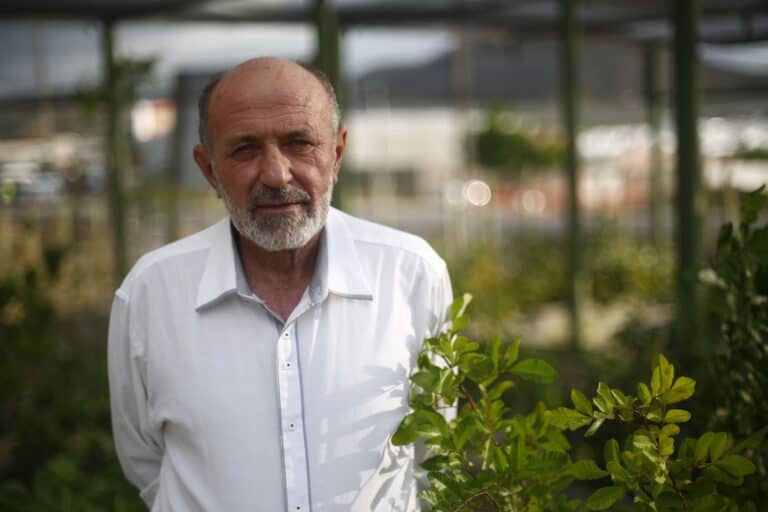
Photo banner: Tião Alves, an agroecologist and professor at Serta — Change Know-how Provider, in the Brazilian Caatinga. Photo by Rafael Martins/Mongabay.
Quotation:
Niemeyer, J., & Vale, M. M. (2022). Boundaries and alternatives for imposing a coverage-mix for ecosystem-essentially based mostly adaptation to climate substitute in Brazil’s caatinga. Land Use Policy, 122106385. doi:10.1016/j.landusepol.2022.106385
Originally reported by news.mongabay.com. Adapted for our readers.
Keep reading
AI Trends & News
Microsoft opens Surface Laptop Ultra pre-orders from US$2,599.99. Explore its launch date, NVIDIA RTX Spark features and implications for Nigerian businesses.
Science & Technology
DJI’s IBC recognition puts pocket gimbal and panoramic capture in the spotlight. Here is how creators can assess framing, editing effort and recording workflows.
Business News
App store steering is about more than permission to add a link. Explore fees, renewal terms, customer experience and the UK consultation.
TAMFIS NIG LTD
Electrical and instrumentation engineering, bid preparation and consulting, IT and software.

