AI Trends & News
Surface Laptop Ultra Pre-orders Open: Price, Release Date and AI Features
Microsoft opens Surface Laptop Ultra pre-orders from US$2,599.99. Explore its launch date, NVIDIA RTX Spark features and implications for Nigerian businesses.
TAMFIS NIG LTDRC 8067447CAC ACTIVEFinima, Bonny Island, Rivers State

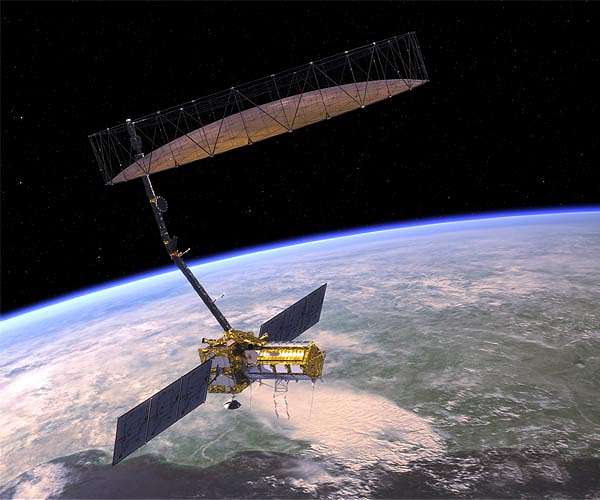
A new satellite mission set for launch in early 2025 promises to transform how we monitor and understand the dynamic movements of Earth's surface. The NASA-ISRO Synthetic Aperture Radar (NISAR) mission represents a significant technological advancement that will provide detailed, regular observations of land and ice-covered regions worldwide. This development holds particular relevance for businesses, infrastructure managers, and disaster resilience planners operating in geologically active areas, offering new tools for risk assessment and operational planning.
The NISAR satellite represents a collaborative effort between NASA and the Indian Space Research Organisation (ISRO), designed to measure surface movements across nearly all of Earth's land and ice-covered areas with remarkable frequency. Operating from an orbit that allows complete coverage every 12 days, the mission will collect data using two distinct radar systems working in tandem.
What makes NISAR particularly innovative is its dual-frequency radar approach. The satellite carries an L-band radar system developed by NASA's Jet Propulsion Laboratory and an S-band system built by ISRO. This combination enables the satellite to penetrate various environmental conditions that limit other observation methods. The long wavelengths used by these radars allow data collection regardless of cloud cover or time of day, providing consistent monitoring capabilities that optical satellites cannot match.
The L-band system, in particular, offers advantages for observing ground movement beneath dense vegetation cover. This capability is crucial for monitoring geological faults and volcanic areas that are often obscured by forest canopies, which would otherwise limit the effectiveness of traditional optical or shorter-wavelength radar systems.
The primary scientific value of NISAR lies in its ability to detect minute surface changes with precision down to fractions of an inch. This level of detail will significantly enhance our understanding of tectonic processes, volcanic activity, and landslide risks. Rather than predicting specific events like earthquakes, the mission will help identify areas where strain is accumulating in the Earth's crust, indicating higher susceptibility to significant seismic events.
For regions with established monitoring networks, such as California, NISAR data will complement existing ground-based sensors, allowing researchers to focus on specific fault zones with greater precision. In less-studied areas, particularly parts of the Himalayan region noted for their seismic history, the satellite could reveal previously unknown hazards by highlighting which sections of faults are locked and building up strain versus those that creep gradually.
Volcano monitoring stands to benefit significantly from NISAR's regular observations. The satellite's ability to detect subtle surface bulging or subsidence related to magma movement beneath volcanoes will provide early indicators of potential eruptions. This capability could prove invaluable for communities living near active volcanic sites, offering additional time for evacuation preparations when combined with other monitoring data.
Beyond pure scientific research, NISAR offers practical applications for infrastructure management and disaster resilience planning. The satellite's long-term data collection will establish baseline measurements for critical structures like levees, aqueducts, dams, and bridges. Deviations from these baselines could signal developing issues that require closer inspection, enabling a more targeted approach to maintenance and safety assessments.
This capability is particularly relevant for extensive infrastructure networks where comprehensive ground surveys are prohibitively expensive and time-consuming. For example, monitoring over a thousand miles of levees in regions like California's Sacramento-San Joaquin River Delta would traditionally require significant personnel and resources. NISAR's space-based perspective allows authorities to prioritize inspections, focusing efforts on areas showing actual changes rather than conducting blanket surveys.
In post-disaster scenarios, such as after earthquakes where liquefaction can undermine ground stability, NISAR data can rapidly assess widespread damage patterns. This information helps emergency responders and recovery teams allocate resources efficiently, directing repairs to areas of greatest need rather than expending effort on unaffected sections.
While the NISAR mission originates from a US-Indian collaboration, its data will have global applications relevant to businesses operating in various markets, including Nigeria. The satellite's monitoring capabilities extend to vegetation mapping and ice sheet tracking, providing environmental data that can inform agricultural planning, water resource management, and climate adaptation strategies.
For Nigerian businesses and investors, particularly those involved in infrastructure development, energy projects, or agricultural enterprises, access to precise ground movement data could enhance risk assessment processes. Understanding subsidence risks in coastal areas or identifying geologically stable sites for long-term investments represents a practical application of this technology.
The commercial availability of NISAR data follows NASA's standard policy of making Earth science data freely accessible to researchers, businesses, and the public worldwide. This open data approach means that Nigerian enterprises, consultants, and government agencies can leverage the same high-quality information available to users in other countries without prohibitive licensing costs, supporting informed decision-making in sectors ranging from real estate development to renewable energy projects.
The NISAR mission creates opportunities beyond direct scientific use, fostering a ecosystem of commercial applications built upon its data streams. Companies specializing in geospatial analytics, risk modeling, and environmental consulting can integrate NISAR measurements into their service offerings, creating enhanced products for clients concerned with ground stability, flood risk, or environmental changes.
Insurance companies operating in disaster-prone regions may find value in NISAR data for refining risk models related to earthquake, landslide, or volcanic activity. Similarly, urban planning departments and civil engineering firms could use the satellite's measurements to inform zoning decisions, infrastructure design standards, and emergency response planning.
The mission's focus on vegetation monitoring also connects to broader environmental, social, and governance (ESG) considerations increasingly important to global investors. Tracking changes in forest cover, wetlands, and agricultural lands through NISAR data could support sustainability reporting and impact assessment for businesses committed to environmental stewardship.
The NASA-ISRO NISAR satellite mission represents more than a scientific endeavour; it offers practical tools for businesses, infrastructure managers, and disaster resilience planners worldwide. By providing regular, precise measurements of Earth's surface movements regardless of weather or time of day, NISAR fills a critical gap in our ability to monitor dynamic geological processes. For Nigerian businesses and global enterprises alike, access to this data—freely available through NASA's open science policy—enhances capacity for informed risk assessment, strategic planning, and resilient operations in an increasingly complex environmental landscape. As the satellite prepares for launch in early 2025, stakeholders across sectors should consider how these advanced monitoring capabilities might inform their long-term strategies and operational preparations.
Originally reported by terradaily.com. Adapted for our readers with AI assistance.
Keep reading
AI Trends & News
Microsoft opens Surface Laptop Ultra pre-orders from US$2,599.99. Explore its launch date, NVIDIA RTX Spark features and implications for Nigerian businesses.
Science & Technology
DJI’s IBC recognition puts pocket gimbal and panoramic capture in the spotlight. Here is how creators can assess framing, editing effort and recording workflows.
Business News
App store steering is about more than permission to add a link. Explore fees, renewal terms, customer experience and the UK consultation.
TAMFIS NIG LTD
Electrical and instrumentation engineering, bid preparation and consulting, IT and software.