
AI Trends & News
Surface Laptop Ultra Pre-orders Open: Price, Release Date and AI Features
Microsoft opens Surface Laptop Ultra pre-orders from US$2,599.99. Explore its launch date, NVIDIA RTX Spark features and implications for Nigerian businesses.
TAMFIS NIG LTDRC 8067447CAC ACTIVEFinima, Bonny Island, Rivers State

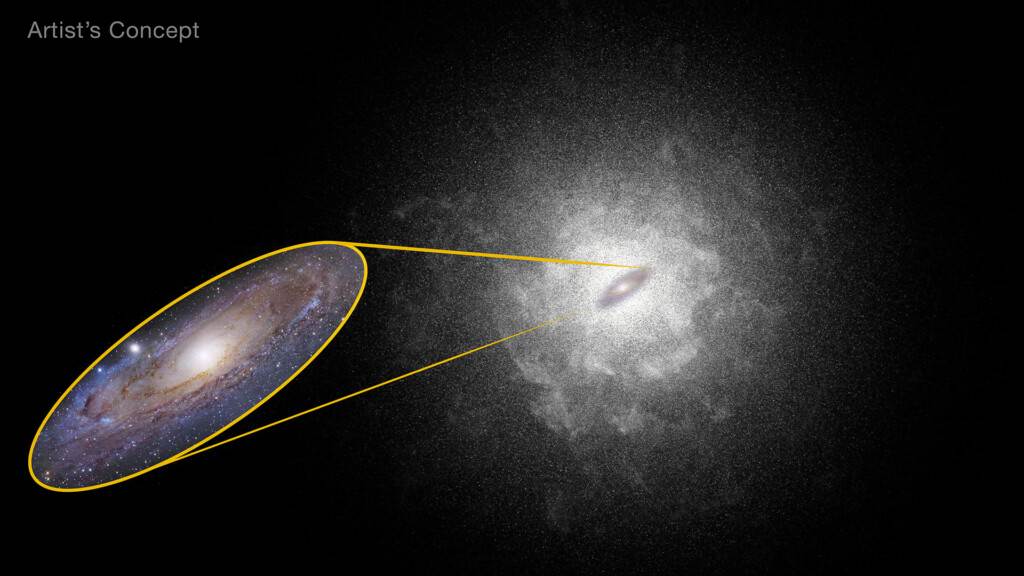
NASA’s upcoming Nancy Grace Roman Space Telescope is poised to transform our understanding of galaxy formation and the elusive nature of dark matter. With a planned launch by May 2027, the telescope will undertake the Roman Infrared Nearby Galaxies Survey (RINGS), a concept designed to capture high-resolution infrared images of nearby galaxies. By examining stellar structures akin to galactic fossils, RINGS aims to reconstruct the evolutionary history of galaxies, including our own Milky Way. The mission also promises to advance dark matter research by observing ultra-faint dwarf galaxies and resolved galactic halos at unprecedented scale.
Galaxies evolve over billions of years, making direct observation of their formation impossible within a human lifespan. However, they leave behind structural imprints in their stars—long tidal tails, stellar streams, and other relics—that serve as fossils of past mergers and star formation events. The Roman Space Telescope’s high-resolution imaging will allow astronomers to detect these faint features across large numbers of galaxies. Robyn Sanderson, deputy principal investigator of RINGS at the University of Pennsylvania, likens this work to an archaeological dig, where scientists sort through stellar 'bones' to reassemble a galaxy’s history. Roman’s ability to resolve these structures will enable researchers to trace merger histories and star formation timelines in unprecedented detail.
Unlike the Hubble Space Telescope, which excels in narrow, deep observations, Roman combines Hubble-like resolution with a field of view 200 times wider in the infrared. This unique combination makes it ideal for sky surveys that require both detail and breadth. The RINGS survey, while still a preliminary concept, leverages this strength to image numerous nearby galaxies efficiently. By studying galaxies similar in mass and age to the Milky Way, scientists hope to gain insights into our own galaxy’s formation path—something difficult to achieve due to our embedded position within it.
The data gathered by RINGS will be made publicly available, with tools currently under development to help the global astronomy community analyse the images once Roman is operational. This open-access approach ensures that the scientific benefits of the mission extend beyond the core team, fostering broad collaboration and accelerating discovery in extragalactic astronomy.
One of Roman’s most significant contributions will be in the study of dark matter, the invisible substance that constitutes about 80% of the universe’s matter. Traditional observations struggle to isolate dark matter’s effects due to the overwhelming presence of normal matter in stars and gas. However, ultra-faint dwarf galaxies offer a rare opportunity: these systems contain very few stars and are overwhelmingly dominated by dark matter. Raja GuhaThakurta of the University of California, Santa Cruz, notes that such galaxies can be treated as 'pure blobs of dark matter,' making them ideal laboratories for testing competing theories of dark matter’s nature.
Roman’s wide field of view and high sensitivity will allow it to detect and resolve large numbers of these faint systems, far surpassing the capabilities of current telescopes. By measuring the motions and distributions of their sparse stellar populations, astronomers can infer the gravitational influence of dark matter with greater precision. This statistical advantage—studying dozens or hundreds of ultra-faint dwarfs instead of just a few—will significantly improve the robustness of dark matter constraints.
Beyond dwarf galaxies, Roman will also transform studies of galactic halos—the vast, diffuse regions of stars and dark matter that surround galaxies. These halos can extend 15 to 20 times beyond a galaxy’s visible disk, making them extremely challenging to observe in full. Currently, detailed halo measurements exist only for the Milky Way and Andromeda due to their proximity. Ben Williams, principal investigator of RINGS at the University of Washington, explains that Roman will change this: 'We’ll go from having reliable halo data for just two galaxies to having it for 100 or more.' This leap will enable statistical studies of halo properties across diverse galaxy types, shedding light on how dark matter is distributed and how it influences galactic evolution.
The Nancy Grace Roman Space Telescope is named in honour of NASA’s first chief of astronomy and a pioneering advocate for women in science. Managed at NASA’s Goddard Space Flight Center in Greenbelt, Maryland, the mission benefits from contributions across multiple institutions. NASA’s Jet Propulsion Laboratory and Caltech/IPAC in Southern California are involved in key hardware elements, while the Space Telescope Science Institute in Baltimore will handle science operations and data processing.
The science team includes researchers from universities and research centres worldwide, ensuring broad expertise in galactic astronomy, cosmology, and instrument development. Industrial partners play a critical role in bringing Roman to life: BAE Systems in Boulder, Colorado, leads spacecraft development; L3Harris Technologies in Rochester, New York, contributes to the telescope’s optical systems; and Teledyne Scientific & Imaging in Thousand Oaks, California, provides the infrared detectors essential for Roman’s wide-field observations.
With a launch readiness date set for May 2027, Roman is entering the final phases of integration and testing. Once operational, it will operate in a sun-Earth L2 orbit, joining other observatories like the James Webb Space Telescope in studying the cosmos. While RINGS remains a proposed survey rather than a guaranteed mission component, its design reflects Roman’s core strengths and the scientific community’s enthusiasm for using the telescope to perform transformative galactic archaeology.
The Nancy Grace Roman Space Telescope represents a major leap forward in our ability to study the universe on both large and small scales. By acting as a galactic archaeologist, Roman will uncover the hidden histories encoded in stellar structures, allowing scientists to piece together how galaxies like the Milky Way came to be over cosmic time. Simultaneously, its power to observe ultra-faint systems and resolved halos will open new windows into the nature of dark matter, one of physics’ greatest unsolved mysteries. As launch approaches in 2027, the excitement within the astronomical community continues to build—not just for what Roman will see, but for the new questions it will enable us to ask. In an era defined by precision cosmology and wide-field surveys, Roman stands poised to deliver transformative insights that will ripple through astronomy, physics, and our understanding of our place in the universe.
Originally reported by nasa.gov. Adapted for our readers with AI assistance.
Keep reading
AI Trends & News
Microsoft opens Surface Laptop Ultra pre-orders from US$2,599.99. Explore its launch date, NVIDIA RTX Spark features and implications for Nigerian businesses.
Science & Technology
DJI’s IBC recognition puts pocket gimbal and panoramic capture in the spotlight. Here is how creators can assess framing, editing effort and recording workflows.
Business News
App store steering is about more than permission to add a link. Explore fees, renewal terms, customer experience and the UK consultation.
TAMFIS NIG LTD
Electrical and instrumentation engineering, bid preparation and consulting, IT and software.

