NASA’s Endurance Mission Measures Earth’s Ambipolar Electric Field for First Time
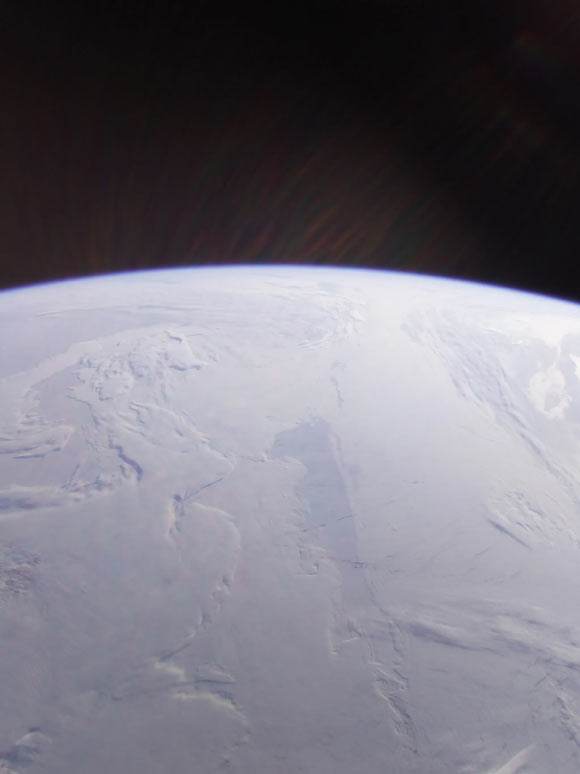
For more than six decades, scientists have theorized the existence of an elusive electric field known as the ambipolar electric field, which plays a vital role in the dynamics of Earth’s upper atmosphere. This field facilitates the polar wind—a steady outflow of charged particles from the poles into space—that influences atmospheric composition and planetary evolution. Until recently, direct measurement of this field remained beyond technological reach. NASA’s Endurance mission, launched in 2022, has now succeeded in measuring this field for the first time, providing unprecedented insight into the forces shaping Earth's ionosphere and its interaction with space.
The Concept of the Ambipolar Electric Field and Polar Wind
The ambipolar electric field is a subtle electrostatic potential that arises due to differences in the mobility of electrons and ions in Earth’s upper atmosphere. It acts to maintain charge neutrality by generating an electric potential that accelerates ions upward, counteracting gravity’s pull. This process is a fundamental driver of the polar wind, a continuous stream of charged particles flowing from the polar regions into space.
The polar wind was first hypothesized over 60 years ago when scientists noticed a persistent outflow of ions and electrons from Earth's poles. Unlike typical atmospheric escape driven by thermal heating, much of the polar wind consists of relatively cold particles traveling at supersonic speeds. This paradox led to the hypothesis that an electric field must be exerting an additional force to lift these particles.
Understanding the ambipolar electric field is crucial because it controls the structure and density of the polar ionosphere, influencing satellite drag, space weather, and even the long-term evolution of Earth's atmosphere. Despite its importance, measuring this field directly remained a challenge due to its weak magnitude and the vast spatial scales over which it operates.
Challenges in Measuring the Ambipolar Electric Field
Detecting the ambipolar electric field is exceptionally challenging because it is extremely weak—on the order of just a fraction of a volt over hundreds of kilometers. Traditional spacecraft instruments lacked the sensitivity and spatial resolution to isolate this subtle potential drop amidst the dynamic and noisy space environment.
Moreover, the polar wind occurs at altitudes ranging roughly from 250 km to over 700 km above Earth’s surface, an area difficult to probe comprehensively with satellites. Most spacecraft either orbit too high or too low to measure the field continuously across this region, limiting the ability to capture a complete vertical profile of the electric potential.
To overcome these hurdles, NASA’s Endurance mission utilized a suborbital sounding rocket designed specifically to traverse the polar wind region. This approach allowed Endurance to collect high-resolution measurements along a vertical path, enabling the first direct observation of the electric potential gradient associated with the ambipolar field.
The Endurance Mission: Design and Execution
Named in homage to Ernest Shackleton’s legendary ship, the Endurance mission was launched from the Svalbard rocket range in Norway, the northernmost launch site on Earth. This location was ideal for accessing the polar wind region near the magnetic pole, where the ambipolar electric field is most prominent.
On May 11, 2022, the Endurance sounding rocket launched and reached an altitude of approximately 768 kilometers before splashing down in the Greenland Sea. During its brief 19-minute flight, the mission collected data across a vertical range of over 500 kilometers, from about 250 km to 768 km altitude, traversing the polar ionosphere.
The rocket was equipped with specially designed instruments capable of measuring the electric potential and charged particle densities with unprecedented precision. This instrumentation enabled the team to detect subtle changes in electric potential that had eluded previous missions.
Key Findings: Quantifying the Ambipolar Electric Field
Endurance’s measurements revealed an electric potential drop of approximately +0.55 ± 0.09 volts across the altitude range studied. Although this voltage is minuscule—comparable to the power of a small watch battery—it is sufficient to accelerate ions against Earth’s gravity and sustain the polar wind.
Hydrogen ions, which dominate the polar wind, experience an outward force from this electric field over ten times stronger than gravity at these altitudes. This force is enough to propel them upward at supersonic speeds, explaining the previously puzzling observations of cold, fast-moving ions escaping the atmosphere.
The mission’s data also showed that heavier ions, such as oxygen, receive a significant upward boost, effectively reducing their apparent weight by about half. This lifting effect increases the ionosphere’s scale height by 271%, meaning the ionosphere remains denser at higher altitudes than it would without the ambipolar field.
Implications for Earth’s Atmosphere and Space Environment
The confirmation and quantification of Earth’s ambipolar electric field have broad implications for understanding how our planet interacts with the space environment. By driving the polar wind, this field actively shapes the composition and density of the upper atmosphere, influencing satellite orbits and communication systems.
The polar wind also contributes to atmospheric escape, slowly removing particles from Earth over geological timescales. This process may have played a role in the evolution of Earth’s atmosphere and its ability to support life by regulating the balance of atmospheric gases.
Furthermore, the ambipolar field interacts with Earth’s magnetic field and solar wind, affecting space weather phenomena such as auroras and geomagnetic storms. Understanding this interaction is vital for improving space weather forecasting and protecting technological infrastructure.
Technological Innovations Behind the Endurance Mission
The success of the Endurance mission hinged on novel instrument design capable of detecting extremely weak electric fields under harsh space conditions. The team developed advanced sensors sensitive enough to measure tiny electric potential differences over large altitude ranges.
Additionally, the mission leveraged precise trajectory control and rapid data acquisition to capture a detailed vertical profile of the ionosphere during the rocket’s short flight. This approach provided a level of spatial resolution previously unattainable by satellites or ground-based instruments.
Collaboration among NASA Goddard Space Flight Center scientists, university researchers, and international partners was crucial in developing and deploying these technologies. The mission exemplifies how targeted suborbital flights can complement orbital missions for specialized scientific objectives.
Future Directions in Polar Wind and Ionospheric Research
Endurance’s groundbreaking measurements open new avenues for studying the polar wind and ionospheric dynamics. Future missions may build on this success by deploying more advanced instruments on satellites or additional sounding rockets to monitor temporal variations in the ambipolar field.
Researchers aim to investigate how solar activity, geomagnetic storms, and seasonal changes influence the strength and structure of the ambipolar electric field. Such studies will enhance our understanding of space weather impacts on Earth’s atmosphere and technological systems.
Moreover, insights gained from Earth’s ambipolar field may inform studies of other planetary atmospheres, such as Mars and Venus, where similar processes may drive atmospheric escape. This comparative planetology approach could shed light on the evolution of planetary environments across the solar system.
Conclusion
The Endurance mission has marked a milestone in space science by successfully measuring Earth’s ambipolar electric field for the first time. This subtle electrostatic force, once only a theoretical construct, is now confirmed as a key driver of the polar wind and a fundamental component shaping our planet’s upper atmosphere. The mission’s findings deepen our understanding of atmospheric escape, ionospheric structure, and space weather interactions. As researchers build on this foundation, the knowledge gained promises to enhance our ability to protect satellites, predict space weather, and explore planetary atmospheres beyond Earth.
Originally reported by sci.news. Adapted for our readers.
Recent advances in machine perfusion technology are not only preserving donated livers but also making them biologically younger at a molecular level. This breakthrough…
What happens when human imagination, artificial intelligence, art and technology come together? From September 1 to 6, Samsung Electronics presented a special exhibition themed…