
AI Trends & News
Surface Laptop Ultra Pre-orders Open: Price, Release Date and AI Features
Microsoft opens Surface Laptop Ultra pre-orders from US$2,599.99. Explore its launch date, NVIDIA RTX Spark features and implications for Nigerian businesses.
TAMFIS NIG LTDRC 8067447CAC ACTIVEFinima, Bonny Island, Rivers State

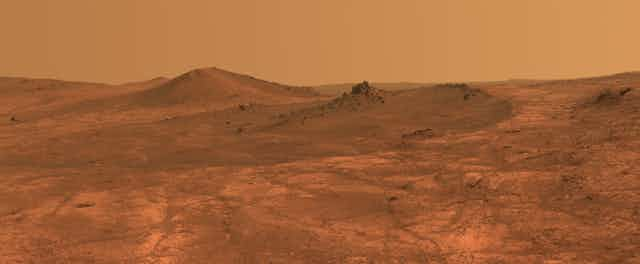
NASA's ambition to send humans to Mars in the 2030s represents more than a milestone in space exploration; it is a catalyst for innovation with potential applications across multiple sectors on Earth. The mission, built upon the Artemis programme's lunar return efforts, aims to address fundamental questions about Mars' geological history, atmospheric evolution, and the possibility of past or present life. While the endeavour is rooted in scientific discovery, the technologies and methodologies developed to support it are already influencing fields such as advanced manufacturing, robotics, and environmental monitoring. For businesses and consumers alike, understanding the spillover effects of such ambitious space programmes offers insight into emerging trends that could shape future products, services, and investment opportunities.
At the core of NASA's Mars mission plan is a desire to understand why the planet, which once resembled Earth with abundant surface water and a thicker atmosphere, evolved into the arid, cold world observed today. Scientists believe that around 3.8 billion years ago, Mars hosted lakes, rivers, and potentially even oceans, creating conditions that may have supported microbial life. Uncovering what caused the planet's dramatic climate shift could provide valuable comparative insights into Earth's own environmental resilience and long-term habitability.
Another key question centres on the search for biosignatures—evidence of past or present life. Although robotic rovers have identified organic molecules and ancient riverbeds, human explorers could conduct more nuanced geological sampling and real-time analysis, particularly in subsurface environments where life might have persisted. The ability to drill deeper, interpret complex stratigraphy, and adapt exploration strategies based on immediate findings gives astronauts a distinct advantage over automated systems in certain scenarios.
The success of a crewed Mars mission hinges on breakthroughs in propulsion, life support, and spacecraft durability. NASA's Space Launch System (SLS) and Orion capsule, which completed the uncrewed Artemis I test flight in late 2022, are designed to withstand the rigours of deep space travel. These systems incorporate advanced heat shielding, radiation protection, and autonomous navigation technologies that could find applications in high-altitude aviation, polar research, and offshore energy operations.
Equally important is the development of sustainable life support systems capable of recycling air, water, and waste over extended periods. Innovations in closed-loop ecosystems, such as those being tested on the International Space Station, are informing the design of resource-efficient habitats that could be adapted for use in remote or disaster-affected regions on Earth. Water purification techniques, in particular, have already influenced municipal and industrial treatment processes in water-scarce areas.
The Artemis programme's focus on establishing a lunar presence serves as a proving ground for these technologies. By testing systems on the Moon—where resupply is possible but challenging—NASA aims to validate their reliability before committing to the multi-year Mars mission. This approach mirrors strategies used in industries such as shipping and logistics, where incremental testing in controlled environments reduces risk before full-scale deployment.
The pursuit of Mars exploration is stimulating growth in sectors ranging from advanced materials to artificial intelligence. Lightweight, high-strength composites developed for spacecraft structures are being evaluated for use in electric vehicles and renewable energy infrastructure, where weight reduction directly improves efficiency. Similarly, radiation-hardened electronics designed to withstand cosmic rays are inspiring more robust computing solutions for use in extreme environments, such as nuclear facilities or high-latitude communications networks.
Autonomous systems are another area of cross-pollination. Rovers intended to assist astronauts on Mars must navigate unpredictable terrain, avoid hazards, and make real-time decisions with limited input from mission control. These capabilities are advancing the state of the art in self-driving logistics vehicles, warehouse automation, and precision agriculture, where machines must operate reliably in dynamic, unstructured settings.
Furthermore, the mission's emphasis on in-situ resource utilisation—such as extracting oxygen from Martian regolith or harvesting ice for water and fuel—is accelerating research into sustainable resource extraction methods. Techniques developed for space could inform low-impact mining practices on Earth, particularly in sensitive ecosystems where minimising disturbance is paramount. The ability to produce essential supplies locally reduces dependence on long supply chains, a principle increasingly valued in resilient business models.
Beyond technological spillovers, the Mars mission is generating new avenues for commercial collaboration and public interest. Private companies are increasingly involved in supplying components, software, and launch services for NASA's deep space programmes, creating opportunities for firms specialising in aerospace engineering, data analytics, and simulation technologies. This growing ecosystem supports job creation and skills development in high-value technical roles, particularly in regions investing in STEM education and innovation hubs.
Public engagement efforts surrounding the mission also contribute to broader scientific literacy, which can influence consumer behaviour and workforce aspirations. Educational outreach programmes linked to Artemis and Mars exploration are inspiring interest in science and engineering careers, potentially helping to address skills gaps in critical industries. For businesses, aligning with these narratives can enhance brand reputation and demonstrate a commitment to long-term, socially beneficial innovation.
While the primary goal of NASA's Mars mission remains scientific discovery, its broader impact lies in the innovation it stimulates across terrestrial industries. The challenges of sending humans to another planet necessitate solutions that push the boundaries of engineering, materials science, and systems design—advancements that often find valuable second lives in addressing Earth-based challenges. From improving the efficiency of renewable energy systems to enhancing the resilience of supply chains, the pursuit of Mars exploration is helping to shape a more technologically capable and sustainable future. For businesses, consumers, and policymakers, monitoring these developments offers a window into emerging trends that could inform strategic decisions, investment priorities, and adoption of next-generation technologies well before the first astronaut sets foot on Martian soil.
Originally reported by discovermagazine.com. Adapted for our readers with AI assistance.
Keep reading
AI Trends & News
Microsoft opens Surface Laptop Ultra pre-orders from US$2,599.99. Explore its launch date, NVIDIA RTX Spark features and implications for Nigerian businesses.
Science & Technology
DJI’s IBC recognition puts pocket gimbal and panoramic capture in the spotlight. Here is how creators can assess framing, editing effort and recording workflows.
Business News
App store steering is about more than permission to add a link. Explore fees, renewal terms, customer experience and the UK consultation.
TAMFIS NIG LTD
Electrical and instrumentation engineering, bid preparation and consulting, IT and software.

