NASA spacecraft launched toward Jupiter’s Europa to see if ice-covered moon could host life
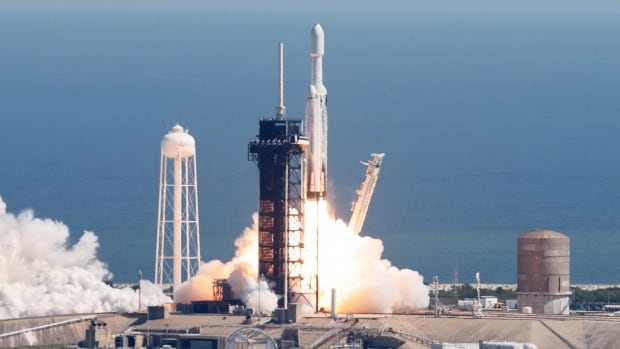
On October 14, 2024, NASA successfully launched the Europa Clipper spacecraft from Kennedy Space Center in Florida, marking the beginning of an ambitious mission to explore Jupiter’s moon Europa. This icy world, enveloped in a thick shell of ice with a vast ocean beneath, has long intrigued scientists as a potential habitat for life beyond Earth. The Europa Clipper mission will conduct detailed studies of Europa’s surface, subsurface ocean, and environment to assess its habitability, providing insights that could reshape our understanding of life in the cosmos.
Europa: A Compelling Target in the Search for Life
Europa, one of Jupiter’s 95 moons, is the fourth largest and measures about 3,100 kilometers in diameter—roughly 90% the size of Earth's moon. Despite its relatively small size, Europa is believed to harbor a global ocean beneath its icy crust that could contain twice the volume of water found in all of Earth's oceans combined. This subsurface ocean lies beneath an ice shell estimated to be between 15 and 25 kilometers thick, with the ocean itself ranging from 60 to 150 kilometers deep.
The presence of liquid water is a critical factor in the search for extraterrestrial life, as it is essential for all known life forms on Earth. Europa’s ocean, combined with the potential for chemical energy sources and a stable environment, makes it one of the most promising places in our solar system to investigate habitability beyond our planet.
Mission Objectives and Scientific Goals
The Europa Clipper mission is designed to conduct a comprehensive survey of Europa’s ice shell, subsurface ocean, surface composition, and potential plumes of water vapor venting from the moon’s crust. These plumes, if confirmed, could provide direct access to the ocean beneath without the need to drill through the ice.
Starting in 2031, Europa Clipper will perform 49 close flybys over three years, some as close as 25 kilometers from Europa’s surface. These flybys will allow the spacecraft to use its suite of nine scientific instruments to gather high-resolution images, analyze surface materials, measure the thickness and properties of the ice shell, and characterize the ocean beneath. The mission aims to understand the moon’s geology, chemistry, and potential energy sources that could support life.
Importantly, while the mission will assess Europa’s habitability, it is not designed to detect life directly. Instead, it will provide critical data to inform future missions that might search for biological signatures.
Engineering Challenges: Radiation and Distance
Europa Clipper faces significant engineering hurdles, primarily due to the harsh radiation environment surrounding Jupiter. Jupiter’s magnetic field is approximately 20,000 times stronger than Earth’s, trapping charged particles that create intense radiation capable of damaging spacecraft electronics.
To protect its sensitive instruments and systems, NASA engineers built a radiation vault from titanium and aluminum within the spacecraft. This vault shields critical components, enabling Europa Clipper to operate effectively despite the intense radiation.
The spacecraft is also solar-powered, featuring expansive solar arrays that will unfold after launch to gather sunlight, powering its instruments and onboard systems. Given the vast distance—about 2.9 billion kilometers—and the complexity of the trajectory, the mission will take roughly five and a half years to reach Jupiter, with gravity assists from Mars and Earth planned to boost its speed.
Launch and Journey Details
The Europa Clipper spacecraft was launched aboard a SpaceX Falcon Heavy rocket from Cape Canaveral, Florida, under clear skies. Originally scheduled for an earlier date, the launch was postponed by a week due to Hurricane Milton.
At full deployment, Europa Clipper measures approximately 30.5 meters long and 17.6 meters wide—larger than a basketball court—and weighs about 6,000 kilograms. The spacecraft carries over 2,750 kilograms of propellant for its journey and orbital maneuvers.
Rather than traveling directly to Jupiter, Europa Clipper will use a series of gravity assists, flying by Mars and Earth to gain the necessary momentum. This complex trajectory optimizes fuel efficiency and mission timing, culminating in Europa orbit insertion in 2030.
Scientific Significance and Broader Implications
NASA officials emphasize that Europa Clipper’s findings will have profound implications for astrobiology—the study of life in the universe. Understanding Europa’s environment could reshape how scientists view the potential for life beyond Earth and inform the search for habitable worlds in other planetary systems.
Jim Free, NASA’s associate administrator, highlighted Europa as one of the most promising environments for habitability in our solar system. Sandra Connelly, deputy associate administrator of NASA’s science mission directorate, noted that Europa possesses the essential conditions for life: water, energy, chemistry, and environmental stability.
The mission’s data will also contribute to future exploration strategies, potentially paving the way for landers or probes designed to penetrate Europa’s ice shell and directly sample its ocean.
What this means
The Europa Clipper mission represents a landmark step in humanity’s quest to understand whether life exists beyond Earth. By studying the icy moon’s hidden ocean and its environment, NASA aims to uncover clues about habitability in one of the solar system’s most intriguing worlds. While the mission will not directly search for life, its comprehensive scientific investigations will provide critical knowledge that could guide future exploration and deepen our understanding of life’s potential in the cosmos. As Europa Clipper embarks on its long journey, it carries the hopes of scientists and the public alike for unlocking the mysteries beneath Europa’s frozen surface.
Recent advances in machine perfusion technology are not only preserving donated livers but also making them biologically younger at a molecular level. This breakthrough…
What happens when human imagination, artificial intelligence, art and technology come together? From September 1 to 6, Samsung Electronics presented a special exhibition themed…