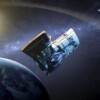
NASA shuts down down asteroid-hunting NEOWISE telescope as the sun drags it to its doom
NASA’s Near-Earth Object Wide-field Infrared Survey Explorer, commonly known as NEOWISE, has officially ended its mission after more than a decade and a half of invaluable contributions to planetary defense. Launched in 2009, NEOWISE was initially designed for a brief infrared survey of the cosmos but quickly exceeded expectations, evolving into a vital tool for detecting near-Earth asteroids and comets. However, with the sun entering a period of heightened activity known as the solar maximum, the spacecraft is succumbing to increased atmospheric drag, leading to its inevitable fiery reentry. This article delves into NEOWISE’s history, achievements, challenges, and the future of asteroid detection following its retirement.
The Origins and Evolution of NEOWISE
NEOWISE began its journey as the Wide-field Infrared Survey Explorer (WISE) when it launched in December 2009. Its primary mission was to map the entire sky in infrared light, capturing faint signals from distant celestial objects and the early universe. Originally slated for only seven months of operation, WISE’s advanced sensors revealed far greater sensitivity than anticipated, prompting NASA to extend its mission.
By 2011, the spacecraft’s mission was redefined to focus on near-Earth objects (NEOs), leading to the rechristening of the telescope as NEOWISE. This shift capitalized on the spacecraft’s ability to detect the infrared heat signatures of asteroids and comets, providing crucial data on their size, composition, and trajectories. Despite running out of the coolant needed to maintain sensor sensitivity, NEOWISE was placed into hibernation rather than being retired outright.
In 2013, NASA revived NEOWISE to continue its NEO survey using its infrared instruments to detect sunlight reflected from nearby objects. This extension allowed the mission to continue for over a decade, vastly expanding our knowledge of the population of potentially hazardous asteroids and comets within the inner solar system.
NEOWISE’s Astounding Discoveries and Contributions
Over its 15-year lifespan, NEOWISE detected more than 200 previously unknown near-Earth objects, including 25 new comets. Its infrared observations enabled astronomers to estimate sizes and albedos (reflectivity) of thousands of asteroids, data that is critical for assessing impact risks. The mission cataloged roughly 44,000 solar system objects, significantly enhancing our understanding of the asteroid belt and near-Earth environment.
One of NEOWISE’s most notable discoveries was comet C/2020 F3 NEOWISE, which became one of the brightest comets visible from Earth in decades during the summer of 2020. This discovery underscored NEOWISE’s ongoing ability to identify transient objects that could otherwise go unnoticed until they were near Earth.
Beyond discoveries, NEOWISE’s comprehensive infrared sky surveys provided a legacy dataset that continues to support planetary science and defense, enabling future missions and ground-based observatories to refine their tracking and characterization of hazardous objects.
The Impact of Solar Maximum on NEOWISE’s Orbit
NEOWISE’s orbit around Earth has been gradually decaying due to atmospheric drag, a process exacerbated by the sun’s 11-year solar cycle. Currently, the sun is in its solar maximum phase, marked by increased solar radiation and particle emissions that heat and expand Earth’s upper atmosphere. This expansion increases drag on low-Earth orbit satellites, accelerating their orbital decay.
With no onboard propellant to boost its altitude, NEOWISE has been slowly descending toward Earth for years. The intensifying solar activity is hastening this process, making a controlled or extended mission impossible. NASA officially ended NEOWISE’s mission on July 31, 2023, shutting down its transmitter and preparing for its eventual atmospheric reentry.
The spacecraft is expected to safely burn up upon reentry into Earth’s atmosphere, likely in late 2024. This natural conclusion to NEOWISE’s mission is a reminder of the challenges posed by space environment dynamics on long-term satellite operations.
The Legacy of NEOWISE in Planetary Defense
NEOWISE has been NASA’s only space-based telescope dedicated solely to planetary defense — the task of detecting and tracking near-Earth objects that could pose impact threats. Its infrared capabilities allowed it to find objects that are difficult to spot with visible light telescopes, including dark asteroids that absorb most sunlight.
The mission’s success has provided invaluable data for impact risk assessment and mitigation planning. By determining the size and composition of asteroids, scientists can better understand potential impact effects and prioritize objects for follow-up observations or deflection strategies.
NEOWISE’s extensive catalog of NEOs and comets serves as a critical resource for researchers worldwide and has paved the way for next-generation planetary defense technologies and missions.
Bridging the Gap: The Future of Asteroid Detection
With NEOWISE’s retirement, a temporary gap emerges in space-based asteroid detection. Currently, no other NASA space telescope focuses exclusively on hunting near-Earth objects in infrared wavelengths. This gap places increased reliance on ground-based observatories, such as the Catalina Sky Survey in Arizona and Pan-STARRS in Hawaii, which detect the majority of NEOs but face limitations from weather, daylight, and atmospheric interference.
Fortunately, NASA is preparing to fill this void with the planned launch of the Near-Earth Object Surveyor (NEO Surveyor) mission, set for no earlier than 2027. This telescope is purpose-built to scan the sky every two weeks in infrared, with a solar shade designed to observe asteroids near the sun’s glare — a region notoriously difficult to monitor from Earth.
NEO Surveyor promises to dramatically improve our ability to detect potentially hazardous asteroids, especially those that approach Earth from the sunward direction, enhancing planetary defense capabilities beyond what NEOWISE achieved.
Challenges and Innovations in Infrared Asteroid Detection
Infrared detection of asteroids offers significant advantages over visible light observations, as many asteroids are dark and reflect little sunlight. Infrared sensors detect the heat emitted by these objects, allowing for better size and albedo measurements. However, maintaining sensitive infrared instruments requires cooling systems to prevent thermal noise, which led to NEOWISE’s initial hibernation when its coolant was depleted.
Innovations in sensor technology and spacecraft design are addressing these challenges in upcoming missions like NEO Surveyor. New cooling techniques, combined with optimized orbits and solar shielding, will enable continuous, sensitive infrared observations without the limitations faced by NEOWISE.
These advancements are essential for comprehensive sky surveys and for identifying smaller, fainter asteroids that could still pose significant threats to Earth.
The Role of Ground-Based Observatories During the Interim
As NEOWISE retires and before NEO Surveyor’s launch, ground-based observatories remain the frontline in asteroid detection. Facilities such as the Catalina Sky Survey and Pan-STARRS have robust programs scanning the skies nightly, discovering and tracking new near-Earth objects to update threat assessments.
While these observatories are highly effective, their observations are limited by atmospheric conditions, daylight, and the inability to monitor regions near the sun’s glare where some asteroids approach Earth. This limitation underscores the importance of space-based infrared telescopes for a complete planetary defense strategy.
Collaboration between ground and space assets ensures continuous monitoring, data sharing, and rapid response to newly discovered objects, maintaining Earth’s vigilance against potential asteroid impacts.
Looking Ahead: Continuing the Mission to Protect Earth
NEOWISE’s retirement marks the end of a pioneering chapter in space-based planetary defense but also signals a renewed commitment to advancing asteroid detection technologies. The lessons learned from NEOWISE’s extended mission have informed the design and objectives of upcoming missions, ensuring improved coverage and sensitivity.
The Near-Earth Object Surveyor mission is poised to revolutionize asteroid detection with its specialized infrared instruments and solar shielding, addressing the blind spots that NEOWISE and ground-based observatories face. Its success will be critical for early warning systems and potential impact mitigation strategies.
Meanwhile, continuous support for existing ground-based observatories and international collaboration will be vital to bridge the gap and maintain robust planetary defense until new space-based assets come online.
Conclusion
NASA’s NEOWISE telescope has been a cornerstone of planetary defense for over a decade, dramatically enhancing our understanding of near-Earth objects and their potential hazards. Its retirement, driven by the inexorable effects of solar activity on its orbit, closes a remarkable chapter in space-based asteroid detection. Yet, this conclusion also heralds a new era, with advanced missions like the Near-Earth Object Surveyor poised to carry forward NEOWISE’s legacy with improved technology and broader capabilities. In the meantime, ground-based observatories will continue their vigilant watch, ensuring that humanity remains prepared against the cosmic threats lurking in our solar system. NEOWISE’s contributions will endure, inspiring ongoing efforts to protect our planet from asteroid impacts for decades to come.
Originally reported by livescience.com. Adapted for our readers.
Recent advances in machine perfusion technology are not only preserving donated livers but also making them biologically younger at a molecular level. This breakthrough…
What happens when human imagination, artificial intelligence, art and technology come together? From September 1 to 6, Samsung Electronics presented a special exhibition themed…