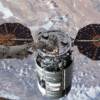
NASA Sets Coverage for Northrop Grumman’s 21st Station Resupply Launch
On August 3, 2024, NASA, in partnership with Northrop Grumman and SpaceX, is targeting a launch to the International Space Station (ISS) to deliver essential supplies and scientific payloads. This mission marks Northrop Grumman’s 21st commercial resupply service flight to the orbital laboratory. Utilizing a SpaceX Falcon 9 rocket to carry the Cygnus spacecraft, the mission plays a critical role in supporting ongoing research and operations aboard the ISS. This article provides a comprehensive overview of the mission’s schedule, scientific objectives, and how the public can engage with the launch.
Mission Overview and Launch Details
The upcoming resupply mission involves the Northrop Grumman Cygnus spacecraft, loaded with approximately 8,200 pounds of cargo, including science investigations, supplies, and equipment. The spacecraft will launch atop a SpaceX Falcon 9 rocket from Space Launch Complex 40 at Cape Canaveral Space Force Station in Florida.
NASA has scheduled the launch for 11:28 a.m. Eastern Daylight Time on Saturday, August 3, 2024. Live coverage of the event will begin at 11:10 a.m. on multiple platforms including NASA+, NASA Television, the NASA app, YouTube, and the agency’s official website. This broad availability ensures public access to real-time updates and video streaming.
Following the launch, the Cygnus spacecraft is expected to arrive at the ISS on Monday, August 5. NASA astronaut Matthew Dominick will use the station’s robotic arm to capture Cygnus, with astronaut Jeanette Epps serving as backup. The spacecraft will then be installed on the Earth-facing port of the Unity module, enabling transfer of cargo and experiments.
Scientific Research and Payload Highlights
This resupply mission supports a diverse array of scientific investigations that leverage the unique microgravity environment of the ISS. Among the key experiments delivered are test articles designed to study liquid and gas flow through porous media, which are integral to the station’s life support systems.
Educational outreach is also a focus, with STEMonstration payloads including a balloonpenny and hexnut to demonstrate principles of centripetal force. Such demonstrations provide valuable educational content for students and the public.
Biological experiments include the transport of microorganisms known as rotifers, which will be studied to understand how spaceflight affects DNA repair mechanisms. Additionally, a bioreactor is onboard to demonstrate the production of high-quality blood and immune stem cells, advancing regenerative medicine research.
Another notable payload is vascularized liver tissue, which will be analyzed to observe blood vessel development in engineered tissue subjected to spaceflight conditions. These studies have potential implications for tissue engineering and medical treatments on Earth.
The mission also supports NASA’s CubeSat Launch Initiative by deploying two CubeSats from the ISS: CySat-1 from Iowa State University and DORA (Deployable Optical Receiver Aperture) from Arizona State University. These small satellites are part of the Educational Launch of Nanosatellites (ELaNa) 52 mission, promoting educational opportunities in space science.
Public Engagement and Media Coverage
NASA offers extensive coverage of the launch and arrival events to engage the public and media. The agency’s live broadcast will be accessible across multiple digital platforms, including NASA Television and social media channels such as X (formerly Twitter), Facebook, and Instagram.
For those interested in a more immersive experience, NASA provides a virtual guest program that allows the public to register for launch attendance online. Participants receive curated resources, notifications about mission updates, and a digital stamp for the NASA virtual guest passport.
Media representatives have opportunities to participate in prelaunch teleconferences featuring experts from NASA, Northrop Grumman, SpaceX, and the Cape Canaveral Weather Squadron. These sessions offer insights into mission operations, science objectives, and launch readiness.
Recognizing the diverse audience for space exploration, NASA also offers mission coverage in Spanish through its NASA en Español platforms on social media and YouTube. Spanish-language interviews and information are available upon request to ensure inclusive communication.
Mission Duration and Spacecraft End-of-Mission Plan
After completing its cargo delivery and supporting onboard activities, the Cygnus spacecraft is scheduled to remain attached to the ISS until January 2025. During this period, it will serve as a storage module and potentially conduct additional experiments.
Upon departure from the station, the spacecraft will perform a controlled reentry into Earth’s atmosphere, where it will safely burn up. This mission’s Cygnus spacecraft is named the S.S. Richard “Dick” Scobee in honor of the late NASA astronaut, commemorating his contributions to space exploration.
What this means
The upcoming Northrop Grumman resupply mission exemplifies the ongoing collaboration between NASA, commercial partners, and academic institutions to sustain and advance scientific research aboard the International Space Station. By delivering a wide range of experiments and supplies, this mission supports critical investigations that have the potential to impact life on Earth and future space exploration. The comprehensive public and media coverage planned by NASA ensures that this significant event is accessible and engaging to a global audience, fostering greater understanding and enthusiasm for space science. As the Cygnus spacecraft embarks on this journey, it continues a legacy of innovation and exploration that underscores humanity’s commitment to expanding knowledge beyond our planet.
Originally reported by nasa.gov. Adapted for our readers with AI assistance.
Author of the article: Published Sep 18, 2026 11 minute read Article content Kyndryl Canada has been engaged to deliver a commercialization strategy and…
The National Agency for Science and Engineering Infrastructure (NASENI) on Friday 4th September 2026, marked three years of institutional transformation under its Executive Vice…
A new slum redevelopment initiative in Velampeta, Visakhapatnam, will provide 177 families with modern flats using shear-wall technology, marking a significant step in urban…