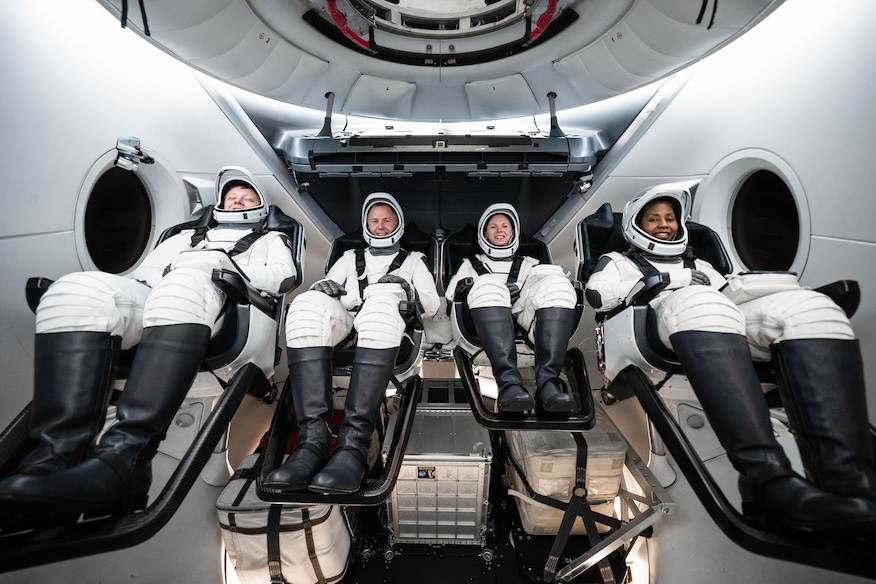
NASA pushes Crew-9 launch to September amid uncertainty of Starliner’s return timeline
NASA’s upcoming Crew-9 mission, scheduled to ferry astronauts to the International Space Station (ISS) aboard a SpaceX Dragon capsule, has been postponed to no earlier than September 24, 2024. The decision follows unresolved issues with Boeing’s Starliner spacecraft, which is currently docked at the ISS but has yet to complete its return to Earth. This delay highlights the intricate coordination required for crew rotations on the ISS and underscores NASA’s commitment to ensuring the safety and reliability of all spacecraft involved in human spaceflight.
Background: The Crew-9 Mission and Starliner’s Role
The Crew-9 mission is a critical part of NASA’s Commercial Crew Program, which partners with private aerospace companies like SpaceX and Boeing to provide reliable transportation for astronauts to and from the ISS. SpaceX’s Crew Dragon capsules have been operational since 2020, regularly ferrying crews to the station with a strong safety record. Boeing’s Starliner spacecraft, however, remains in a testing and validation phase, aiming to provide an additional crew transport option to increase redundancy and capacity for NASA.
On June 5, 2024, Boeing launched its Crew Flight Test (CFT) mission, a significant milestone for the Starliner program. This mission was designed to demonstrate the spacecraft’s capabilities in orbit and its ability to dock with the ISS. However, following the launch, the Starliner spacecraft encountered thruster issues that have delayed its planned return to Earth. NASA and Boeing are currently conducting detailed analyses of the spacecraft’s propulsion system, including results from docked hot-fire tests, to ensure the vehicle’s safety and reliability before authorizing its undocking and landing.
Thruster Issues and Return Timeline Uncertainty
The core challenge facing the Starliner spacecraft involves its Reaction Control System (RCS) thrusters, which are essential for maneuvering and safe docking and undocking operations. Boeing reports that 27 out of 28 thrusters are healthy and fully operational, and the propulsion system retains critical redundancy. Additionally, helium levels, which are vital for thruster function, remain stable, further supporting the spacecraft’s readiness.
Despite these positive signs, NASA has yet to conduct a flight readiness review to determine whether Starliner can safely return to Earth. This review was initially scheduled but postponed, reflecting the agency’s cautious approach to crew safety. The ongoing evaluation involves thorough testing, data analysis, and root cause assessments related to the helium and thruster issues. NASA and Boeing are collaborating closely to finalize flight rationale and confirm the spacecraft’s integrated propulsion system reliability before making any decisions about Starliner’s return timeline.
Impact on ISS Docking and Crew Rotation Scheduling
The delay in Starliner’s return has created a logistical bottleneck at the ISS, where docking port availability is tightly managed. Currently, astronauts Barry “Butch” Wilmore and Sunita Williams remain aboard the ISS after launching on a United Launch Alliance Atlas V rocket. Additionally, the Crew-8 mission’s Dragon spacecraft is still docked to the station. Until either Starliner or Crew-8 departs, there are no free docking ports available to accommodate the incoming Crew-9 mission.
NASA prefers a "direct handover" process for crew rotations, where arriving and departing crews overlap briefly on the station. This approach ensures continuity of operations and knowledge transfer between crews. The only exception in the Commercial Crew Program era occurred when weather delays forced an early departure of Crew-2 before Crew-3’s arrival. Given the current circumstances, NASA aims to keep Crew-8 in place until Crew-9 arrives, which means Starliner must undock and return to Earth first. This sequence will free the forward port on the Harmony module, the preferred docking location for U.S. spacecraft.
This situation illustrates the delicate choreography required to manage crew rotations and spacecraft traffic at the ISS. The availability of docking ports, spacecraft readiness, and crew safety considerations all factor into scheduling decisions, making delays and adjustments inevitable when issues arise.
Launch Site Change and Broader Scheduling Adjustments
In addition to the launch delay, NASA has announced that the Crew-9 mission will launch from Space Launch Complex 40 (SLC-40) at Cape Canaveral Space Force Station instead of the originally planned Launch Complex 39A at Kennedy Space Center. This change is intended to avoid conflicts with preparations for NASA’s Europa Clipper mission, which has a launch window opening on October 10, 2024.
The Europa Clipper mission requires significant pad modifications, including converting the launch pad from a Falcon 9 to a Falcon Heavy configuration, a process that typically takes about three weeks. By moving Crew-9 to SLC-40, NASA ensures that both missions can proceed without interference.
This upcoming Crew-9 launch will mark the first crewed mission from SLC-40 since SpaceX completed the installation of a new crew access tower in 2023. NASA officials have reported that certification for Crew Dragon launches from SLC-40 is nearing completion, signaling readiness for this transition.
The manifest shuffle also affects other missions. For example, the next Cargo Dragon mission, CRS-31, is now scheduled to launch no earlier than mid-October, reflecting the ripple effects of the Crew-9 delay and launch site change.
Private Missions and the Shifting Launch Landscape
The delay of Crew-9 opens the possibility for private astronaut missions to launch first from Florida in 2024. Notably, the Polaris Dawn mission, a commercial astronaut flight, has a tentative launch date as early as August 24. Although its official schedule lists a "no earlier than late summer 2024" launch, mission commander Jared Isaacman recently indicated on social media that the team is preparing to fly to Kennedy Space Center soon.
Following Polaris Dawn, Axiom Space’s Ax-4 mission is planned for spring 2025 and will carry four private astronauts to the ISS. These private missions represent the growing role of commercial operators in low Earth orbit, adding complexity and opportunity to NASA’s scheduling and resource management.
The increasing presence of private astronaut missions alongside NASA’s government-led flights reflects a dynamic and evolving spaceflight environment. Coordination between government agencies and commercial entities will be essential to maximize the utilization of the ISS and ensure safe, efficient operations.
What this means
NASA’s decision to delay the Crew-9 mission highlights the complexities inherent in coordinating human spaceflight operations involving multiple spacecraft and agencies. The ongoing evaluation of Boeing’s Starliner spacecraft underscores NASA’s prioritization of crew safety and mission success above schedule pressures. Adjustments to launch sites and timelines demonstrate NASA’s flexibility and responsiveness in managing a crowded spaceflight calendar that includes both government and private missions. As NASA and its partners navigate these challenges, the evolving landscape of crewed spaceflight promises increased collaboration, innovation, and opportunities for expanding human presence in low Earth orbit and beyond.
Originally reported by spaceflightnow.com. Adapted for our readers with AI assistance.
Recent advances in machine perfusion technology are not only preserving donated livers but also making them biologically younger at a molecular level. This breakthrough…
What happens when human imagination, artificial intelligence, art and technology come together? From September 1 to 6, Samsung Electronics presented a special exhibition themed…