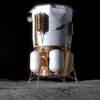
NASA payload to fly on first Blue Origin lunar lander mission
NASA is advancing its lunar exploration efforts by selecting Blue Origin’s first lunar lander mission to carry a specialized payload aimed at studying how rocket engine plumes interact with the moon’s surface. Scheduled for launch as early as March 2025, this mission will provide vital data to help prepare for future crewed landings at the lunar south pole. The payload, known as the Stereo Cameras for Lunar Plume Surface Studies (SCALPSS), will capture detailed images and data on the effects of engine exhaust on lunar regolith, a key factor in ensuring the safety and success of Artemis missions.
The Importance of Studying Lunar Engine Plume Interactions
Rocket engines produce powerful plumes during landing and takeoff, which can disturb the lunar surface material, or regolith. Understanding how these plumes interact with the regolith is crucial for designing landers that minimize surface damage and avoid hazards such as dust clouds that could impair visibility or damage equipment.
NASA’s SCALPSS payload is specifically designed to capture stereo images of the plume and surface interaction, enabling scientists to analyze the behavior of regolith when exposed to engine exhaust. This data will inform engineering decisions for future landers, helping to ensure safer and more reliable landings for astronauts.
Previous flights of SCALPSS have been conducted on other commercial lunar missions, including Intuitive Machines’ first lander in February and Firefly Aerospace’s Blue Ghost mission planned for late 2024. However, these missions involved landers with engines producing less than 8,000 pounds-force (lbf) of thrust, limiting the scope of plume interaction data.
Why Blue Origin’s Lander Was Chosen
NASA’s procurement documents reveal that Blue Origin’s lunar lander was selected because it meets the critical thrust requirement of engines producing at least 8,000 lbf. This threshold is necessary to study plume effects under conditions similar to those expected during Artemis crewed missions.
Although some details remain redacted, Blue Origin has publicly stated that its BE-7 engine, developed for the Blue Moon lander, can produce up to 10,000 lbf of thrust. This capability makes it uniquely qualified among commercial lunar landers targeting the south pole region.
The selected mission, referred to internally as the 'Pathfinder' or 'MK1-SN001' lander, is a demonstration flight intended to validate key systems and gather environmental data. NASA awarded Blue Origin a task order valued at approximately $6.1 million without competition, citing the company’s ability to meet thrust requirements and deliver the payload by the end of 2025.
Mission Profile and Technical Details of Blue Moon Pathfinder
Blue Origin plans to launch the Pathfinder mission aboard its New Glenn rocket, with a tentative launch window starting in March 2025. The mission profile involves placing the Blue Moon lander into low Earth orbit, where it will complete several orbits to conduct system checkouts.
Following these initial tests, the spacecraft will perform a translunar injection maneuver to travel to the moon, arriving in low lunar orbit within five to seven days. During lunar orbit, the lander will conduct extensive subsystem characterization before attempting a soft landing on the lunar surface.
The Blue Moon MK1 Pathfinder is notably larger than other commercial landers, standing 8.05 meters tall with a diameter of 3.08 meters and a fully fueled mass of up to 21,350 kilograms. It is designed to deliver payloads of up to three metric tons to the lunar surface, supporting a range of scientific and exploration objectives.
Implications for NASA’s Artemis Program and Future Lunar Exploration
The data collected by SCALPSS on Blue Origin’s lander will directly support NASA’s Artemis program, which aims to return humans to the moon and establish a sustainable presence. Understanding plume-regolith interactions at higher thrust levels is essential for designing landers that can safely transport astronauts and cargo to the lunar south pole.
Blue Origin’s work on the Mark 1 lander will also inform development of the Mark 2 version, which is intended to carry astronauts. NASA selected Blue Origin last year for a second Human Landing System (HLS) award to develop and demonstrate the Mark 2 lander, complementing SpaceX’s Starship, which received the first HLS contract in 2021.
By leveraging commercial partnerships through NASA’s Commercial Lunar Payload Services (CLPS) program, the agency is accelerating technology development and mission readiness. Blue Origin’s Pathfinder mission represents a critical step in validating systems and gathering data that will underpin crewed lunar landings planned for later in the decade.
What this means
The collaboration between NASA and Blue Origin on the upcoming lunar lander mission marks a significant milestone in preparing for sustainable human exploration of the moon. By deploying the SCALPSS payload on a lander with powerful engines, NASA will obtain critical insights into how rocket plumes affect the lunar surface—information that is vital for the safety and success of Artemis crewed missions. Blue Origin’s Pathfinder flight not only advances commercial lunar capabilities but also lays the groundwork for future astronaut landings, underscoring the growing role of private industry in space exploration. As the 2025 launch approaches, this mission promises to deliver valuable data and demonstrate technologies that will help humanity return to the moon and beyond.
Originally reported by spacenews.com. Adapted for our readers with AI assistance.
Recent advances in machine perfusion technology are not only preserving donated livers but also making them biologically younger at a molecular level. This breakthrough…
What happens when human imagination, artificial intelligence, art and technology come together? From September 1 to 6, Samsung Electronics presented a special exhibition themed…