NASA indefinitely delays return of Starliner to review propulsion data
NASA’s Commercial Crew Program is currently facing a significant setback as the return of Boeing’s CST-100 Starliner spacecraft from the International Space Station (ISS) has been indefinitely delayed. Originally scheduled to undock and return to Earth in mid-June 2024, the spacecraft’s departure date has been pushed back to allow engineers and mission managers additional time to assess and address critical propulsion system anomalies. These issues include multiple leaks in the helium pressurization system and the failure of several reaction-control thrusters, raising concerns about the spacecraft’s ability to safely execute its return journey. This article delves into the details of the delay, the technical challenges faced, and the implications for NASA’s ongoing efforts to establish reliable commercial crew transportation capabilities.
Background of the Starliner Mission and Its Objectives
The Boeing CST-100 Starliner is a key element of NASA’s Commercial Crew Program, designed to ferry astronauts to and from the International Space Station. The vehicle aims to provide safe, reliable, and cost-effective access to low Earth orbit, complementing SpaceX’s Crew Dragon spacecraft. The current mission, known as the Crew Flight Test, marks a critical milestone as it tests Starliner’s capabilities with astronauts onboard for the first time.
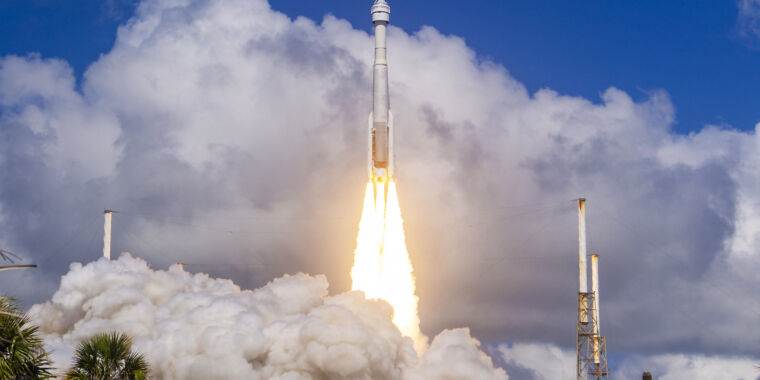
Launched aboard a United Launch Alliance Atlas V rocket on June 5, 2024, the Starliner successfully docked with the ISS, carrying NASA astronauts Butch Wilmore and Suni Williams. The mission’s primary goals included demonstrating safe rendezvous, docking, and extended stay capabilities aboard the station, as well as validating spacecraft systems for operational crew rotations.
The mission was originally planned to last approximately two weeks, with Starliner scheduled to undock from the ISS and return to Earth on June 14, 2024. However, as the spacecraft approached this timeline, NASA and Boeing engineers identified anomalies that necessitated a reassessment of the return plan to ensure astronaut safety and mission success.
Identifying Propulsion System Anomalies During the Mission
During the mission, mission controllers detected multiple issues related to Starliner’s propulsion system. Notably, there were five separate leaks in the helium pressurization system, which is vital for maintaining proper pressure in the spacecraft’s thruster propellant tanks. Helium leaks can compromise thruster performance and, by extension, spacecraft maneuverability and safety.
In addition to the helium leaks, five of Starliner’s 28 reaction-control system thrusters failed as the vehicle approached the ISS. These thrusters play a critical role in controlling the spacecraft’s orientation and trajectory, especially during complex maneuvers such as docking and undocking. Thruster failures raised concerns about the spacecraft’s ability to safely perform the de-orbit burn and other critical return maneuvers.
The combination of these issues prompted NASA and Boeing engineers to conduct thorough data reviews and analyses. The anomalies were significant enough to cause mission managers to cancel several planned return opportunities, opting instead to extend the spacecraft’s stay at the ISS while they evaluated the situation.
NASA’s Decision to Indefinitely Delay Starliner’s Return
On June 21, 2024, NASA announced it was adjusting the Starliner’s return date from the initially planned June 26 to an unspecified date in July or later. This decision followed intensive meetings involving senior NASA leadership, including Associate Administrator Jim Free, and Boeing representatives. The focus was to ensure that all contingencies for a safe return could be addressed comprehensively.
Steve Stich, manager of NASA’s Commercial Crew Program, emphasized that the agency is letting data drive its decision-making process. Safety remains the highest priority, and the delay allows mission teams to better understand the small helium leaks and thruster performance issues encountered during rendezvous and docking operations.
While the delay disrupts initial mission timelines, NASA is strategically using this additional time to support critical ISS activities, including planned spacewalks, while also gathering valuable insights that will inform system upgrades for future Starliner missions. The indefinite postponement reflects a cautious approach aimed at ensuring the long-term success of the spacecraft’s commercial crew role.
Implications of the Delay for ISS Operations and Astronauts
Extending Starliner’s stay at the ISS beyond the original timeline has both benefits and challenges. On one hand, it provides NASA with an extended opportunity to collect data on Starliner’s performance during a longer-duration mission, which is crucial for future operational flights where astronauts may remain on the station for up to six months.
On the other hand, the spacecraft is certified for a maximum 45-day stay at the ISS, and that clock started ticking on June 6, 2024. Prolonging the mission beyond this timeframe could strain the vehicle’s systems and increase risks if the return is further delayed. NASA and Boeing must carefully balance these factors to maintain crew safety and mission integrity.
Additionally, the delay affects ISS scheduling and logistics. Planned spacewalks and station maintenance activities must be coordinated around Starliner’s extended presence, requiring adjustments to station operations and resource management to accommodate the spacecraft’s unforeseen longer stay.
Technical Challenges Behind Helium Leaks and Thruster Failures
The helium system in Starliner serves a critical function by pressurizing the propellant tanks to ensure stable delivery of fuel to the thrusters. Leaks in this system can lead to erratic thruster behavior or insufficient thrust during maneuvers. Identifying the source and severity of these leaks requires detailed telemetry analysis and sometimes in-orbit troubleshooting.
The failure of multiple reaction-control thrusters compounds the challenge. These thrusters are essential for precise attitude control during docking, undocking, and re-entry operations. Losing several thrusters reduces redundancy and could complicate critical maneuvers, increasing risk to the crew and spacecraft.
Boeing and NASA engineers are collaborating to diagnose whether the thruster failures stem from hardware malfunctions, software issues, or environmental factors encountered in space. Understanding these causes is vital to implementing corrective actions and ensuring the reliability of Starliner’s propulsion system for future flights.
NASA’s Approach to Risk Management and Decision-Making
NASA’s management approach emphasizes data-driven decision-making and rigorous risk assessment, especially when human lives are involved. The indefinite delay of Starliner’s return reflects the agency’s commitment to thorough evaluation rather than rushing a potentially hazardous operation.
The agency’s Commercial Crew Program manager, Steve Stich, has highlighted that the mission management team follows a standard process that prioritizes safety and system readiness. This methodical approach ensures that all anomalies are comprehensively understood and addressed before proceeding with critical mission phases like undocking and re-entry.
NASA’s willingness to adjust timelines in response to new data underscores its cautious stance. The agency seeks to avoid repeating past issues and to build confidence in Starliner’s capabilities, which is essential for NASA’s long-term goal of dependable crew transportation to the ISS and beyond.
Future Prospects for Starliner and Commercial Crew Missions
Despite the current setback, the Starliner program remains a vital component of NASA’s Commercial Crew Program, which aims to end reliance on Russian Soyuz spacecraft for ISS access. Boeing and NASA are using the data gathered from this mission to refine the spacecraft’s systems and improve overall reliability.
The insights gained from addressing the helium leaks and thruster failures will inform design upgrades and operational procedures for post-certification missions. These enhancements are expected to bolster Starliner’s safety margins and performance in subsequent crewed flights.
Looking ahead, NASA plans to resume Starliner’s return once engineers are confident that the propulsion system can safely support all phases of the trip back to Earth. The agency’s cautious strategy aims to ensure that future missions can reliably transport astronauts to and from the ISS, supporting ongoing scientific research and exploration objectives.
Balancing Mission Objectives with Safety and Operational Realities
The Starliner delay illustrates the complex balance NASA must maintain between ambitious mission objectives and stringent safety requirements. While timely crew rotation and spacecraft turnaround are important for ISS operations, ensuring astronaut safety remains paramount.
Extending Starliner’s stay provides valuable operational data but also places additional demands on spacecraft systems and station resources. NASA must carefully manage these trade-offs to avoid compromising mission success or crew well-being.
Ultimately, the lessons learned from this mission will strengthen NASA’s commercial crew capabilities and inform best practices for future spacecraft development and mission planning, reinforcing the agency’s commitment to safe, sustainable human spaceflight.
Conclusion
The indefinite postponement of Boeing’s Starliner return mission underscores NASA’s unwavering commitment to astronaut safety and mission integrity. While the propulsion system anomalies present significant technical challenges, the agency’s cautious and data-driven approach ensures that risks are thoroughly evaluated before proceeding. This delay, though disappointing in terms of schedule, provides NASA and Boeing the opportunity to gain critical insights and implement improvements that will enhance Starliner’s reliability and safety for future missions. As NASA continues to develop its commercial crew capabilities, the lessons learned from this mission will play a pivotal role in shaping the future of human spaceflight and maintaining continuous access to the International Space Station.
Originally reported by arstechnica.com. Adapted for our readers.
Recent advances in machine perfusion technology are not only preserving donated livers but also making them biologically younger at a molecular level. This breakthrough…
What happens when human imagination, artificial intelligence, art and technology come together? From September 1 to 6, Samsung Electronics presented a special exhibition themed…