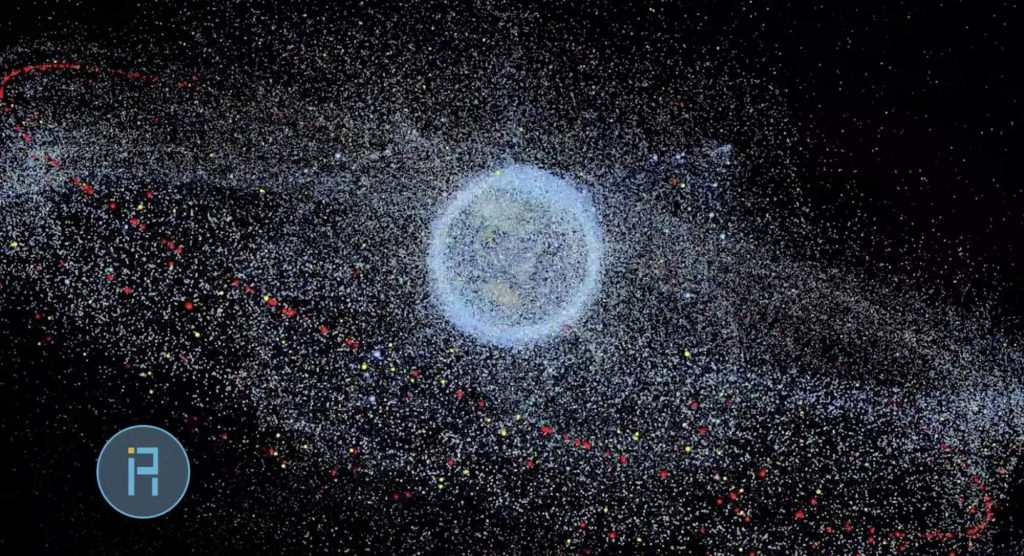
NASA file identifies cost-effective approaches to facing orbital debris
Orbital debris, often referred to as space junk, poses an increasing threat to satellites, space missions, and future space exploration. As the number of satellites in Earth's orbit grows exponentially, the risks associated with collisions and debris accumulation escalate. NASA’s recent report sheds light on cost-effective approaches to tackling this challenge, focusing on both mitigation and remediation strategies. By analyzing various methods through a cost-benefit lens, the report offers valuable insights for policymakers, space agencies, and commercial operators aiming to maintain sustainable space environments. This article delves into the key findings of NASA’s report, exploring the most promising and economically viable solutions to manage orbital debris.
Understanding the Orbital Debris Challenge
Orbital debris consists of defunct satellites, spent rocket stages, fragments from disintegration, erosion, and collisions, all orbiting Earth at high velocities. Even small debris pieces can cause significant damage to operational spacecraft due to their tremendous speeds. The accumulation of this debris increases the risk of collisions, which can generate more fragments and exacerbate the problem in a cascading effect known as the Kessler Syndrome.
The growing reliance on satellite technology for communication, navigation, weather forecasting, and scientific research makes managing orbital debris a critical priority. Without effective measures, the risk of damaging collisions threatens not only current assets but also future space missions and the long-term usability of certain orbital regions.
NASA’s recent report addresses this pressing issue by evaluating various debris mitigation and remediation strategies. The goal is to identify approaches that maximize benefits while minimizing costs, ensuring that efforts to manage orbital debris are both effective and economically sustainable.
Reducing Post-Mission Disposal Time: A Cost-Effective Strategy
One of the most cost-effective approaches highlighted by NASA is reducing the post-mission disposal time of satellites. This term refers to the duration a satellite remains in orbit after it completes its operational mission before it is deorbited or moved to a graveyard orbit. Currently, U.S. government regulations align with international guidelines recommending disposal within 25 years.
However, the Federal Communications Commission (FCC) has adopted stricter rules requiring satellites to be deorbited within five years after mission completion, effective from September 2023. NASA’s analysis reveals that even moderate reductions in disposal timeframes, such as shifting to a 15-year rule, can produce benefits 20 to 750 times greater than the associated costs, potentially generating up to $6 billion in savings over 30 years.
Shorter disposal times reduce the likelihood of defunct satellites becoming collision hazards or contributing to debris fields. The report suggests that immediate post-mission deorbiting could yield up to $9 billion in salvage benefits, though with lower cost-benefit ratios compared to slightly longer timeframes. Overall, reducing disposal time consistently results in cost-benefit ratios above one, indicating that the economic advantages outweigh implementation costs.
Advancements in Debris Remediation Techniques
Beyond mitigation, NASA’s report explores remediation methods aimed at actively removing existing debris from orbit. Among these, “just-in-time” collision avoidance stands out as particularly promising. This approach involves using lasers or other technologies to gently nudge debris pieces, preventing potential collisions with operational spacecraft.
The cost-benefit analysis conducted in the report places these remediation techniques on par with the most effective mitigation strategies. Despite some uncertainties in performance and cost estimates, remediation could be equally or even more beneficial than current mitigation and monitoring efforts.
Implementing active debris removal could slow or reverse debris accumulation trends, enhancing orbital safety. These technologies, while still under development, represent a proactive step toward sustainable space operations and could complement regulatory measures like reduced disposal times.
Enhancing Spacecraft Protection and Monitoring Systems
Another key finding in the NASA report is the value of incorporating some level of shielding on spacecraft to protect them from debris impacts. While shielding adds weight and cost to spacecraft design, it can prevent damage from smaller debris particles that are difficult to track or avoid.
Additionally, improving monitoring systems for ‘high-risk’ conjunctions—situations where two objects come dangerously close—enables satellite operators to make more informed decisions about collision avoidance maneuvers. Enhanced tracking accuracy and timely alerts reduce unnecessary maneuvers and fuel consumption, optimizing operational efficiency.
The report notes that while shielding and improved monitoring offer tangible benefits, uncertainties remain, particularly regarding the cost-effectiveness of shielding. Nevertheless, these approaches contribute to a layered defense strategy against orbital debris risks.
Evaluating Less Effective Approaches: The Case of Spacecraft Passivation
Not all debris mitigation measures yield favorable cost-benefit outcomes. NASA’s report specifically highlights spacecraft passivation—the process of depleting residual energy sources such as batteries and propellant tanks to prevent explosions—as less effective economically.
Even under optimistic scenarios, passivation fails to produce net savings over 30 years. The costs associated with implementing passivation measures exceed the benefits derived from reducing debris-producing explosions. This finding challenges assumptions about the universal effectiveness of passivation in debris management.
While passivation remains a recommended safety practice to minimize explosion risks, its economic impact appears limited compared to other mitigation and remediation strategies. This insight encourages stakeholders to prioritize resources toward more impactful solutions.
The Role of Policy and Regulatory Frameworks
Effective management of orbital debris requires robust policy frameworks and international cooperation. NASA’s findings support regulatory actions like the FCC’s recent mandate to shorten post-mission disposal times, demonstrating these rules’ economic and operational benefits.
Global alignment on debris mitigation standards is critical to prevent regulatory arbitrage, where operators choose jurisdictions with lax rules. Such alignment ensures consistent application of best practices and fosters shared responsibility among nations and commercial entities.
Moreover, incentivizing adoption of remediation technologies and improved monitoring through policy mechanisms, such as funding support or operational requirements, can accelerate progress toward sustainable space environments. NASA’s cost-benefit analyses provide valuable data to inform these policy decisions.
Future Directions and Technological Innovations
The evolving space environment demands continuous innovation in debris management technologies. NASA’s report underscores the potential of emerging methods like laser-based debris nudging and advanced tracking algorithms to enhance collision avoidance capabilities.
Research into autonomous debris removal vehicles, on-orbit servicing, and improved materials for spacecraft shielding also holds promise. These technologies could reduce debris generation and facilitate the safe operation of increasingly crowded orbits.
As commercial space activities expand, integrating cost-effective debris management solutions into satellite design and mission planning will be essential. Collaborative efforts between government agencies, industry, and academia can accelerate technology maturation and deployment.
Balancing Costs and Benefits for Sustainable Space Operations
NASA’s comprehensive cost-benefit approach provides a valuable framework for evaluating debris management strategies. By quantifying benefits and costs in monetary terms, stakeholders can prioritize interventions that deliver the greatest value.
The report highlights that many mitigation and remediation measures yield positive returns on investment, supporting their adoption to safeguard orbital environments. However, uncertainties in data and technology performance necessitate ongoing assessment and adaptation.
Ultimately, balancing economic considerations with technical feasibility and operational requirements will be key to developing effective, sustainable solutions that ensure the long-term viability of space activities for all users.
Conclusion
NASA’s recent report provides a comprehensive evaluation of strategies to manage orbital debris, emphasizing cost-effectiveness and practical implementation. Reducing post-mission disposal times emerges as a highly beneficial approach, supported by advancements in debris remediation technologies and improved monitoring systems. While some measures like spacecraft passivation show limited economic returns, the overall findings encourage a multifaceted approach combining mitigation, remediation, policy, and technology. As space activities continue to grow, adopting these cost-effective strategies will be crucial to preserving the safety and sustainability of Earth’s orbital environment for future generations.
Originally reported by spacenews.com. Adapted for our readers.
Recent advances in machine perfusion technology are not only preserving donated livers but also making them biologically younger at a molecular level. This breakthrough…
What happens when human imagination, artificial intelligence, art and technology come together? From September 1 to 6, Samsung Electronics presented a special exhibition themed…