NASA crew launched for simulated Mars mission subsequent month
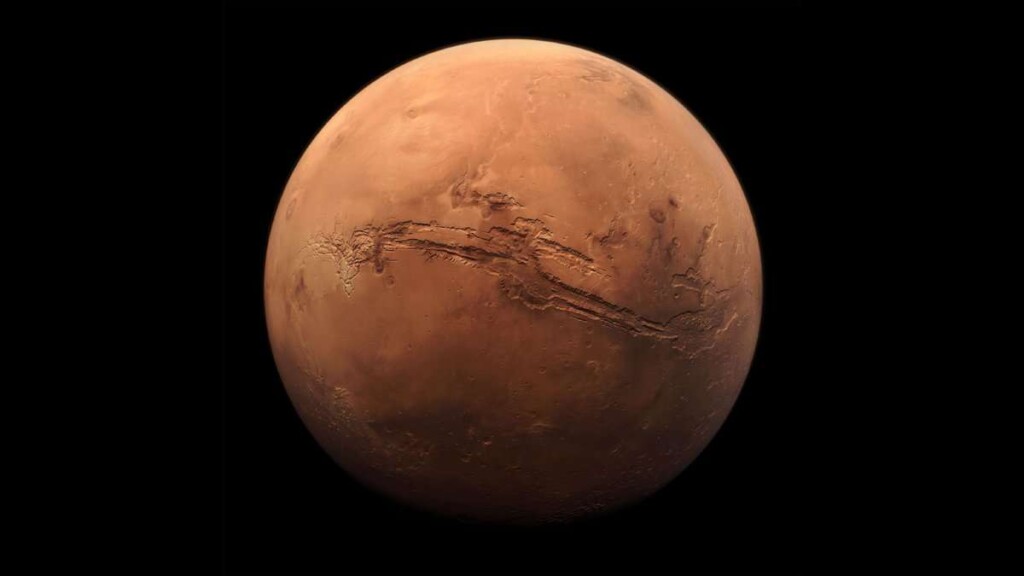
As humanity edges closer to sending astronauts to Mars, NASA is undertaking critical preparatory steps to understand the complexities of long-duration space travel. Next month, a select crew of four volunteers will embark on a 45-day simulated Mars mission inside a specially designed habitat at NASA's Johnson Space Center in Houston. This analog mission will replicate the isolation, confinement, communication delays, and operational scenarios expected on actual Martian expeditions. Through this immersive simulation, NASA aims to gather invaluable data on human health, behavior, and mission logistics that will inform the planning and success of future crewed missions to the Red Planet.
Overview of the NASA Simulated Mars Mission
Scheduled to commence in early May and run through mid-June, NASA's upcoming analog mission will place four crew members in a habitat that mimics living and working conditions on Mars. The Human Exploration Research Analog (HERA) habitat, located at the Johnson Space Center, is engineered to replicate the environmental and operational constraints astronauts would face on the Martian surface.
The crew members—Jason Lee, Stephanie Navarro, Shareef Al Romaithi, and Piyumi Wijesekara—have been carefully selected for their skills and ability to adapt to the mission’s rigorous demands. Two alternate astronauts, Jose Baca and Brandon Kent, will also support the mission in case of contingencies.
During the 45-day mission, the crew will conduct scientific experiments, perform operational tasks, and simulate communication with mission control on Earth, which includes realistic time delays to reflect the up to five-minute lag in real Mars-Earth transmissions.
The Role of the Human Exploration Research Analog (HERA) Habitat
HERA serves as NASA’s primary ground-based analog for studying the effects of isolation and confinement on astronauts during deep space missions. The habitat's design replicates the limited living space, life support systems, and environmental controls that would be present on Mars.
Inside HERA, crew members experience the psychological and physical challenges of living in a closed environment, including restricted mobility and limited social interaction. This helps researchers assess factors such as stress, teamwork, cognitive function, and physical health over extended periods.
The habitat is also equipped with virtual reality tools that enable the crew to simulate extravehicular activities on the Martian surface. These immersive experiences help prepare astronauts for the operational demands of exploration missions and provide valuable data on human-machine interaction in space.
Scientific Objectives and Human Health Research
One of the central goals of the mission is to study how isolation, confinement, and communication delays impact human physiology and psychology. Researchers will monitor variables such as sleep patterns, cognitive performance, stress levels, and mood to understand how long-duration missions could affect astronaut well-being.
The mission is part of NASA’s Human Research Program (HRP), which seeks to identify risks to astronaut health and develop countermeasures to mitigate them. Collaboration with international space agencies like the European Space Agency (ESA) and the Mohammed Bin Rashid Space Centre (MBRSC) enhances the scientific rigor and scope of these studies.
Data collected during the mission will inform protocols for mental health support, physical fitness, nutrition, and habitat design to ensure astronauts remain healthy and effective during future Mars missions.
Operational Training and Mission Simulation
Beyond health research, the simulated mission provides a platform for astronauts to practice mission-critical operations such as scientific data collection, habitat maintenance, and emergency response procedures.
The crew will experience communication delays that mimic the time lag between Mars and Earth, forcing them to operate with greater autonomy and problem-solving capability. This helps refine mission protocols and decision-making frameworks for real deep space missions.
Additionally, the integration of virtual reality scenarios and simulated extravehicular activities allows the crew to develop skills necessary for conducting surface exploration and sample collection on Mars.
Crew Member Profiles and Selection Process
The four primary crew members—Jason Lee, Stephanie Navarro, Shareef Al Romaithi, and Piyumi Wijesekara—were selected based on their expertise, psychological resilience, and ability to work collaboratively in confined environments.
Each crew member brings unique skills to the mission, including backgrounds in engineering, science, and medicine, which are critical for conducting research and maintaining habitat systems during the simulation.
The selection process involved rigorous physical and psychological evaluations to ensure the crew can withstand the stresses of isolation and perform complex tasks autonomously, reflecting the demands of actual Mars exploration missions.
Comparison with Longer-Duration Analog Missions
While this mission is set for 45 days, NASA also conducts longer analog simulations such as the Crew Health and Performance Exploration Analog (CHPEA), which simulates up to a year-long Mars mission at a separate facility within Johnson Space Center.
Longer missions allow for more comprehensive study of the cumulative effects of isolation and confinement, providing insights into the endurance and adaptability of astronauts over extended periods.
Data from these varied duration missions collectively contribute to refining habitat design, crew selection, and mission planning for eventual human expeditions to Mars.
Implications for Future Mars Exploration
Simulated missions like this serve as vital stepping stones toward achieving NASA’s goal of sending humans to Mars in the coming decades. They provide empirical data that informs spacecraft design, life support systems, and mission operations.
Understanding how humans respond to extended isolation and communication delays helps engineers and mission planners develop technologies and protocols that promote crew safety and mission success.
Moreover, these analog missions foster international collaboration and interdisciplinary research, strengthening the global effort to explore Mars and expand humanity’s presence beyond Earth.
Conclusion
NASA’s upcoming simulated Mars mission represents a pivotal effort in the journey toward human exploration of the Red Planet. By immersing a carefully selected crew in a habitat that replicates the challenges of Martian living, researchers gain essential insights into maintaining astronaut health, optimizing mission operations, and overcoming the unique obstacles of deep space travel. These analog missions not only refine technological and procedural solutions but also prepare humanity psychologically and physically for the profound adventure of setting foot on Mars. As NASA continues to push the boundaries of exploration, such simulations will remain indispensable in ensuring that when astronauts finally journey to Mars, they do so equipped with the knowledge and resilience needed for success.
Originally reported by space.com. Adapted for our readers.
Recent advances in machine perfusion technology are not only preserving donated livers but also making them biologically younger at a molecular level. This breakthrough…
What happens when human imagination, artificial intelligence, art and technology come together? From September 1 to 6, Samsung Electronics presented a special exhibition themed…