
AI Trends & News
Surface Laptop Ultra Pre-orders Open: Price, Release Date and AI Features
Microsoft opens Surface Laptop Ultra pre-orders from US$2,599.99. Explore its launch date, NVIDIA RTX Spark features and implications for Nigerian businesses.
TAMFIS NIG LTDRC 8067447CAC ACTIVEFinima, Bonny Island, Rivers State

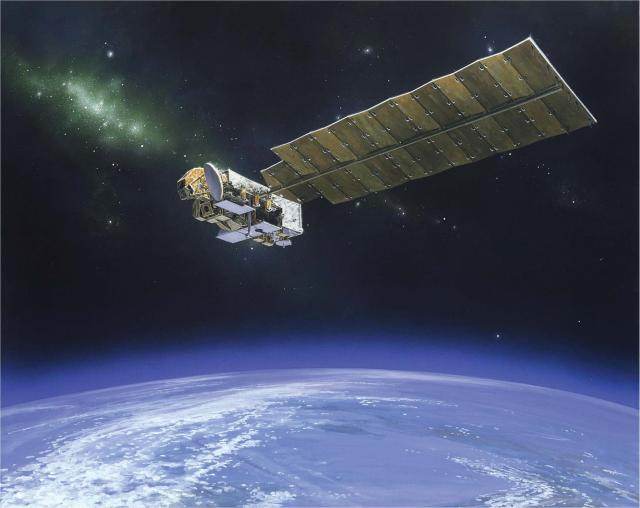
Launched on July 15, 2004, NASA’s Aura satellite embarked on a groundbreaking mission to monitor Earth’s atmosphere with unprecedented precision. As part of NASA’s Earth Observing System, Aura has been instrumental in studying atmospheric chemistry, air quality, and climate interactions. Celebrating its 20th anniversary, Aura’s contributions have transformed scientific research, informing policy decisions and enhancing our understanding of the planet’s protective layers and pollution dynamics. This article delves into Aura’s key milestones, scientific discoveries, and ongoing impact on Earth observation.
NASA’s Aura satellite was launched as a dedicated atmospheric chemistry mission designed to observe the composition and dynamics of Earth's atmosphere. Positioned in a polar sun-synchronous orbit, Aura provides global coverage, enabling scientists to monitor trace gases, aerosols, and pollutants that influence climate and air quality. Its suite of advanced instruments delivers detailed measurements critical for understanding atmospheric processes from the stratosphere to the troposphere.
Aura’s primary objectives include studying the ozone layer, air pollution, and the interactions between atmospheric chemistry and climate change. The satellite carries four key instruments: the Ozone Monitoring Instrument (OMI), the Tropospheric Emission Spectrometer (TES), the Microwave Limb Sounder (MLS), and the High Resolution Dynamics Limb Sounder (HIRDLS). Together, these tools provide comprehensive data on ozone, nitrogen dioxide, sulfur dioxide, and other vital atmospheric compounds.
Over its 20 years in orbit, Aura has continuously supplied scientists with high-resolution global data sets, enabling breakthroughs in understanding the Earth’s protective atmosphere. Its long-term observations have been crucial for tracking environmental changes, evaluating policy effectiveness, and guiding new scientific missions focused on atmospheric health.
One of Aura’s most celebrated contributions has been its detailed monitoring of the ozone hole over Antarctica. Shortly after its launch, Aura’s first publicly released images dramatically illustrated the depletion of ozone in the stratosphere, providing visual and quantitative evidence of the environmental crisis. These observations have been vital in assessing the effectiveness of international agreements like the Montreal Protocol.
In 2018, Aura data confirmed a significant decline in atmospheric chlorine levels, directly linking this reduction to the recovery of the ozone layer. Scientists observed about 20% less ozone depletion during the Antarctic winter of 2016 compared to 2005. This milestone marked the first time satellite data conclusively demonstrated the positive impact of global efforts to phase out chlorofluorocarbons (CFCs) and other harmful chemicals.
Aura continues to monitor the ozone layer’s health, providing critical information about seasonal variations and long-term trends. This ongoing surveillance ensures that any new threats to the ozone layer can be detected early, helping policymakers and scientists maintain momentum toward atmospheric protection.
Beyond ozone, Aura has been instrumental in mapping air pollution worldwide. Using data from the Ozone Monitoring Instrument and other sensors, NASA scientists have produced high-resolution global maps of key pollutants such as nitrogen dioxide (NO2), sulfur dioxide (SO2), and aerosols. These maps have revealed important trends in air quality across continents and major urban centers.
Between 2005 and 2015, Aura data showed that regions like the United States, Europe, and Japan experienced improved air quality due to stringent emission regulations. Conversely, rapidly industrializing areas including China, India, and the Middle East saw increases in pollution levels, highlighting the environmental challenges accompanying economic growth. These insights have informed international efforts to balance development with environmental sustainability.
Aura’s ability to detect and quantify pollutants invisible to the naked eye has also supported public health initiatives. For example, data from Aura’s OMI helped demonstrate reductions in NO2 levels in U.S. cities following the Clean Air Act, providing scientific validation for air quality policies aimed at reducing respiratory illnesses and environmental damage.
Aura’s data has illuminated how human activities and natural phenomena affect atmospheric composition. For instance, the satellite tracked air quality changes resulting from the COVID-19 pandemic’s global economic slowdown. Satellite and ground-based observations revealed significant short-term reductions in pollutants like nitrogen dioxide, offering a unique perspective on the relationship between human behavior and air pollution.
In addition to anthropogenic sources, Aura has monitored natural emissions such as volcanic sulfur dioxide. By compiling a global inventory of volcanic SO2 emissions from 2005 to 2015, Aura data has enhanced climate models and improved understanding of volcanic impacts on atmospheric chemistry and radiative forcing.
Aura has also observed ‘ship tracks’—bright, linear cloud formations caused by particulate emissions from ships. These observations have shed light on how maritime pollution interacts with cloud properties and climate, underscoring the complex interplay between human industry and natural atmospheric processes.
Aura’s success stems from its cutting-edge instruments, each designed to capture specific atmospheric components with high accuracy. The Ozone Monitoring Instrument (OMI) employs ultraviolet and visible light spectroscopy to detect trace gases and aerosols, enabling precise air quality assessments. OMI’s data has been foundational for numerous environmental studies and policy evaluations.
The Tropospheric Emission Spectrometer (TES) analyzes infrared radiation to provide detailed vertical profiles of atmospheric gases, offering insights into chemical processes occurring at different altitudes. Meanwhile, the Microwave Limb Sounder (MLS) measures microwave emissions to study ozone, water vapor, and other constituents in the upper atmosphere.
Together, these instruments have pioneered methodologies for remote atmospheric sensing, setting standards for subsequent missions. Aura’s technological innovations paved the way for newer satellites like the Plankton, Aerosol, Cloud, ocean Ecosystem (PACE) mission and the Tropospheric Emissions: Monitoring of Pollution (TEMPO) mission, which continue to advance Earth observation capabilities.
After 20 years of continuous operation, Aura stands as a testament to the power of long-term Earth observation. Its extensive data archives enable scientists to analyze atmospheric changes over two decades, providing a rare and invaluable resource for climate and environmental research. This longevity has been critical for detecting subtle trends and validating climate models.
Aura’s mission success has inspired a new generation of atmospheric satellites and instruments. The data and techniques developed by Aura’s team have informed the design of missions that aim to expand coverage, improve resolution, and explore new atmospheric phenomena. Future satellites will build upon Aura’s foundation, enhancing our ability to monitor and protect the planet’s atmosphere.
Moreover, Aura’s contributions have strengthened global collaborations among scientists, policymakers, and environmental agencies. By providing transparent, accessible, and reliable atmospheric data, Aura supports international efforts to address climate change, pollution, and ozone layer protection, fostering a more informed and proactive approach to Earth stewardship.
Over its two decades in orbit, Aura has not only advanced scientific knowledge but also played a vital role in public education and awareness. NASA has utilized Aura’s striking images and data visualizations to communicate complex atmospheric issues in accessible ways, helping the public understand the importance of air quality and ozone protection.
Educational programs and outreach initiatives have incorporated Aura’s findings to inspire students and communities worldwide. By showcasing real-time data and satellite imagery, NASA encourages engagement with environmental science and promotes informed discussions on climate and pollution challenges.
Aura’s mission has demonstrated how space technology can directly benefit society by providing actionable information for health, safety, and environmental policy. Its legacy includes fostering a greater appreciation for Earth’s atmosphere and the need for sustained observation and protection.
Celebrating 20 years in orbit, NASA’s Aura satellite stands as a landmark achievement in Earth observation. Its pioneering instruments and comprehensive data have revolutionized our understanding of atmospheric chemistry, ozone dynamics, and global air quality. Aura’s enduring legacy continues to inform science, policy, and public awareness, ensuring that we remain vigilant stewards of our planet’s atmosphere. As we look to the future, Aura’s contributions will guide new missions and research, helping humanity confront the challenges posed by climate change and environmental pollution with ever greater precision and insight.
Originally reported by science.nasa.gov. Adapted for our readers.
Keep reading
AI Trends & News
Microsoft opens Surface Laptop Ultra pre-orders from US$2,599.99. Explore its launch date, NVIDIA RTX Spark features and implications for Nigerian businesses.
Science & Technology
DJI’s IBC recognition puts pocket gimbal and panoramic capture in the spotlight. Here is how creators can assess framing, editing effort and recording workflows.
Business News
App store steering is about more than permission to add a link. Explore fees, renewal terms, customer experience and the UK consultation.
TAMFIS NIG LTD
Electrical and instrumentation engineering, bid preparation and consulting, IT and software.

