NASA Begins New Deployable Solar Array Tech Demo on Pathfinder Spacecraft
In August 2024, NASA launched the Pathfinder Technology Demonstrator-4 (PTD-4) spacecraft equipped with a novel deployable solar array technology known as LISA-T (Lightweight Integrated Solar Array and Antenna). This technology demonstration aims to validate a thin-film, flexible solar array integrated with communication antennas, designed to significantly improve power and communication capabilities for small spacecraft operating in deep space. The successful deployment and operation of LISA-T could revolutionize spacecraft design by offering higher power density, lower mass, and compact stowage volumes essential for future missions beyond Earth orbit.
Overview of the Pathfinder Technology Demonstrator-4 Mission
The Pathfinder Technology Demonstrator-4 (PTD-4) mission represents NASA’s commitment to advancing small spacecraft capabilities through innovative technology demonstrations. Launched aboard SpaceX's Transporter-11 rocket from Vandenberg Space Force Base, PTD-4 serves as a platform to test new technologies in orbit at a relatively low cost and manageable risk. The spacecraft bus, named Triumph, was developed by Terran Orbital Corporation and hosts the LISA-T payload, the mission’s primary experiment.
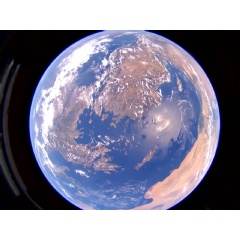
PTD-4’s mission focuses on validating the deployment, operation, and environmental survivability of thin-film solar arrays integrated with antenna systems. The spacecraft’s onboard camera has already provided initial images of Earth, confirming the systems’ health and readiness for the LISA-T technology demonstration. This mission is part of the broader Pathfinder Technology Demonstration series funded by NASA’s Small Spacecraft Technology program, which aims to increase the capabilities of small spacecraft for science and exploration.
The PTD-4 mission is managed by NASA’s Space Technology Mission Directorate and supported by the Marshall Space Flight Center in Huntsville, Alabama, which designed and built the LISA-T system and its avionics. By leveraging commercial platforms and innovative technology, PTD-4 enables NASA to test high-impact technologies with a high probability of success and valuable data return.
Introducing LISA-T: Lightweight Integrated Solar Array and Antenna
LISA-T is a pioneering technology that integrates a deployable solar array with communication antennas into a single, lightweight, flexible system. The solar array consists of four thin-film petals that unfold from a central boom, delivering both power generation and communication capabilities. This integration reduces the overall spacecraft mass and volume compared to traditional solar panels and separate antennas, making it ideal for small spacecraft with strict size and weight constraints.
The thin-film solar cells used in LISA-T offer significant advantages, including lower mass and stowed volume, while producing approximately three times more power per unit mass and volume than conventional rigid solar arrays. This increased power density is crucial for small spacecraft, especially those venturing into deep space where sunlight intensity is lower and power demands are higher.
The central boom deployment pushes the folded petals nearly one meter away from the spacecraft bus, enabling efficient power generation and antenna functionality. This deployment mechanism is a critical aspect of the demonstration, as it involves managing large, flexible, non-metallic structures in the harsh space environment, a challenge that NASA is addressing through this mission.
Challenges in Deploying Thin-Film Solar Arrays in Space
Deploying large, thin-film solar arrays in space presents unique engineering challenges. Unlike traditional rigid panels, thin-film arrays are highly flexible and have a high area-to-mass ratio, making them susceptible to mechanical stresses, vibrations, and environmental factors such as temperature fluctuations and radiation. Ensuring reliable deployment without damage is a key focus of the LISA-T demonstration.
The central boom’s full extension is critical to unfolding the solar petals properly. Initial operations encountered challenges in fully extending the boom, highlighting the complexities involved in deploying flexible structures remotely in orbit. NASA’s mission team is actively working to resolve these issues to proceed with petal deployment and power generation testing.
Environmental survivability is another concern. The arrays must withstand the vacuum of space, micrometeoroid impacts, and thermal cycling while maintaining structural integrity and operational efficiency. Testing these factors in orbit provides invaluable data to refine future designs and ensure mission reliability for long-duration deep space missions.
Significance of LISA-T for Small Spacecraft and Deep Space Missions
Small spacecraft are increasingly important for scientific exploration and commercial applications, but their power and communication capabilities have been limited by existing solar array technologies. LISA-T addresses these limitations by offering a lightweight, compact, and high-power solution that enables small spacecraft to perform more complex missions and operate farther from Earth.
The integration of power generation and communication antennas into a single deployable system simplifies spacecraft design and reduces the need for multiple subsystems, decreasing overall mission complexity and cost. This advancement is particularly critical for deep space missions where spacecraft must be self-sufficient and capable of transmitting large volumes of data back to Earth.
By demonstrating the practical deployment and operation of thin-film solar arrays in orbit, LISA-T paves the way for future missions that require enhanced power and communication capabilities without increasing spacecraft size or mass. This technology could enable new classes of small spacecraft for planetary exploration, Earth observation, and scientific research beyond low Earth orbit.
NASA’s Approach to Technology Demonstrations with Pathfinder Series
The Pathfinder Technology Demonstration series exemplifies NASA’s strategy of leveraging commercial spacecraft platforms to test innovative technologies in space. By using smaller, lower-cost spacecraft, NASA can take calculated risks to validate cutting-edge systems like LISA-T while minimizing financial exposure and accelerating technology readiness levels.
Each Pathfinder mission focuses on specific technologies that have the potential to transform spacecraft capabilities. PTD-4’s focus on deployable thin-film solar arrays and integrated antennas reflects NASA’s recognition of the need for new power and communication solutions to support ambitious exploration goals.
This approach allows NASA to gather critical flight data and operational experience in real space conditions, which is essential for refining designs and scaling up technologies for future flagship missions. The success of the Pathfinder series will influence the development of next-generation spacecraft architectures.
Collaborative Efforts Behind LISA-T and PTD-4 Development
The development of LISA-T and the PTD-4 spacecraft is the result of collaboration between NASA centers and commercial partners. NASA’s Marshall Space Flight Center led the design and fabrication of the LISA-T system and its avionics, ensuring integration with the spacecraft bus and mission objectives.
Terran Orbital Corporation of Irvine, California, developed and built the PTD-4 spacecraft bus, leveraging its expertise in small satellite platforms. This partnership highlights the role of commercial industry in supporting NASA’s technology demonstration missions and the growing synergy between government and private sector space efforts.
Funding and management of the PTD-4 mission come from NASA’s Small Spacecraft Technology program, based at Ames Research Center in Silicon Valley. This program supports innovation in small spacecraft technology to expand NASA’s exploration capabilities and foster new commercial space applications.
Future Prospects and Applications of Deployable Solar Array Technologies
The successful demonstration of LISA-T will open new possibilities for spacecraft design, enabling more efficient power and communication systems for a wide range of missions. Future small spacecraft could carry larger, more powerful solar arrays that deploy compactly, maximizing available surface area without increasing launch volume or mass.
Beyond deep space exploration, deployable thin-film solar arrays could benefit Earth observation satellites, telecommunications, and scientific missions requiring reliable, high-density power sources. Their flexibility and lightweight nature also make them suitable for integration with new spacecraft architectures, including modular and reconfigurable systems.
As space missions become more ambitious and diverse, technologies like LISA-T will be essential to overcoming power and communication constraints. Continued development and testing will focus on enhancing durability, deployment mechanisms, and integration with advanced spacecraft systems, ensuring these arrays meet future mission demands.
Conclusion
NASA’s Pathfinder Technology Demonstrator-4 mission marks a significant milestone in advancing spacecraft power and communication technologies through the LISA-T deployable solar array and antenna system. By successfully deploying and operating this innovative thin-film, flexible array in orbit, NASA is paving the way for more capable, lightweight small spacecraft that can meet the demanding power and data needs of future deep space exploration. The PTD-4 mission exemplifies NASA’s strategic approach of leveraging commercial spacecraft platforms to validate transformative technologies efficiently and cost-effectively. As LISA-T continues its operations, the data and experience gained will inform the design of next-generation spacecraft, enabling ambitious missions that push the boundaries of human knowledge and presence in space.
Originally reported by webwire.com. Adapted for our readers.
Recent advances in machine perfusion technology are not only preserving donated livers but also making them biologically younger at a molecular level. This breakthrough…
What happens when human imagination, artificial intelligence, art and technology come together? From September 1 to 6, Samsung Electronics presented a special exhibition themed…