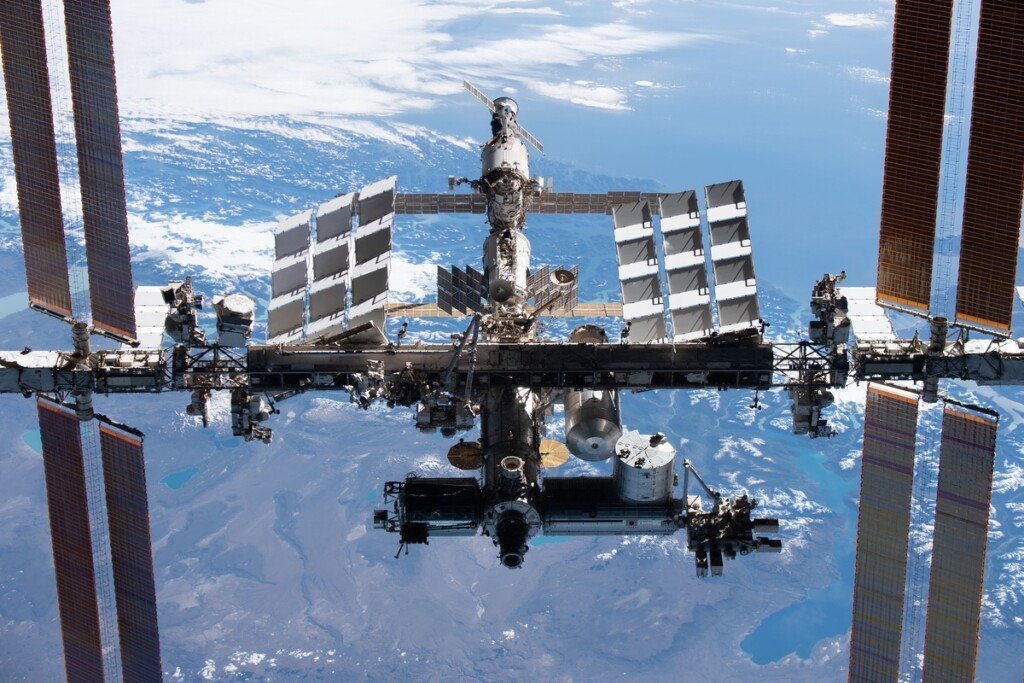
NASA awards SpaceX contract for space station deorbit vehicle
In a landmark decision, NASA has selected SpaceX to build the United States Deorbit Vehicle (USDV), a specialized spacecraft tasked with the critical mission of safely deorbiting the International Space Station (ISS) around 2030. Valued at up to $843 million, this contract marks a significant step towards responsibly retiring the ISS, which has been a symbol of international cooperation and scientific advancement in low Earth orbit for over two decades. This article delves into the contract specifics, the rationale behind the deorbiting plan, and the technical and operational challenges involved in this complex endeavor.
Details of the NASA-SpaceX USDV Contract
On June 26, NASA officially awarded SpaceX a contract valued at up to $843 million to design and develop the United States Deorbit Vehicle (USDV). This spacecraft will be responsible for the final deorbiting maneuvers of the International Space Station, ensuring its controlled reentry into Earth’s atmosphere. The contract covers the development phase, with NASA planning a separate procurement for the USDV’s launch services.
The USDV contract is a culmination of NASA's intent announced over a year ago to pursue a dedicated deorbit vehicle for the ISS. Unlike cargo or crew transportation, the USDV will be owned and operated directly by NASA, highlighting the mission’s critical nature. This approach ensures NASA maintains control over the deorbit process, which is vital for safety and international coordination.
Though NASA has not disclosed specific design details or visuals of the USDV, industry analysts expect the spacecraft to be based on SpaceX’s proven Dragon platform. The Dragon spacecraft currently supports cargo and crew missions to the ISS, making it a logical foundation for a vehicle tasked with such a high-stakes operation.
Rationale Behind the ISS Deorbiting Mission
The International Space Station has been operational since 1998 and has served as a cornerstone of human spaceflight and scientific research. However, as its operational lifespan nears its end, NASA and its international partners have prioritized a safe and responsible deorbiting strategy to mitigate risks associated with uncontrolled reentry.
NASA released a comprehensive white paper outlining the decision-making process that led to selecting controlled deorbiting as the preferred method to retire the ISS. Alternatives such as dismantling the station in orbit, repurposing its modules, or boosting it to a higher orbit were thoroughly evaluated but ultimately deemed unfeasible due to technical, logistical, and ownership challenges.
The white paper emphasized that controlled deorbiting over remote ocean areas, like the South Pacific Ocean Uninhabited Area, is the safest and most viable option. This approach minimizes the risk to human life and property on Earth, ensuring the ISS's legacy concludes responsibly.
Technical Challenges in Designing the USDV
Developing the USDV presents unique technical hurdles. The spacecraft must reliably dock with the massive ISS and execute a series of complex maneuvers to slow down and guide the station into a controlled reentry trajectory. This requires high redundancy and robust anomaly recovery systems to guarantee mission success on its first and only flight.
NASA’s solicitation for the USDV emphasized the importance of vehicle reliability and fail-safe capabilities. Given the ISS’s size—comparable to a football stadium—and the critical nature of the deorbit burn, any failure could result in uncontrolled reentry, posing severe risks.
SpaceX’s experience with the Dragon spacecraft’s autonomous docking and reentry systems provides a strong foundation. However, adapting the design to handle the ISS’s mass and unique operational requirements will require significant engineering innovation and rigorous testing.
Financial Aspects and Program Funding
The awarded contract’s value of $843 million aligns closely with NASA’s internal cost estimates for the USDV program, which were initially projected to be just under $1 billion. This budget covers the design, development, and testing phases but excludes launch services, which will be procured separately.
NASA has actively sought to balance program costs with industry capabilities, requesting $180 million in fiscal year 2024 and $109 million for 2025 to ensure steady progress. However, recent congressional hearings revealed that NASA Administrator Bill Nelson has suggested the total program cost might rise to $1.5 billion due to unforeseen complexities.
Nelson has urged lawmakers to include full funding for the USDV in emergency appropriations, citing geopolitical uncertainties and the critical need to safely deorbit the ISS by 2031. This highlights the program’s strategic importance beyond technical and financial considerations.
Operational Role and Ownership of the USDV
Unlike commercial cargo and crew vehicles, which NASA procures as services, the USDV will be owned and operated directly by NASA. This distinction underscores the mission’s critical safety and regulatory significance, requiring direct agency control over the vehicle’s operations and mission timeline.
The USDV will dock with the ISS to initiate the deorbit sequence, performing the final burns to lower the station’s orbit and guide it towards a controlled reentry path. This operation will likely involve coordination with international partners, given the ISS’s multinational ownership and the need for transparency in orbital operations.
Ownership by NASA also ensures compliance with international treaties and agreements governing space assets and their disposal. This approach helps maintain trust among ISS partners and sets a precedent for responsible end-of-life spacecraft management.
Future Prospects and Timeline for ISS Deorbiting
The deorbiting of the ISS is currently planned for around 2030, though NASA’s contract includes options to store the USDV on the ground until the mid-2030s. This flexibility accounts for potential extensions of the ISS’s operational life, which could be influenced by scientific priorities, international agreements, or technological developments.
NASA and its partners continue to assess the ISS’s condition and mission relevance, with the USDV program designed to be ready whenever deorbiting becomes necessary. This readiness approach ensures that NASA can respond promptly to changing circumstances, including geopolitical or technical emergencies.
Looking beyond the ISS, the USDV program establishes a framework for future deorbiting missions of large orbital structures. Lessons learned from this project will inform best practices for space station end-of-life procedures and debris mitigation strategies.
Implications for Space Safety and Debris Mitigation
The controlled deorbiting of the ISS via the USDV represents a crucial advancement in space debris mitigation. By ensuring the station reenters Earth’s atmosphere safely, NASA reduces the risk of large debris surviving reentry and impacting populated areas.
This mission sets a precedent for responsible management of large space assets at their end of life. With the growing number of satellites and orbital structures, effective deorbiting strategies are essential to maintain a sustainable space environment and prevent collisions that could generate hazardous debris fields.
Moreover, the USDV project highlights international cooperation in space safety. The ISS’s multinational ownership means that its deorbiting must be conducted transparently and collaboratively, reinforcing global norms and agreements on space operations.
SpaceX’s Role and Industry Impact
SpaceX’s selection for the USDV contract underscores the company’s expanding role in critical NASA missions beyond crew and cargo transportation. This contract enhances SpaceX’s portfolio and demonstrates NASA’s trust in its engineering capabilities for high-stakes missions.
While SpaceX has not publicly shared design specifics for the USDV, its experience with the Dragon spacecraft provides a strong technological base. The project will likely push SpaceX to innovate further, adapting systems to meet the unique demands of deorbiting the largest human-made structure in orbit.
This contract also signals a broader trend in NASA’s collaboration with commercial partners for specialized space technologies. By leveraging commercial innovation and expertise, NASA aims to achieve cost-effective and reliable solutions for complex space operations.
Conclusion
The awarding of the USDV contract to SpaceX marks a pivotal moment in the lifecycle management of the International Space Station and in the evolution of space safety protocols. As the ISS approaches the end of its operational life, NASA’s commitment to a controlled, safe deorbit ensures that this symbol of global scientific collaboration concludes its mission responsibly. SpaceX’s expertise combined with NASA’s strategic oversight promises a pioneering approach to deorbiting one of humanity’s most significant space assets. The USDV program not only addresses immediate safety concerns but also lays the groundwork for future sustainable space operations, reinforcing international partnerships and advancing our capabilities in orbital asset management.
Originally reported by spacenews.com. Adapted for our readers.
Recent advances in machine perfusion technology are not only preserving donated livers but also making them biologically younger at a molecular level. This breakthrough…
What happens when human imagination, artificial intelligence, art and technology come together? From September 1 to 6, Samsung Electronics presented a special exhibition themed…