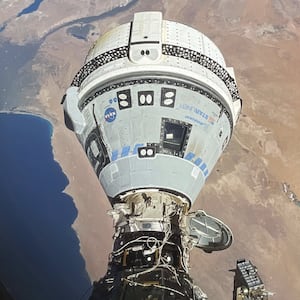
Nasa astronauts will stay at space station longer for more troubleshooting of Boeing capsule
NASA’s commitment to advancing human space exploration has recently faced a critical test with Boeing’s new Starliner spacecraft. After a successful launch and docking to the International Space Station (ISS), the spacecraft encountered unexpected propulsion system malfunctions and helium leaks that have prompted NASA to extend the mission duration for its astronauts aboard the ISS. This unprecedented extension is designed to provide ample time for ground teams to conduct extensive troubleshooting and testing to guarantee the capsule’s safety and reliability for its return journey. This comprehensive article explores the circumstances surrounding the Starliner’s challenges, the implications for NASA’s commercial crew program, and the broader context of human spaceflight logistics.
Background of Boeing’s Starliner and Its Role in NASA’s Commercial Crew Program
Boeing’s Starliner spacecraft represents a pivotal component of NASA’s Commercial Crew Program, which aims to develop safe, reliable, and cost-effective crew transportation to and from the International Space Station. Since the retirement of the Space Shuttle fleet in 2011, NASA has partnered with private aerospace companies to maintain continuous human presence in low Earth orbit. Boeing, alongside SpaceX, was selected to build crew capsules capable of ferrying astronauts, with Starliner designed to complement SpaceX’s Crew Dragon by providing competition and redundancy.
The Starliner capsule underwent extensive uncrewed test flights to validate its systems and performance. Despite initial setbacks, including delays and a previous orbital test flight failure, Boeing remained committed to refining the spacecraft. The recent crewed flight, involving NASA astronauts Butch Wilmore and Suni Williams, marked a crucial milestone as the first time astronauts flew aboard Starliner. The mission was intended to demonstrate the spacecraft’s operational readiness and safety for routine crew rotation missions.
The Commercial Crew Program’s success is vital for NASA’s broader exploration goals, including the Artemis lunar missions and eventual human missions to Mars. Ensuring that both Boeing’s Starliner and SpaceX’s Crew Dragon are fully functional and reliable supports NASA’s strategy of maintaining continuous access to low Earth orbit while fostering innovation and competition within the aerospace industry.
Details of the Starliner’s Propulsion and Helium Leak Issues
Shortly after launch and during rendezvous with the ISS, Boeing’s Starliner experienced multiple propulsion system anomalies that raised concerns among NASA and Boeing engineers. The spacecraft’s thrusters, responsible for fine maneuvering and docking operations, encountered failures that nearly jeopardized the docking procedure. Although five of the 28 thrusters failed during the approach, all but one were successfully restarted, allowing the capsule to safely dock with the ISS.
In addition to thruster malfunctions, the spacecraft developed several helium leaks. Helium is a critical component used to pressurize the propellant tanks, ensuring proper fuel flow to the thrusters. The initial helium leak was detected during ascent, and subsequent leaks emerged during the mission. Although Boeing has indicated that these leaks are not expected to impact the return trip, the presence of such anomalies necessitated thorough investigation to confirm the spacecraft’s integrity and safety for re-entry.
Both the propulsion system and helium leaks are located within the service module, a detachable segment that supports the capsule during flight but burns up upon re-entry into Earth’s atmosphere. Understanding and resolving these issues is crucial not only for the current mission’s safe completion but also for the success of future Starliner flights that will ferry astronauts to and from the ISS.
Extended Mission Duration and Impact on Astronauts’ Stay
Originally, the Starliner crew flight test was planned to last approximately one week, allowing astronauts Butch Wilmore and Suni Williams to conduct systems checks and return promptly to Earth. However, the propulsion and leak problems prompted NASA and Boeing to delay the astronauts’ return multiple times. This extension is unprecedented for a crew flight test and marks a significant adjustment in mission planning to ensure all anomalies are addressed.
NASA’s Commercial Crew Program manager Steve Stich emphasized that the astronauts are safe and not in any rush to return, highlighting the spacecraft’s design capability to support missions lasting up to 210 days. The extended stay also aligns with the operational flexibility of the ISS, which regularly hosts crews for six-month to year-long expeditions. This flexibility allows NASA to prioritize safety and data collection over fixed timelines.
The astronauts are continuing to perform routine ISS duties and supporting ground teams with data collection related to the Starliner’s condition. This prolonged mission duration also means that NASA must carefully coordinate other ISS activities, including spacewalks, to avoid conflicts and ensure crew safety amid ongoing troubleshooting efforts.
Challenges in Coordinating ISS Operations Amid Starliner Troubleshooting
The extended Starliner mission has introduced complexities in scheduling and ISS operations. Planned spacewalks have been postponed due to unrelated safety concerns, such as a recent water leak in an astronaut’s spacesuit. These delays have compounded the challenges of managing crew activities while simultaneously addressing the Starliner’s technical issues.
NASA must carefully balance the astronauts’ workload, ensuring they have sufficient time for both routine station maintenance and support for ground-based troubleshooting. Additionally, coordination with Boeing engineers conducting thruster tests on Earth is essential to replicate and better understand the anomalies experienced in orbit, which requires close communication between teams across multiple time zones.
The dynamic situation underscores the intricate nature of human spaceflight logistics, where unforeseen technical problems can ripple through mission schedules and require adaptive planning. NASA’s experience managing these challenges will inform best practices for future long-duration missions and commercial spacecraft operations.
Ground Testing and Troubleshooting Efforts on Earth
While the astronauts remain aboard the ISS, Boeing engineers are conducting extensive ground tests of the Starliner’s thrusters at facilities in New Mexico. These tests aim to replicate the conditions that caused thruster failures during docking, enabling engineers to diagnose root causes and develop mitigation strategies. Such rigorous testing is vital for validating the spacecraft’s propulsion system before authorizing its return flight.
The ground tests are expected to continue for several weeks, during which time NASA will withhold setting a firm return date for the astronauts. This cautious approach ensures that any decision to bring the crew home is based on comprehensive data and confidence in the capsule’s performance. It also reflects NASA’s overarching priority of crew safety above schedule adherence.
Boeing and NASA are collaborating closely during this phase, sharing telemetry data and test results to expedite troubleshooting efforts. The insights gained will not only resolve current issues but also enhance the Starliner’s design and operational procedures for future missions.
Safety Protocols and Contingency Plans for Astronaut Return
Despite the delays, NASA reassures that astronauts Butch Wilmore and Suni Williams are not stranded and remain in a safe environment aboard the ISS. The Starliner spacecraft is designed to support crewed missions lasting up to seven months, providing ample life support and system redundancy for extended operations in orbit. This capability allows NASA to prioritize thorough problem-solving without compromising astronaut well-being.
In the event of an emergency aboard the ISS, the Starliner capsule remains ready to execute an expedited return to Earth. This contingency capability is critical for maintaining crew safety during unforeseen circumstances, underscoring the robustness of NASA’s commercial crew infrastructure.
NASA’s approach exemplifies a paradigm shift in spaceflight operations where mission timelines are adaptable based on real-time technical assessments. This flexibility ensures that astronauts can remain in space securely while ground teams resolve spacecraft anomalies, thus maintaining operational integrity and advancing mission objectives.
Implications for NASA’s Future Crew Rotation and Commercial Partnerships
The Starliner’s current challenges and extended mission duration have implications for NASA’s crew rotation schedule and its partnership dynamics with commercial spaceflight providers. Since the retirement of the Space Shuttle, NASA has relied heavily on SpaceX’s Crew Dragon for ISS crew transport, with nine successful taxi flights since 2020. Boeing’s Starliner was expected to provide a complementary option, enhancing mission resilience and competition.
Delays in Starliner’s operational readiness may result in increased reliance on SpaceX in the near term, but NASA remains committed to maintaining two independent crew transportation systems. This dual-provider strategy enhances redundancy and fosters technological innovation, which is critical for sustaining human presence in orbit and supporting future deep space missions.
The lessons learned from Starliner’s troubleshooting will inform NASA’s certification process and operational protocols for future commercial crew flights. Boeing’s ability to address these challenges successfully will reinforce confidence in the spacecraft’s long-term viability as a key asset in NASA’s human spaceflight portfolio.
Looking Ahead: The Future of Commercial Crew Missions and Space Exploration
The ongoing Starliner mission highlights both the challenges and progress in the era of commercial human spaceflight. NASA’s investment in private sector partnerships is transforming access to low Earth orbit, enabling more frequent, flexible, and cost-effective crew transportation. Despite technical hurdles, the commitment to safety and rigorous testing ensures that these advances do not compromise mission integrity.
As NASA prepares for ambitious missions beyond Earth orbit, including the Artemis program aimed at returning humans to the Moon and eventually sending astronauts to Mars, reliable commercial crew vehicles like Starliner and Crew Dragon are foundational. These spacecraft not only support ISS operations but also serve as testbeds for technologies and operational experience critical to deep space exploration.
The extended stay of astronauts aboard the ISS for Starliner troubleshooting exemplifies NASA’s adaptive approach to mission management. It reinforces the agency’s dedication to astronaut safety, technological excellence, and the continuous evolution of human spaceflight capabilities that will enable humanity’s next giant leaps.
Conclusion
The extended stay of NASA astronauts aboard the International Space Station to troubleshoot Boeing’s Starliner capsule reflects the complexities and challenges inherent in pioneering commercial human spaceflight. While technical issues with the propulsion system and helium leaks have necessitated delays, NASA’s cautious and data-driven approach underscores its unwavering commitment to astronaut safety and mission success. As Boeing and NASA collaborate on ground tests and diagnostics, the insights gained will not only resolve current anomalies but also strengthen the Starliner’s design and operational readiness for future missions. This episode exemplifies the evolving nature of space exploration, where adaptability, innovation, and rigorous testing are key to advancing humanity’s presence beyond Earth. Looking ahead, the successful integration of Starliner into NASA’s commercial crew fleet will enhance mission resilience and support the agency’s ambitious goals for lunar exploration and beyond.
Originally reported by nzherald.co.nz. Adapted for our readers.
Recent advances in machine perfusion technology are not only preserving donated livers but also making them biologically younger at a molecular level. This breakthrough…
What happens when human imagination, artificial intelligence, art and technology come together? From September 1 to 6, Samsung Electronics presented a special exhibition themed…