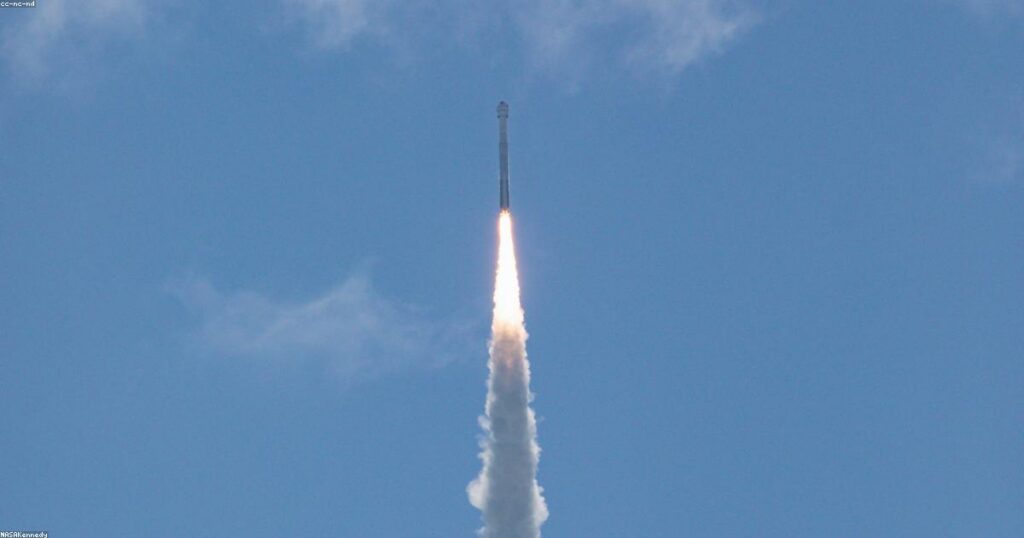
NASA astronauts reach for Boeing’s first human spaceflight
NASA’s collaboration with Boeing on the Starliner spacecraft represents a significant stride in the United States’ efforts to maintain a sustainable human presence in low Earth orbit. Following extensive testing and several delays, the first human spaceflight mission featuring the Starliner is now on the horizon. NASA astronauts Butch Wilmore and Suni Williams have recently arrived at Kennedy Space Center, Florida, to prepare for this historic flight. This mission is not just a testament to technological innovation but also a critical step toward expanding commercial crew transportation options to the International Space Station (ISS).
Boeing’s Starliner: A New Era in Human Spaceflight
Boeing’s CST-100 Starliner spacecraft is designed to transport astronauts to and from the International Space Station, offering a reusable, versatile alternative to existing crew vehicles. The Starliner program is part of NASA’s Commercial Crew Program, which aims to foster private-sector innovation and reduce dependence on foreign spacecraft for crew transportation.
Starliner’s development has involved rigorous testing phases, including uncrewed test flights to validate its systems and safety features. Although the program faced setbacks and delays, these challenges have ultimately strengthened the spacecraft’s design and operational protocols.
With its first crewed mission imminent, Starliner is poised to enhance the reliability and flexibility of crew rotations to the ISS, supporting ongoing scientific research and international collaboration in space.
Meet the Astronauts: Butch Wilmore and Suni Williams
Veteran astronauts Butch Wilmore and Suni Williams bring extensive spaceflight experience to Boeing’s first human Starliner mission. Wilmore has logged multiple spacewalks and served as commander on the ISS, while Williams is known for her record-setting time in space and numerous spacewalks.
Their combined expertise is invaluable for testing the Starliner’s capabilities and ensuring mission success. Both astronauts underwent specialized training to familiarize themselves with the spacecraft’s unique systems and operational procedures.
Wilmore and Williams’ participation underscores NASA’s commitment to safety and mission readiness, leveraging seasoned crew members who can adapt to the dynamic challenges of spaceflight.
Arrival at Kennedy Space Center and Mission Preparations
In a critical phase of pre-launch activities, Wilmore and Williams recently arrived at Kennedy Space Center, Florida, the hub of NASA’s human spaceflight operations. Their arrival marks the beginning of intensive preparations including simulations, spacecraft integration, and final health evaluations.
At Kennedy, the astronauts will collaborate closely with Boeing and NASA teams to complete checkouts of the Starliner capsule and the United Launch Alliance Atlas V rocket that will carry them into orbit.
This period also involves rehearsing emergency procedures and refining mission timelines to ensure a smooth and safe ascent to the ISS.
Overcoming Delays: The Road to Starliner’s First Crewed Flight
Boeing’s Starliner program has faced multiple delays due to technical challenges, software issues, and the impacts of the COVID-19 pandemic. These hurdles required additional testing and redesign efforts to uphold NASA’s stringent safety standards.
Despite these setbacks, Boeing and NASA have demonstrated resilience, using data from uncrewed test flights to identify and resolve critical issues. This iterative approach has enhanced the spacecraft’s reliability and operational safety.
The upcoming crewed mission represents the culmination of years of perseverance and innovation, setting a new benchmark for commercial human spaceflight.
Significance of the Commercial Crew Program Partnership
The collaboration between NASA and Boeing under the Commercial Crew Program is a strategic effort to stimulate the U.S. space industry and reduce reliance on Russian Soyuz spacecraft for ISS crew transport.
By investing in private companies like Boeing, NASA fosters competition and innovation, which leads to cost reductions and technological advancements in spaceflight.
Starliner’s success will validate this public-private partnership model, potentially opening doors to expanded commercial missions beyond low Earth orbit in the future.
Starliner’s Design and Technological Innovations
Starliner’s design emphasizes reusability, safety, and crew comfort. It features a pressurized capsule capable of carrying up to seven astronauts, with advanced avionics and life support systems tailored for long-duration missions.
The spacecraft’s abort system enhances crew safety during all mission phases, capable of quickly propelling the capsule away from the rocket in case of an emergency.
Additionally, Starliner can autonomously dock with the ISS or be manually controlled by the crew, providing operational flexibility and redundancy.
Looking Ahead: The Future Impact of Boeing’s Crewed Starliner Missions
The successful launch and operation of Boeing’s first crewed Starliner flight will pave the way for regular crew rotations to the ISS, increasing mission frequency and scientific output.
This mission also serves as a stepping stone toward more ambitious NASA goals, including lunar exploration under the Artemis program and eventual human missions to Mars.
Furthermore, Starliner’s operational success could stimulate the commercial space market, encouraging new ventures and broadening access to space for research, industry, and tourism.
Conclusion
The arrival of NASA astronauts Butch Wilmore and Suni Williams at Kennedy Space Center signals the dawn of a new chapter in American human spaceflight with Boeing’s Starliner spacecraft. Years of development, rigorous testing, and overcoming challenges have culminated in this historic mission, which promises to enhance crew transportation to the International Space Station and accelerate the commercialization of space. As we stand on the threshold of this pioneering flight, the collaboration between NASA and Boeing exemplifies innovation, resilience, and the enduring human spirit to explore beyond our planet. The success of Starliner’s first crewed mission will not only strengthen the United States’ position in space but also inspire future generations to reach for the stars.
Originally reported by chron.com. Adapted for our readers.
Recent advances in machine perfusion technology are not only preserving donated livers but also making them biologically younger at a molecular level. This breakthrough…
What happens when human imagination, artificial intelligence, art and technology come together? From September 1 to 6, Samsung Electronics presented a special exhibition themed…