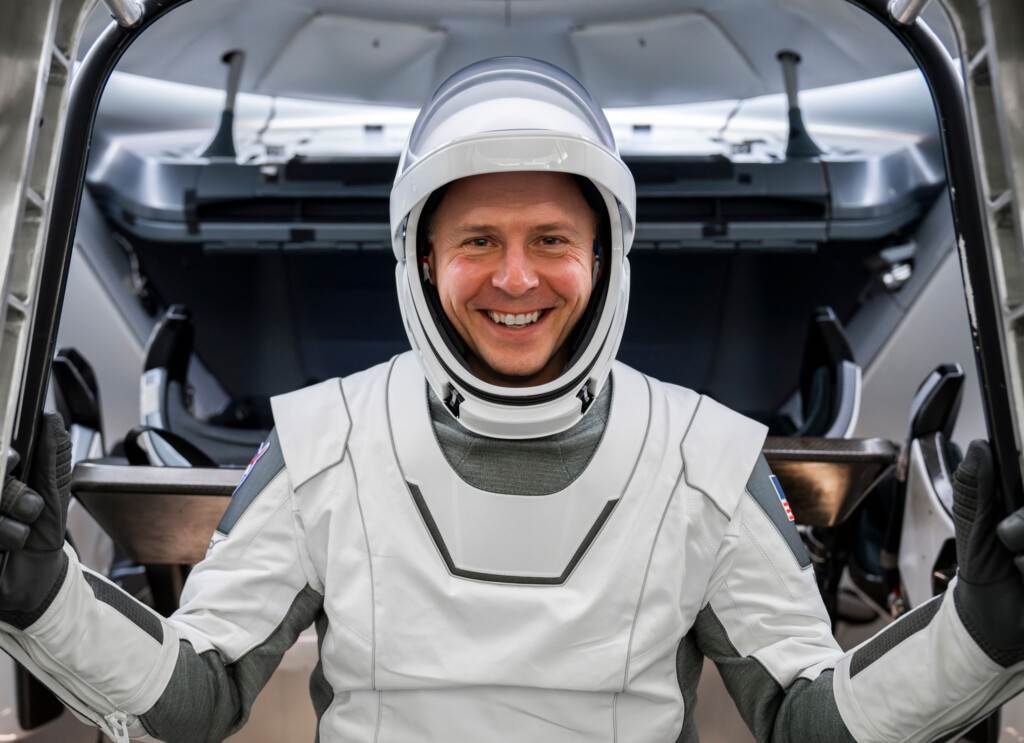
NASA Astronaut Nick Hague Boosts Human Health Research in Space
As humanity prepares for extended missions to the Moon, Mars, and beyond, understanding how spaceflight affects human health is crucial. NASA astronaut Nick Hague is at the forefront of this endeavor, participating in groundbreaking research aboard the International Space Station (ISS) during the SpaceX Crew-9 mission. His studies focus on mitigating health challenges posed by microgravity, including vision impairment, fluid redistribution, and motion sickness—conditions that could jeopardize astronaut performance and safety. This article explores Hague's mission objectives, the innovative research projects he will undertake, and their implications for the future of space exploration and terrestrial medicine.
Nick Hague's Role in Advancing Space Health Science
Nick Hague's assignment on the SpaceX Crew-9 mission to the ISS is a critical component of NASA's Human Research Program. His participation in multiple scientific experiments aims to expand our understanding of how prolonged weightlessness influences human physiology. This knowledge is vital for developing countermeasures to protect astronauts during future long-duration missions beyond low Earth orbit.
Hague’s expertise as an engineer and astronaut enables him to operate complex scientific equipment and collect precise data in the challenging environment of space. His role extends beyond routine mission tasks, encompassing active involvement in research that addresses key health risks identified in prior spaceflights.
The five-month duration of his mission provides an optimal timeframe to observe and analyze physiological changes over extended microgravity exposure. This continuous data collection is essential for validating potential interventions designed to sustain crew health on missions that may last years.
One of the primary health concerns Hague will investigate is Spaceflight Associated Neuro-ocular Syndrome (SANS). This condition involves changes in astronauts’ vision and eye anatomy caused by fluid shifts toward the head in microgravity, leading to optic nerve swelling, retinal folds, and flattening at the back of the eye.
SANS poses a significant threat to astronaut health because vision impairment can compromise mission safety and effectiveness. Despite ongoing research, its exact causes remain unclear, necessitating multifaceted studies to uncover underlying mechanisms and develop effective countermeasures.
Hague’s mission includes participating in two distinct studies targeting SANS from different angles—one focusing on mechanical fluid redistribution and the other on nutritional intervention. These complementary approaches aim to yield a more comprehensive understanding of how to prevent or mitigate this syndrome during long space voyages.
The Thigh Cuff Study: Managing Fluid Shifts Physically
The Thigh Cuff experiment is designed to test whether wearing specially fitted cuffs around the upper legs can counteract the headward fluid shift that contributes to SANS. These cuffs apply gentle pressure to the thighs, encouraging fluids to remain in the lower body.
During the study, Hague will wear the cuffs for six hours in two separate sessions, while ultrasound imaging monitors blood flow in his legs and neck veins. Comparing data collected with and without the cuffs will help researchers assess their effectiveness in modulating fluid distribution.
Thigh cuffs are compact, lightweight, and easy to use, making them a promising countermeasure for long-duration missions where bulky equipment is impractical. This research could also inform treatments for Earth-bound conditions involving abnormal fluid retention in the brain or heart.
Exploring Nutritional Solutions: The Vitamin B Supplement Study
In parallel with mechanical interventions, Hague will participate in a study examining whether a daily vitamin B supplement can reduce or prevent the ocular changes associated with SANS. The research is based on findings that genetic variations influence individuals’ vitamin B metabolism and susceptibility to eye swelling.
Led by nutritional biochemist Sara Zwart, this study involves administering vitamin B before, during, and after flight, while monitoring eye health and genetic markers. The goal is to determine if supplementation can offset genetic predispositions that exacerbate SANS symptoms.
Beyond spaceflight, this research may have broader implications for treating conditions such as polycystic ovary syndrome (PCOS) on Earth, which similarly affects eye health and fertility. Insights gained could lead to novel therapies targeting shared genetic pathways.
Combating Motion Sickness with Innovative Medication Delivery
Motion sickness remains a common challenge for astronauts during launch, landing, and adaptation to microgravity. Hague will test a novel nasal gel formulation of scopolamine, an anti-nausea medication, to evaluate its effectiveness in preventing or alleviating space motion sickness.
This self-administered gel offers a potentially faster and more convenient alternative to traditional oral or patch-based treatments. Hague will document his experiences and any side effects, as well as the efficacy of other behavioral or pharmacological interventions he employs.
The study, led by neuroscientist Scott Wood, aims to include data from 48 participants eventually. Results will inform protocols to help future crew members maintain comfort and operational capability during critical mission phases.
The Importance of Long-Duration Spaceflight Research
The insights gained from Hague’s research are essential as NASA and international partners plan missions that extend beyond the ISS, including Artemis lunar expeditions and eventual Mars exploration. Understanding and mitigating health risks in space is fundamental to mission success and astronaut safety.
Long-duration exposure to microgravity presents unique physiological challenges, such as muscle atrophy, bone density loss, immune system changes, and neurological effects. Each study Hague participates in contributes to a growing body of knowledge that will guide the development of comprehensive health management strategies.
Moreover, spaceflight health research often yields benefits for terrestrial medicine. Innovations in fluid management, nutritional supplementation, and motion sickness treatment may translate into improved care for patients suffering from related conditions on Earth.
Collaborative Efforts in Space Medicine Research
Hague’s mission exemplifies the collaborative nature of modern space exploration, involving NASA, Roscosmos, and international research teams. Such partnerships maximize scientific output and accelerate the development of effective countermeasures for human health in space.
The integration of engineering, biology, nutrition, and neuroscience in these studies highlights the interdisciplinary approach necessary to address complex physiological issues induced by spaceflight. Hague’s dual role as astronaut and research subject bridges these domains effectively.
This cooperation also fosters shared knowledge that benefits all spacefaring nations and promotes peaceful exploration. The data collected will support the design of future spacecraft, habitats, and mission protocols tailored to human health needs.
Looking Ahead: The Future of Human Space Exploration and Health
The research conducted by Nick Hague and his colleagues on the ISS sets the stage for safer, more sustainable human presence beyond Earth. As missions grow longer and venture farther, robust health countermeasures become indispensable to preserve crew performance and well-being.
Continued innovation in medical technologies, nutritional strategies, and physiological monitoring will be crucial to overcoming the challenges posed by microgravity and cosmic radiation. Hague’s work contributes vital data that will inform these advancements.
Ultimately, the lessons learned from space health research will not only enable humanity’s journey deeper into the cosmos but also enhance quality of life on Earth by inspiring new treatments and health solutions.
Conclusion
Nick Hague’s contributions to human health research aboard the International Space Station represent a significant leap forward in understanding and mitigating the physiological challenges posed by spaceflight. Through innovative studies on vision disorders, fluid management, nutritional supplementation, and motion sickness, his work addresses some of the most pressing health risks for astronauts. These efforts not only facilitate safer and more effective long-duration missions but also foster advancements in medical science that extend to Earth. As humanity prepares to explore the Moon, Mars, and beyond, the research led by Hague and his team will be instrumental in ensuring that astronauts remain healthy, resilient, and mission-ready in the demanding environment of space.
Originally reported by nasa.gov. Adapted for our readers.
Recent advances in machine perfusion technology are not only preserving donated livers but also making them biologically younger at a molecular level. This breakthrough…
What happens when human imagination, artificial intelligence, art and technology come together? From September 1 to 6, Samsung Electronics presented a special exhibition themed…