NASA and SpaceX Set Target Date for Crew-9 Space Station Mission
NASA and SpaceX are gearing up for the highly anticipated Crew-9 mission to the International Space Station (ISS), aiming for a launch no earlier than August 18, 2023. This mission represents the ninth crew rotation under NASA’s Commercial Crew Program, utilizing SpaceX’s Falcon 9 rocket and Dragon spacecraft to transport astronauts to low Earth orbit. Featuring a mixed crew of NASA astronauts and a Roscosmos cosmonaut, Crew-9 is poised to further scientific research and international collaboration aboard the space station. This article delves into the mission specifics, crew backgrounds, vehicle details, scientific objectives, and the broader implications for human spaceflight.
Overview of the Crew-9 Mission
The Crew-9 mission is a critical component of NASA’s ongoing Commercial Crew Program, which partners with private aerospace companies to ferry astronauts safely and reliably to the International Space Station. This mission marks the ninth such crew rotation flown by SpaceX’s Crew Dragon spacecraft, underscoring the program’s success in fostering public-private collaboration in space exploration.
Scheduled for launch no earlier than August 18, 2023, from NASA Kennedy Space Center’s Launch Complex 39A in Florida, Crew-9 will transport four crew members to the ISS for approximately six months. The spacecraft named Freedom, which previously supported Crew-4 and Axiom Space’s Ax-2 and Ax-3 missions, will serve as their transport vehicle.
This mission continues to demonstrate the growing capabilities of commercial spaceflight providers like SpaceX, enabling NASA to focus on deep space exploration goals while maintaining a continuous human presence aboard the ISS.
Meet the Crew: Astronauts and Cosmonaut
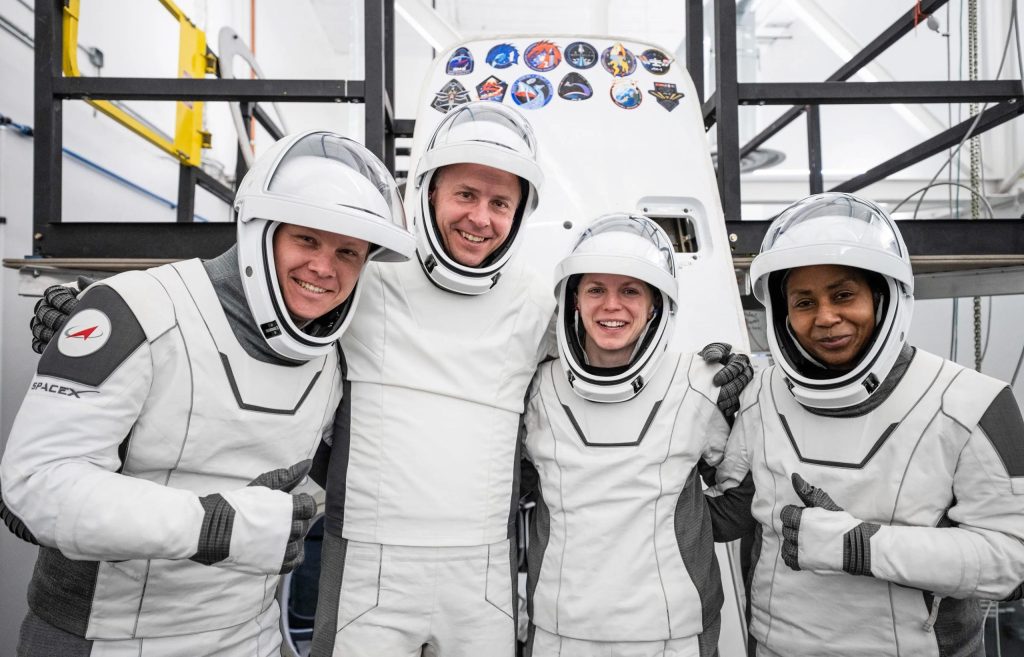
The Crew-9 team comprises NASA astronauts Zena Cardman, Nick Hague, Stephanie Wilson, and Roscosmos cosmonaut Alexander Gorbunov, representing a blend of experience and fresh perspectives. This diversity reflects the international and multidisciplinary nature of modern space missions.
Zena Cardman will serve as the spacecraft commander on her first spaceflight, bringing a strong scientific background and leadership skills to the mission. Nick Hague, the pilot, returns for his second ISS mission, having previously demonstrated exceptional expertise during his first flight. Stephanie Wilson, a mission specialist, embarks on her fourth spaceflight, having accumulated 42 days in orbit aboard three space shuttle Discovery missions.
Alexander Gorbunov, representing Roscosmos, is also making his first journey to space. His inclusion underscores the continued international cooperation in space exploration, even amid geopolitical challenges, highlighting a shared commitment to scientific advancement.
The Spacecraft and Launch Vehicle: Falcon 9 and Dragon Freedom
The Crew-9 mission will launch aboard SpaceX’s Falcon 9 rocket, a two-stage rocket renowned for its reusability and reliability. Falcon 9 has become the backbone of commercial and government launches, capable of delivering crewed and uncrewed payloads to a variety of orbits.
The Crew Dragon spacecraft, named Freedom for this mission, is designed for crew transport to and from the ISS. Freedom has a proven track record, having supported previous missions including Crew-4 and private astronaut missions for Axiom Space. Its advanced life support, avionics systems, and emergency abort capabilities ensure crew safety throughout the mission.
Together, Falcon 9 and Dragon Freedom exemplify the advancements in commercial spaceflight technology, enabling routine access to low Earth orbit and supporting NASA’s broader human spaceflight goals.
Scientific Objectives and Research on the ISS
Crew-9 astronauts will conduct a wide range of scientific investigations aboard the ISS, leveraging the unique microgravity environment to advance knowledge in fields like biology, materials science, and human health. These experiments have direct implications for future long-duration missions to the Moon and Mars.
Among the research priorities are studies on cellular biology, fluid dynamics, and plant growth, which help scientists understand how living organisms adapt to spaceflight. Additionally, the crew will participate in technology demonstrations and experiments aimed at improving spacecraft systems and astronaut health.
The mission’s six-month duration allows for extended observation and data collection, enabling researchers to gather comprehensive insights that are impossible to replicate on Earth.
Mission Patch Symbolism and Crew Insights
The Crew-9 mission patch is rich in symbolism, reflecting the mission’s goals and heritage. Its design features a falcon with the number nine as its beak, paying tribute to the Falcon 9 rocket, while a crescent moon as the falcon’s eye nods to humanity’s broader space exploration ambitions.
The patch also depicts coastal waves inspired by Florida’s historic launch site, symbolizing Earth’s global ocean that connects all continents. The constellation Draco honors the Dragon spacecraft, and the Delta symbol evokes the spirit of space exploration dating back to 1961.
Crew members have expressed pride in the patch’s design, noting it represents not only their mission but also the collective effort and international cooperation that underpin human spaceflight.
Training and Preparation for Long-Duration Flight
Preparing for a six-month mission aboard the ISS requires rigorous training encompassing technical skills, physical fitness, and psychological resilience. The Crew-9 astronauts underwent extensive simulations, spacecraft systems training, and emergency response exercises to ensure mission readiness.
In addition to technical preparation, the crew engaged in team-building activities to foster strong interpersonal dynamics critical for living and working in the confined environment of the space station. Such cohesion is vital for mission success and crew well-being.
Astronauts also receive specialized training in scientific experiment protocols and robotics operations, equipping them to conduct research and maintain the station’s systems efficiently during their stay.
International Collaboration and the Future of Spaceflight
Crew-9 exemplifies the spirit of international partnership in space exploration, with NASA and Roscosmos collaborating despite geopolitical tensions on Earth. This cooperation ensures continuous human presence and scientific progress aboard the ISS.
The mission reinforces the Commercial Crew Program’s role in enabling NASA to leverage private sector innovation while maintaining strategic partnerships with international space agencies. Such collaborations are essential for the ambitious goals of lunar exploration under Artemis and eventual Mars missions.
As commercial and governmental entities work together, missions like Crew-9 pave the way for a sustainable and expansive human presence in space, inspiring future generations and advancing global scientific knowledge.
Conclusion
The upcoming Crew-9 mission marks another significant leap in human spaceflight, showcasing the successful partnership between NASA and SpaceX under the Commercial Crew Program. With a diverse and experienced crew, cutting-edge spacecraft technology, and a strong emphasis on scientific research, this mission will continue to expand humanity’s understanding of living and working in space. Moreover, Crew-9 stands as a testament to international collaboration, uniting astronauts from NASA and Roscosmos in pursuit of shared exploration goals. As launch day approaches, the mission promises to inspire and propel future endeavors beyond Earth’s orbit, laying the groundwork for humanity’s next giant steps into the cosmos.
Originally reported by scitechdaily.com. Adapted for our readers.
Recent advances in machine perfusion technology are not only preserving donated livers but also making them biologically younger at a molecular level. This breakthrough…
What happens when human imagination, artificial intelligence, art and technology come together? From September 1 to 6, Samsung Electronics presented a special exhibition themed…