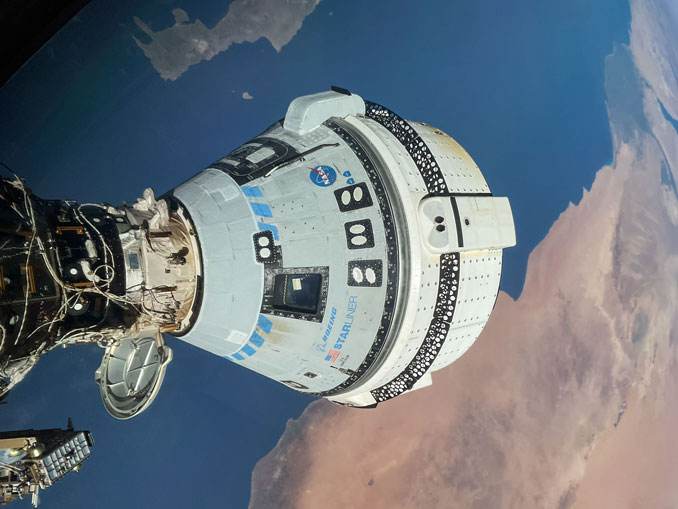
NASA again delays Starliner undocking, return to Earth
NASA’s Boeing Crew Flight Test, featuring the Starliner spacecraft, has experienced yet another delay in its undocking and return to Earth. Initially scheduled for June 26, the return has been postponed as NASA and Boeing officials prioritize safety by thoroughly investigating helium leaks and thruster anomalies detected during the mission. This delay highlights the complexity of spaceflight operations and the meticulous care taken to ensure astronaut safety and mission success. In this detailed article, we delve into the technical issues faced, the decision-making processes behind the delay, and what this means for the future of commercial crewed spaceflight.
Background of the Starliner Mission and Its Objectives
The Boeing Starliner spacecraft is a cornerstone of NASA’s Commercial Crew Program, designed to ferry astronauts to and from the International Space Station (ISS). The current mission, known as the Boeing Crew Flight Test, is the first piloted test flight aiming to validate Starliner’s capabilities in real-world conditions. The spacecraft successfully docked with the ISS, marking a significant milestone for Boeing’s efforts to provide reliable crew transportation.
Originally slated for an undocking and return to Earth on June 26, the mission was intended to demonstrate Starliner’s ability to safely complete a crewed mission, including launch, docking, and re-entry. This mission is critical for certifying Starliner for future operational flights, which NASA hopes to integrate into regular ISS crew rotation schedules starting early next year.
However, the mission has encountered technical challenges that have prompted NASA and Boeing to delay the spacecraft’s return. These issues underscore the complexities and risks associated with human spaceflight and the stringent standards NASA applies to crew safety and mission integrity.
Technical Challenges: Helium Leaks and Thruster Anomalies
A primary concern leading to the delay is the detection of small helium leaks within the Starliner’s propulsion system. Helium is used to pressurize the spacecraft’s thrusters, which control maneuvering during flight. While initial leaks were identified before launch and deemed minor, additional leaks were detected once the spacecraft was en route to the ISS, raising concerns about system integrity.
Alongside the helium leaks, the spacecraft experienced thruster performance issues. Specifically, the flight computer deactivated seven maneuvering jets as a precautionary measure after telemetry indicated irregularities. The thrusters in question are housed in the service module, a component that is jettisoned before re-entry and burns up in Earth’s atmosphere, complicating direct hardware inspection.
Because the service module cannot be physically examined post-mission, NASA and Boeing rely heavily on telemetry data and simulations to understand these anomalies. This necessity to thoroughly analyze remote data has contributed to the decision to extend Starliner’s stay at the ISS to allow more time for diagnostics and testing.
Mission Management and Decision-Making Process
NASA’s approach to managing the Starliner mission exemplifies the agency’s commitment to safety and data-driven decision-making. According to Steve Stich, manager of NASA’s Commercial Crew Program, the team is following a standard mission management process that prioritizes thorough analysis over schedule adherence. This means that the spacecraft will remain docked until all concerns about the helium leaks and thruster performance are fully resolved.
The decision to delay the undocking also allows NASA to conduct an agency-level re-entry readiness review. This review is similar to the one performed for SpaceX’s Crew Dragon Demo-2 mission in 2020, although Starliner’s current issues are unique and require additional scrutiny. The review serves as a formal acceptance step before committing to a new landing date.
Despite the delay, NASA has emphasized that astronauts aboard Starliner—Commander Barry “Butch” Wilmore and Co-Pilot Sunita Williams—are not stranded. They remain cleared to undock and return to Earth immediately if an emergency arises aboard the ISS, ensuring crew safety remains paramount.
Impact on ISS Operations and Scheduled Activities
The extended stay of Starliner at the ISS impacts station operations, including scheduled spacewalks. The undocking delay means the spacecraft will remain docked past two planned spacewalks set for late June and early July. Station managers are adjusting their timelines to accommodate Starliner’s extended presence, ensuring that critical ISS activities can proceed safely.
The presence of Starliner also necessitates careful coordination with other spacecraft and station systems to avoid conflicts or operational risks. NASA’s strategic use of this additional time helps clear the path for these essential ISS activities while maintaining readiness for the spacecraft’s eventual departure.
This situation underscores the interconnected nature of ISS missions, where delays in one element can ripple through other scheduled operations. NASA and Boeing’s collaborative approach aims to minimize disruption while prioritizing the safety and success of all activities aboard the station.
Comparisons with Previous Commercial Crew Missions
NASA’s Commercial Crew Program also includes SpaceX’s Crew Dragon spacecraft, which successfully completed its first crewed mission, Demo-2, in 2020. Unlike Starliner, Demo-2 did not encounter significant technical problems during its mission. This contrast highlights the developmental challenges Boeing faces with Starliner’s design and systems.
The Demo-2 mission lasted about two months, and NASA conducted a thorough re-entry readiness review before its return, setting a precedent for the careful scrutiny applied to Starliner’s mission. Both spacecraft serve similar purposes but have different engineering approaches and operational histories.
Boeing’s Starliner has experienced multiple delays and technical setbacks over the years, pushing its timeline back by several years. This current mission remains a critical test to determine whether Starliner can meet NASA’s rigorous standards for crewed spaceflight and successfully join the commercial crew fleet.
Future Implications for Starliner and Commercial Crew Program
The current delay may influence the timeline for Starliner’s certification and operational use. NASA had hoped to begin regular crew rotations with Starliner as early as next year, but ongoing technical challenges could push this milestone further into the future. The agency remains committed to resolving these issues before approving operational flights.
Lessons learned from this mission will inform necessary system upgrades and design improvements for Starliner. Understanding the causes of helium leaks and thruster anomalies is essential to enhancing spacecraft reliability and safety for future missions.
This mission also demonstrates the importance of rigorous testing and risk management in human spaceflight. While delays are disappointing, they reflect NASA and Boeing’s dedication to astronaut safety and mission success, which ultimately benefits the entire commercial crew program.
Astronaut Experience and Crew Safety Measures
Commander Barry “Butch” Wilmore and Co-Pilot Sunita Williams are experienced astronauts who play a vital role in this mission’s success. Their presence aboard Starliner and the ISS provides real-time human oversight of spacecraft operations and contingency management.
NASA has ensured that the crew remains prepared for an immediate return if necessary. The spacecraft is ready to undock on short notice should an emergency arise on the ISS or within the spacecraft itself, ensuring that crew safety protocols are robust and responsive.
The astronauts’ ability to remain safe and comfortable during this extended mission period is a testament to the spacecraft’s design and NASA’s operational planning. Their ongoing mission contributes valuable data and insights that will help refine Starliner’s systems and inform future crewed missions.
Looking Ahead: Next Steps for Starliner’s Return and Mission Completion
NASA and Boeing plan to conduct a formal re-entry readiness review before establishing a new undocking and landing date. This review will incorporate all available data on the helium leaks, thruster performance, and overall spacecraft health to ensure a safe return trajectory.
In the meantime, engineers continue to analyze telemetry and run simulations to better understand the anomalies and develop contingency plans for undocking and re-entry. This cautious approach aims to mitigate risks and avoid unforeseen complications during the spacecraft’s descent.
The extended mission duration also provides an opportunity to gather additional operational insights, which will be invaluable for certifying Starliner’s systems and preparing for future commercial crew flights. NASA remains optimistic that, despite delays, Starliner will become a reliable vehicle for transporting astronauts to and from the ISS.
Conclusion
The repeated delays in Starliner’s undocking and return to Earth underscore the complexities of human spaceflight and the uncompromising emphasis NASA places on astronaut safety. While frustrating for schedules and program milestones, these delays enable thorough analysis of critical technical issues such as helium leaks and thruster anomalies. The collaborative efforts of NASA and Boeing in managing this mission demonstrate a commitment to learning and improvement, ensuring that when Starliner does return, it will do so with greater reliability and safety. As the Commercial Crew Program evolves, the lessons from this mission will help pave the way for a new era of routine, safe crew transportation to the International Space Station and beyond.
Recent advances in machine perfusion technology are not only preserving donated livers but also making them biologically younger at a molecular level. This breakthrough…
What happens when human imagination, artificial intelligence, art and technology come together? From September 1 to 6, Samsung Electronics presented a special exhibition themed…