
AI Trends & News
Surface Laptop Ultra Pre-orders Open: Price, Release Date and AI Features
Microsoft opens Surface Laptop Ultra pre-orders from US$2,599.99. Explore its launch date, NVIDIA RTX Spark features and implications for Nigerian businesses.
TAMFIS NIG LTDRC 8067447CAC ACTIVEFinima, Bonny Island, Rivers State

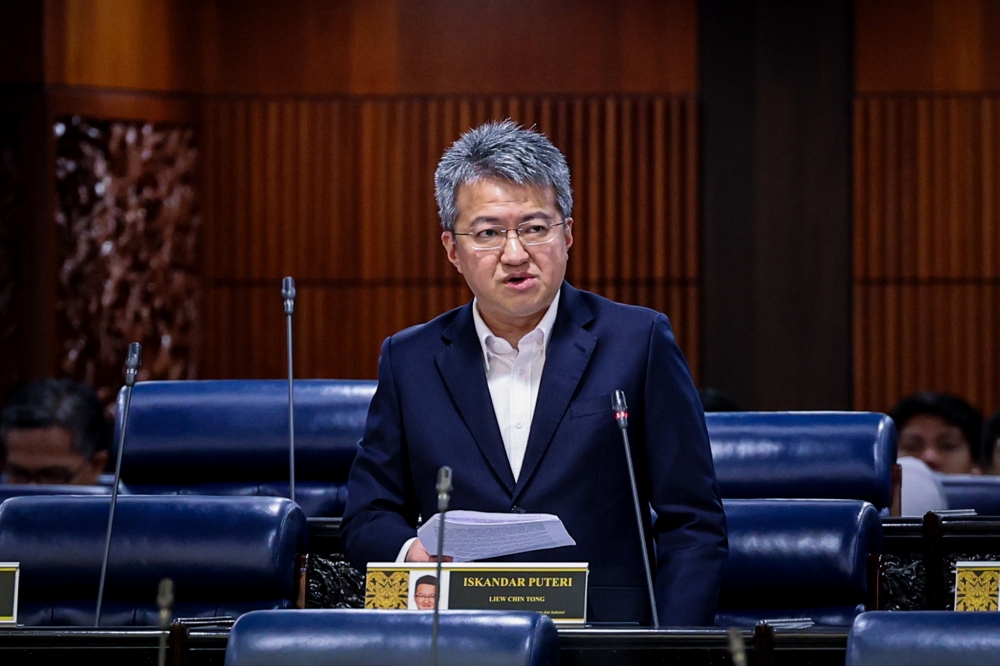
In the evolving landscape of global commerce, Malaysia faces a pivotal moment where nurturing technology-driven enterprises into multinational corporations (MNCs) within the ASEAN region is crucial. Deputy Investment, Trade and Industry Minister Liew Chin Tong recently underscored the importance of moving beyond traditional support for small and medium enterprises (SMEs) to foster local tech giants capable of expanding across ASEAN and beyond. This strategic shift aims not only to enhance Malaysia’s economic resilience but also to build sustainable growth, reduce reliance on external markets, and contribute to a prosperous regional economy. This article explores the minister’s insights, challenges, and the pathways Malaysia must adopt to realize this vision.
Small and medium enterprises (SMEs) have long been recognized as vital contributors to Malaysia’s economy, accounting for a significant portion of employment and GDP. Government policies often emphasize supporting SMEs through funding, training, and market access initiatives. However, Deputy Minister Liew Chin Tong points out that this focus, while important, is insufficient for Malaysia’s ambitions to become a regional economic powerhouse.
The main limitation lies in the scale and scope of SMEs, which typically operate within local or niche markets with limited capacity for rapid expansion or innovation at a multinational level. Without a concerted effort to elevate some of these enterprises into large-scale, technology-driven companies, Malaysia risks missing out on the economic benefits and global influence that MNCs bring.
Moreover, the current ecosystem tends to favor foreign multinational corporations by providing them with incentives and infrastructure, inadvertently overshadowing the growth potential of local firms. This dynamic highlights the urgent need for policies that strategically prioritize the development of indigenous tech champions.
Deputy Minister Liew envisions a future where Malaysian technology companies evolve into ASEAN-based multinational corporations, leveraging regional integration to expand their footprint. This vision aligns with Malaysia’s broader economic goals of increasing competitiveness, innovation, and sustainable development within ASEAN and globally.
By fostering tech giants that operate across ASEAN markets, Malaysia can capitalize on the region’s growing middle class and digital economy. These companies would not only drive economic growth domestically but also enhance Malaysia’s stature as a key player in the global technology landscape.
Such MNCs would serve as engines of innovation, job creation, and knowledge transfer, thereby uplifting the entire ecosystem. They would also help diversify Malaysia’s export markets, reducing overdependence on traditional partners like the United States.
Despite the clear benefits, building technology-based MNCs presents several challenges. One major hurdle is access to capital, as many promising startups and scale-ups struggle to secure funding that matches their growth ambitions. The capital markets need to adopt a forward-looking mindset that prioritizes long-term value creation over short-term returns.
Another challenge is talent development. Malaysia must invest heavily in education and skill enhancement to produce a workforce capable of supporting high-tech industries. This includes fostering expertise in areas such as artificial intelligence, data analytics, and sustainable technologies.
In addition, regulatory and infrastructural gaps can inhibit the scaling of technology firms. Streamlining business regulations, enhancing digital infrastructure, and facilitating cross-border trade within ASEAN are critical enablers for these companies to thrive regionally.
Capital markets play a pivotal role in the growth trajectory of technology firms aspiring to become MNCs. Deputy Minister Liew stresses the need for capital markets to adopt innovative approaches that support sustainable and responsible investment, particularly in emerging sectors.
By facilitating access to equity financing and encouraging long-term investment, capital markets can help companies scale rapidly while maintaining financial health. This requires new frameworks that value intangible assets such as intellectual property, brand reputation, and environmental, social, and governance (ESG) performance.
Moreover, capital market reforms should aim to attract regional and global investors interested in ASEAN’s tech potential. Enhancing transparency, governance, and investor education will build confidence and mobilize the necessary resources for these companies.
Malaysia’s economic resilience depends heavily on diversifying its export markets. Deputy Minister Liew points out that relying on the United States as a primary consumer is unsustainable in the long run. Instead, Malaysia must strategically pivot to other growing economies within ASEAN and beyond.
Expanding into ASEAN markets offers a natural advantage due to geographic proximity, cultural ties, and existing trade agreements. Technology-based MNCs can leverage these factors to establish regional supply chains and customer bases.
However, diversification is not solely about accessing new markets; it also involves ensuring that these markets have the purchasing power to consume Malaysian products. This underscores the importance of regional economic development and the growth of middle-class consumers.
For Malaysia’s tech giants to thrive regionally, the ASEAN middle class must grow in size and wealth. The Deputy Minister emphasizes that consumption patterns depend on economic prosperity, which in turn requires inclusive growth and equitable wealth distribution across ASEAN countries.
Developing sustainable economies with a focus on education, healthcare, and infrastructure will raise living standards and increase disposable incomes. This creates a virtuous cycle where increased consumption fuels business growth and innovation.
Malaysia has a role to play not only in elevating its own middle class but also in contributing to ASEAN’s collective prosperity. Technology-driven companies that address regional needs—such as digital finance, health tech, and green solutions—are well-positioned to support this development.
Recent initiatives such as the collaboration between the Securities Industry Development Corporation (SIDC) and the Capacity-building Alliance of Sustainable Investment (CASI) highlight Malaysia’s commitment to sustainable finance and talent development. These partnerships aim to build capacity in sustainable and responsible investment across ASEAN.
Programs like the Certified Capital Market Professional in Sustainable and Responsible Investment (CCMP-SRI 2) provide mid-to-senior level professionals with advanced skills necessary to support the growth of technology-driven MNCs within a sustainable framework.
Such educational and professional development initiatives are essential for creating a knowledgeable workforce and investor base that can drive Malaysia’s ambitions to develop tech giants with strong ESG credentials, ensuring long-term competitiveness and social impact.
Deputy Minister Liew advocates for bold, innovative strategies that reshape Malaysia’s capital markets and economic landscape. He envisions a ‘Madani society’—a prosperous, sustainable, and inclusive community where economic growth benefits all citizens.
Achieving this requires breaking away from traditional economic models and embracing new ideas that integrate technology, sustainability, and social well-being. Malaysia must cultivate visionary leadership and cross-sector collaboration to drive this transformation.
Ultimately, nurturing tech giants into ASEAN MNCs is not just an economic imperative but a social one, ensuring that Malaysia and the region remain competitive, resilient, and inclusive in an increasingly interconnected world.
Malaysia stands at a strategic crossroads where nurturing homegrown technology companies into ASEAN-based multinational corporations can unlock new economic opportunities and elevate the nation’s regional standing. Deputy Minister Liew Chin Tong’s call to action highlights the need for a comprehensive approach encompassing capital market reforms, talent development, market diversification, and sustainable growth initiatives. By embracing bold strategies and fostering collaborations, Malaysia can build resilient tech giants that drive innovation, support inclusive prosperity, and contribute to a thriving ASEAN community. The path forward demands visionary leadership and collective commitment to transform Malaysia’s economic landscape for the digital age.
Originally reported by malaymail.com. Adapted for our readers.
Keep reading
AI Trends & News
Microsoft opens Surface Laptop Ultra pre-orders from US$2,599.99. Explore its launch date, NVIDIA RTX Spark features and implications for Nigerian businesses.
Science & Technology
DJI’s IBC recognition puts pocket gimbal and panoramic capture in the spotlight. Here is how creators can assess framing, editing effort and recording workflows.
Business News
App store steering is about more than permission to add a link. Explore fees, renewal terms, customer experience and the UK consultation.
TAMFIS NIG LTD
Electrical and instrumentation engineering, bid preparation and consulting, IT and software.

