“I’ve seen a number of partial [solar] eclipses, but this is my first total eclipse,” said Lindsay Hays, a program scientist in the Planetary Science Division at NASA Headquarters. “So I’m very excited for it.”
Hays answered questions from eclipse viewers as part of the museum’s Solar Eclipse Festival, which lasted from 12 p.m. to 4 p.m. ET Monday, though many arrived earlier. With free eclipse glasses, a large eclipse cake and a variety of vendors and food trucks, the event brought a communal eclipse experience to downtown Syracuse’s Armory Square. Attendees, including many families with young people, spread out on picnic blankets in the pleasant weather.
One attendee, Christopher Ducey of Solvay, Current York, save up a Cave Astrola telescope from the Seventies on the lawn. The vintage telescope is heavy and beefy by standard standards, Ducey mentioned.
“However I adore this conventional ingredient, and it without complications converts to a no doubt good projecting solarscope, which is what I’m the use of it for on the present time,” Ducey added. Earlier in the day, the telescope’s eyepiece forged a crisp projection of the sun onto a hide in the good thing about it, but clouds carried out without the solarscope from working later in the day.
Connected: Right here are the simplest photos of the April 8 total photo voltaic eclipse over North The US
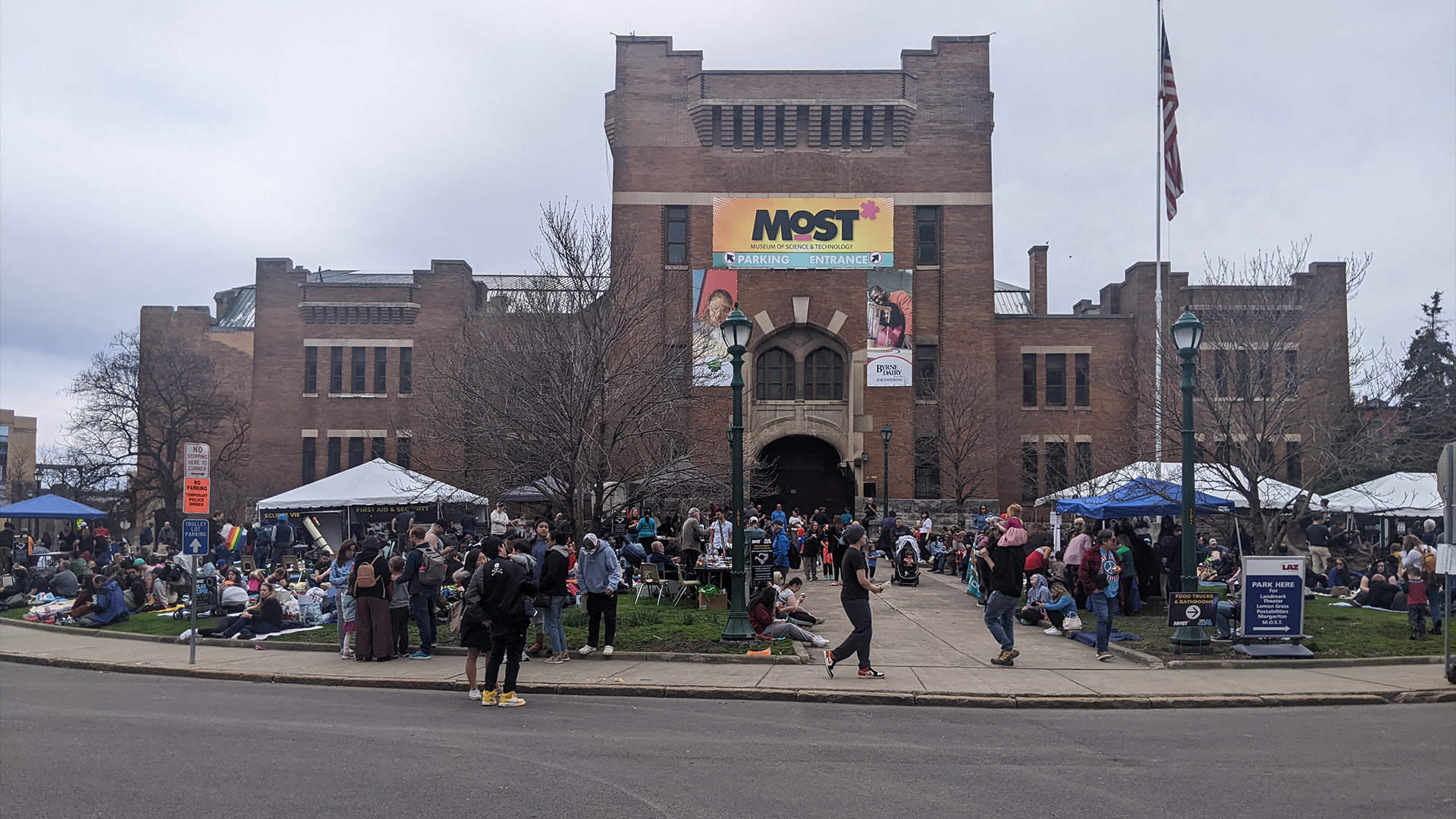
Aloof, the morning’s clouds were patchy, and attendees remained optimistic that they’d perchance gain a study totality — the 2d right thru a total photo voltaic eclipse when the moon fully blocks the sun’s disk, plunging the bottom beneath into shadow. If the cloud quilt remained light, Hays mentioned, there became as soon as a gamble that the eclipse itself could perchance reason the clouds to dissipate a limited bit. The lowered daylight could perchance limit the evaporation of water into the atmosphere, she mentioned, resulting in fewer clouds forming. Hays mentioned this same cessation recurrently causes the sky to obvious up a limited bit right thru the evening.
Hays was even hopeful that the sky could clear up enough to see planets, such as Jupiter near the moon during the unexpected darkness of totality.
Like Hays, many at the event were eager to experience totality for the first time.
“It is primarily the most dazzling part of it,” said Theo, 5, from New York City, showing off the drawing he’d made of a dark-blue moon rimmed by a pale-yellow corona (the sun’s outer atmosphere, which is visible to the naked eye only during totality).
Other attendees were merely excited to be there, pointing to the eclipse as a unifying force in a divided world.
“I’m excited to see everyone together, especially in such a chaotic time,” said Ora Jezer, who was at a sales booth representing the Central-Northern New York (CNNY) chapter of the Sierra Club, along with her mother, Rhea Jezer, who is the CNNY community chair.
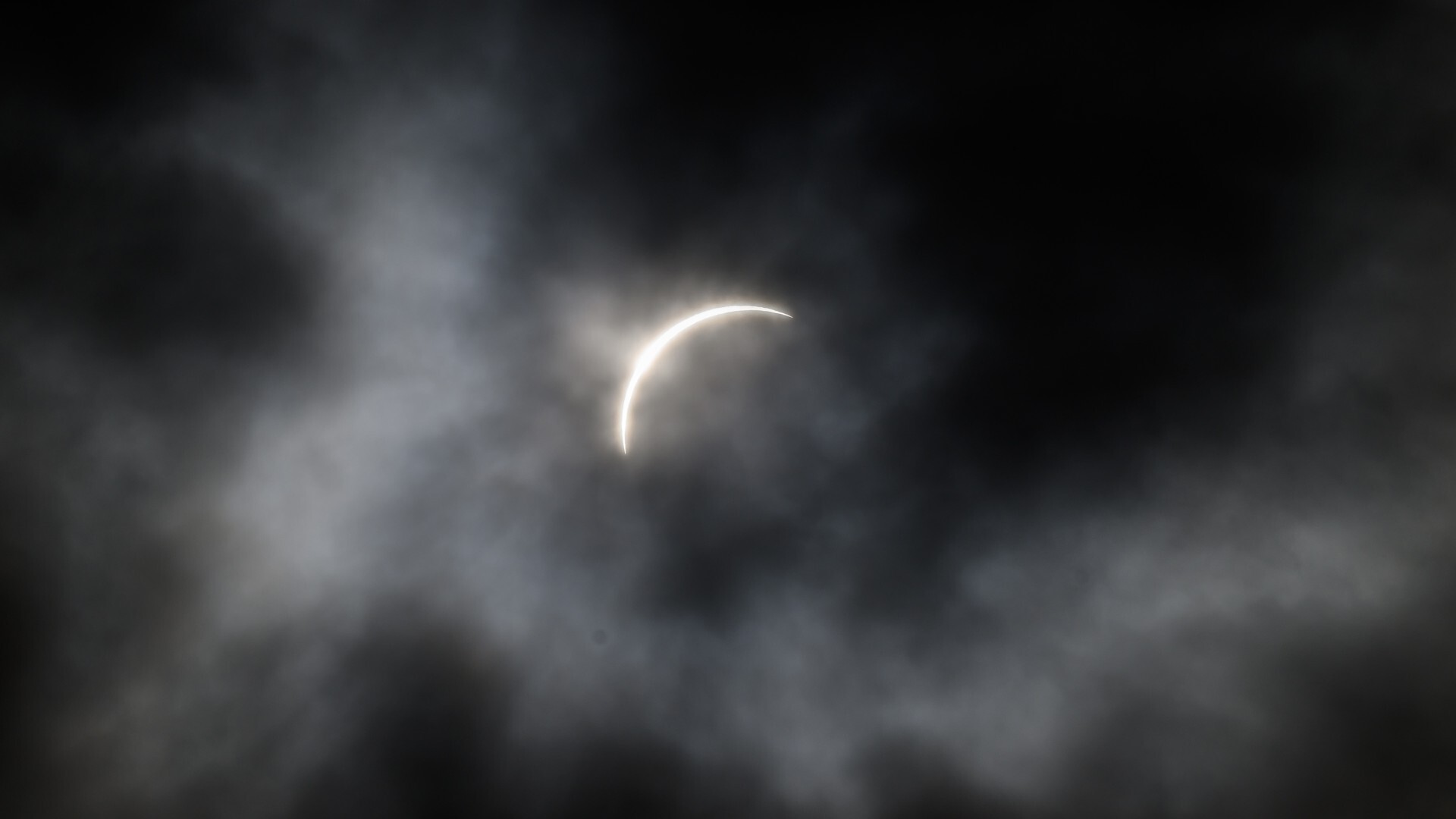
As museum workers announced the start of the partial phase of the eclipse, the sky remained cloudy, with the sun appearing and disappearing from view. Overall, nothing was visible through the eclipse glasses. However, every now and then, rays of sunlight shone through the clouds and cheers from onlookers marked each clear glimpse of the eclipse.
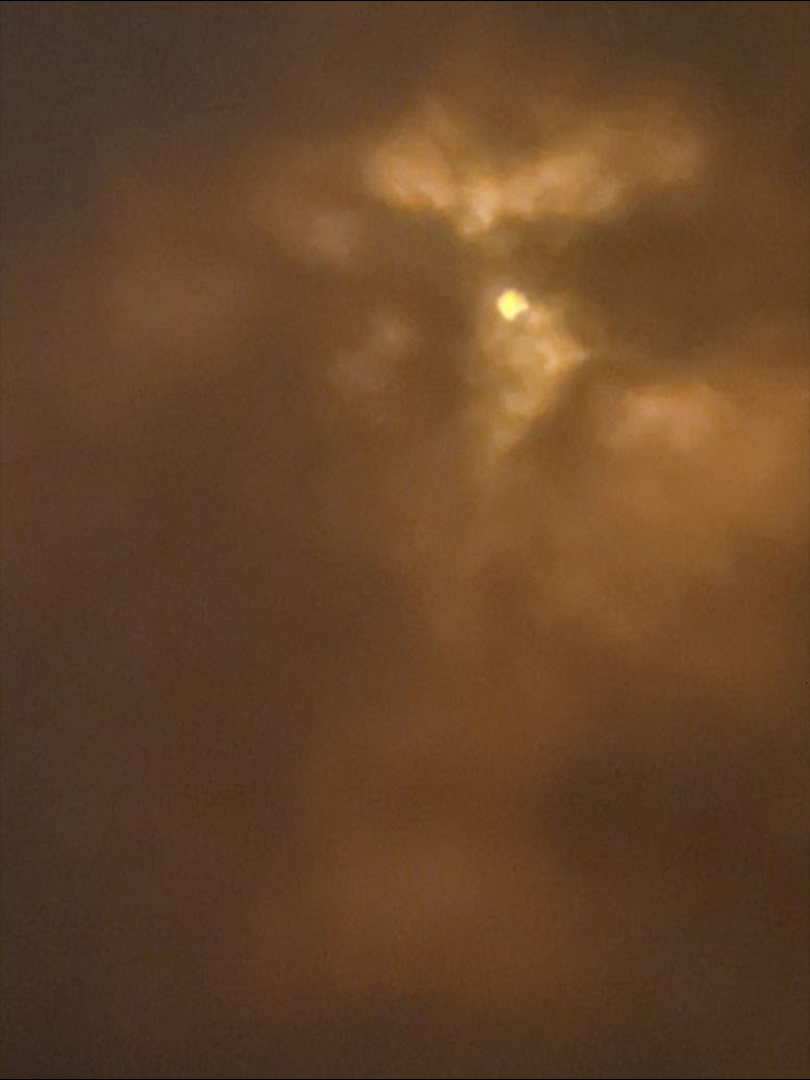
Honestly before the onset of totality, the clouds dissipated enough to see the final rays disappear in the beauty of the moon. Colors appeared strangely mutedand quickly enough, the darkness of evening swept across the sky without warning.
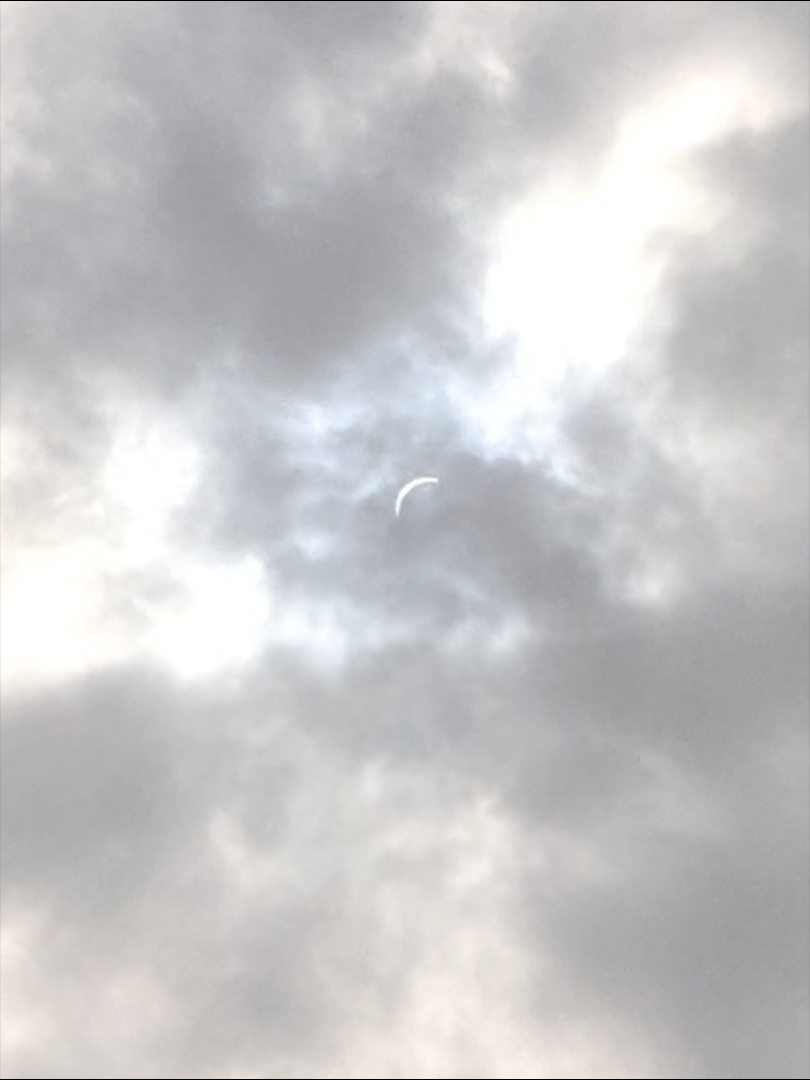
Unfortunately, the sun’s corona wasn’t bright enough to pierce the layer of clouds over MOST. However, others in Syracuse, including onlookers watching from an event at Syracuse Inner Harborwere fortunate to catch a glimpse of the corona through a break in the clouds.
Despite the weather, the eerie darkness of totality filled the crowd with awe.
“When the darkness washed over the group, you could truly feel the energy and the shock that people were experiencing,” Emily Stewart, senior director of education and curation at MOST, wrote in an email to Live Science.
After a minute and a half, a single bead of bright, golden light began to emerge from the clouds. The phenomenon, called Baily’s beads, occurs when sunlight peeks through valleys on the moon’s surface. There were extra cheers throughout the sun’s reemergence, and the partial views immediately afterward were among the clearest of the day.
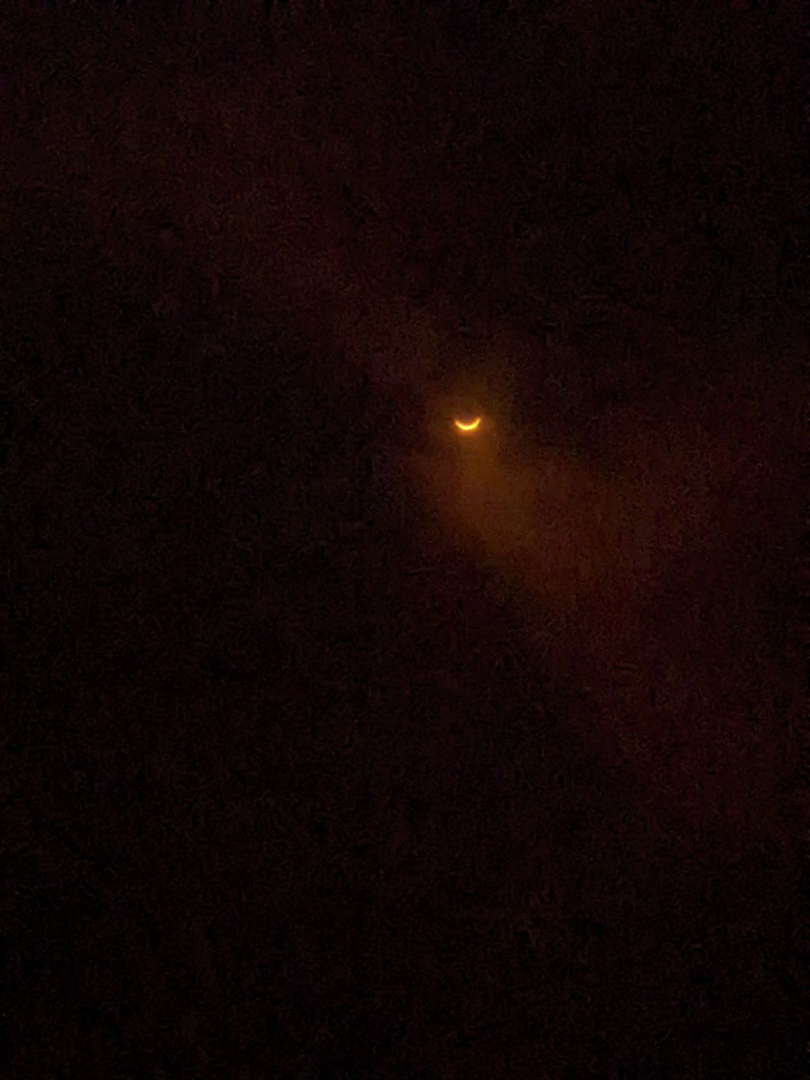
Although the view of the eclipse from MOST was not ideal for viewing totality, Stewart said the experience remained memorable.
“Seeing so many other people come out to see a big event, to hear them cheering and clapping after they saw the eclipse with their own eyes, was so rewarding for our whole team,” she said.