
AI Trends & News
Surface Laptop Ultra Pre-orders Open: Price, Release Date and AI Features
Microsoft opens Surface Laptop Ultra pre-orders from US$2,599.99. Explore its launch date, NVIDIA RTX Spark features and implications for Nigerian businesses.
TAMFIS NIG LTDRC 8067447CAC ACTIVEFinima, Bonny Island, Rivers State

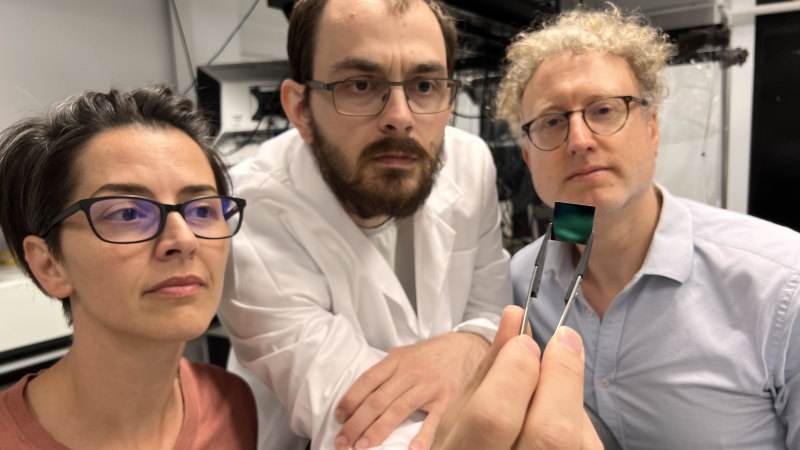
The fight against doping in elite sports is intensifying, with new scientific advancements critical to maintaining integrity and fairness. Synthetic Erythropoietin (EPO), a notorious performance-enhancing drug that boosts oxygen delivery to muscles, has posed a significant challenge for drug testers due to its close similarity to naturally occurring EPO. As the Brisbane 2032 Olympics approach, researchers at the University of Queensland, in partnership with Sport Integrity Australia, are developing revolutionary quantum sensor chip technology designed to improve the detection of synthetic EPO. This article explores the technology’s potential, current obstacles, and its role in the ongoing anti-doping arms race.
Erythropoietin (EPO) is a hormone produced naturally by the kidneys to stimulate red blood cell production, essential for oxygen transport. Synthetic EPO, originally developed to treat medical conditions like anemia and kidney failure, has been misused by endurance athletes seeking enhanced performance. The synthetic version’s molecular structure closely mimics natural EPO, making it extraordinarily difficult to distinguish in drug tests.
Currently, only a handful of experts worldwide—just eight—are qualified to interpret tests that differentiate synthetic EPO from natural variants. These analyses involve meticulous examination under microscopes and complex biochemical assessments, often requiring samples to be sent to specialized accredited laboratories. The subjective nature of these interpretations increases the risk of false negatives or positives, complicating doping enforcement.
This high level of difficulty and limited expertise restrict the accessibility and reliability of EPO testing globally. For Australia, this is particularly significant as none of these experts are based domestically, posing logistical challenges ahead of hosting a major global event like the Brisbane Olympics.
Researchers at the University of Queensland have developed quantum sensor chips, tiny devices no larger than a pinky nail, designed to detect synthetic EPO with unprecedented precision. These chips utilize quantum technology to identify subtle differences in protein structures and movement patterns between natural and synthetic EPO molecules, which conventional microscopes cannot discern.
The quantum sensors operate by detecting unique protein signatures that synthetic EPO exhibits. This innovative approach allows for rapid, objective, and reliable differentiation, eliminating much of the subjectivity and complexity inherent in current testing methods. The technology’s scalability also means it could be mass-produced at low cost, making advanced EPO testing more accessible worldwide.
Professor Warwick Bowen, the project’s lead quantum physicist, emphasizes the technology’s broad societal potential. Beyond sports, such quantum sensing tools could transform medical diagnostics and biochemical analyses, underscoring the significant scientific breakthrough this represents.
Anti-doping efforts have always been characterized as an arms race between those developing new performance-enhancing substances and the agencies tasked with detecting them. As athletes and their support teams innovate new doping methods, testing technologies must evolve rapidly to keep pace. Synthetic EPO, given its subtlety and effectiveness, embodies this ongoing challenge.
The introduction of quantum sensor chips marks a critical advancement in this race. By providing a more straightforward and reliable method to distinguish synthetic from natural EPO, drug testers gain a vital upper hand. This shift could deter athletes from doping by increasing the likelihood of detection and sanctions.
However, this arms race is continuous. Researchers acknowledge that doping methods will adapt, necessitating ongoing innovation in detection technologies. The quantum chip technology is a powerful tool, but it must be part of a broader, adaptive anti-doping strategy that integrates multiple testing modalities and intelligence gathering.
The partnership between the University of Queensland and Sport Integrity Australia exemplifies the critical collaboration required to tackle doping effectively. Combining academic expertise in quantum physics and biochemistry with practical anti-doping enforcement experience accelerates the development and deployment of novel detection methods.
Sport Integrity Australia plays a vital role in ensuring sports remain fair and clean within the nation, providing the infrastructure and regulatory framework necessary to implement new technologies. Their involvement ensures that scientific advances translate into practical applications at major events like the Brisbane Olympics.
This collaboration also fosters innovation by enabling researchers to test their quantum sensor chips in real-world conditions and receive feedback from anti-doping professionals. Such iterative development is essential to optimize the technology’s accuracy, usability, and integration into existing testing protocols.
Despite promising initial results, the quantum sensor chip technology faces several challenges before it can be fully operational for official doping tests. Validation against existing methods, regulatory approval, and scalability are critical hurdles that must be addressed in the coming years.
The technology must undergo rigorous testing to ensure consistent accuracy across diverse athlete populations and conditions. Additionally, integrating the chips into standardized testing workflows requires collaboration with international anti-doping agencies such as the World Anti-Doping Agency (WADA).
Professor Bowen notes a ‘runway’ of approximately seven years to refine the technology, form industry partnerships, and develop commercial products in time for Brisbane 2032. This timeline involves iterative design improvements, pilot testing, and regulatory compliance processes, with the possibility of unforeseen challenges along the way.
The successful deployment of quantum sensor chips could herald a new era in sports integrity, where doping detection becomes more precise, accessible, and deterrent. This advancement aligns with global efforts to uphold fairness and protect athletes’ health.
Beyond EPO detection, the underlying quantum sensing technology holds promise for identifying other synthetic substances and biomarkers relevant to doping. This versatility could expand the tools available to anti-doping agencies, enhancing their capacity to monitor a wider range of prohibited substances.
Moreover, the technology’s potential applications extend into healthcare diagnostics, environmental monitoring, and biochemical research, demonstrating the far-reaching impact of this innovation beyond the sporting arena.
As Brisbane prepares to host the 2032 Summer Olympics, the introduction of advanced anti-doping technologies like quantum sensor chips symbolizes a commitment to clean sport. Organizers and regulators aim to leverage these innovations to ensure a level playing field for all athletes.
This proactive approach reflects lessons learned from past Olympics, where doping scandals have marred competition and damaged public trust. By investing in cutting-edge detection methods well ahead of the event, authorities hope to minimize such risks and enhance the Games’ reputation.
Athletes and fans alike stand to benefit from this enhanced scrutiny, as it fosters confidence in competition outcomes and celebrates genuine athletic achievement. The Brisbane 2032 Olympics could thus set a new standard for anti-doping excellence.
The development of quantum sensor chip technology represents a significant leap forward in the battle against doping, particularly in detecting synthetic EPO. As Brisbane 2032 draws near, this innovation offers hope for a more transparent and fair Olympic Games, where athletes compete on a truly level playing field. While challenges remain in refining and implementing the technology, the collaborative efforts of researchers and anti-doping agencies signal a promising future. In this high-stakes arms race, staying ahead through scientific ingenuity is essential to preserving the spirit of sport and protecting its integrity for generations to come.
Originally reported by smh.com.au. Adapted for our readers.
Keep reading
AI Trends & News
Microsoft opens Surface Laptop Ultra pre-orders from US$2,599.99. Explore its launch date, NVIDIA RTX Spark features and implications for Nigerian businesses.
Science & Technology
DJI’s IBC recognition puts pocket gimbal and panoramic capture in the spotlight. Here is how creators can assess framing, editing effort and recording workflows.
Business News
App store steering is about more than permission to add a link. Explore fees, renewal terms, customer experience and the UK consultation.
TAMFIS NIG LTD
Electrical and instrumentation engineering, bid preparation and consulting, IT and software.

