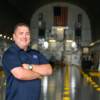
NASA’s Artemis program represents a new era in human space exploration, aiming to return astronauts to the Moon and pave the way for deep space missions. Behind the scenes of this ambitious endeavor lies a network of critical logistical operations, including the transportation of massive rocket components. One key figure in this process is John Campbell, a logistics engineer responsible for managing NASA’s Pegasus barge, an iconic vessel with decades of spaceflight history. This article explores Campbell’s journey, the importance of the Pegasus barge, and how these elements contribute to the Artemis mission’s success.
The Role of John Campbell in NASA’s Artemis Program
John Campbell serves as a logistics engineer at NASA’s Marshall Space Flight Center in Huntsville, Alabama, where he oversees the transportation of critical rocket hardware. His primary responsibility involves managing the Pegasus barge, a vessel tasked with moving the massive core stage of the Space Launch System (SLS) across waterways and state lines. Campbell’s role is vital to ensuring that these complex and delicate components reach their destinations safely and on schedule.
Campbell’s passion for engineering began in his youth, inspired by the mechanics and technologies that power modern space exploration. After earning a mechanical engineering degree from the University of Alabama, he worked in the HVAC sector before joining NASA. Over 17 years, his career has grown alongside NASA’s evolving space missions, allowing him to contribute directly to the Artemis program’s historic goals.
Beyond his technical duties, Campbell finds personal fulfillment in the unique experiences his job offers. From witnessing the stacking of space shuttles at Kennedy Space Center to navigating the peaceful waters alongside dolphins, he appreciates both the professional and natural aspects of his work. His dedication reflects the human side of NASA’s monumental efforts to explore beyond Earth.
NASA’s Pegasus Barge: A Vessel Steeped in History
The Pegasus barge is no ordinary transport vessel; it carries a rich legacy dating back to the Apollo Program. NASA has long relied on barges to ferry the enormous and heavy components of its rockets, including the Saturn V and Space Shuttle hardware. Designed originally for the Space Shuttle Program, Pegasus was updated to meet the demands of the Artemis era and the unprecedented size of the SLS core stage.
Measuring approximately 300 feet in length, Pegasus is engineered to navigate the rivers and coastal waters of the Southeastern United States. Its robust design allows it to carry payloads that are too large or fragile for overland transport, making it an indispensable asset in NASA’s logistical chain. The barge’s history is intertwined with some of the most iconic moments in spaceflight.
Recent upgrades to Pegasus have accommodated the colossal SLS core stage, enabling NASA to transport this critical hardware from manufacturing sites to launch facilities. The barge’s transformation symbolizes NASA’s transition from the Space Shuttle era to the Artemis generation, embodying continuity and innovation in space logistics.
The Journey of the SLS Core Stage Across America
Transporting the 212-foot-long core stage of NASA’s Space Launch System is a monumental logistical challenge. The journey begins at NASA’s Stennis Space Center in Mississippi, where the core stage undergoes testing. From there, Pegasus carries the massive rocket segment along rivers and coastal waterways to the Kennedy Space Center in Florida for final assembly and launch preparations.
This voyage requires meticulous planning and coordination, as the barge must navigate complex waterways while ensuring the safety of the hardware and the environment. John Campbell’s expertise is crucial in managing these operations, coordinating with multiple agencies and stakeholders to avoid delays or incidents during transit.
Each trip aboard Pegasus is a carefully choreographed event, with Campbell often accompanying the journey to oversee operations firsthand. These voyages not only transport critical hardware but also symbolize NASA’s commitment to pushing the boundaries of space exploration by ensuring every component arrives ready for mission success.
From Muscle Shoals to NASA: John Campbell’s Career Path
John Campbell’s story begins in Muscle Shoals, Alabama, where his fascination with engineering took root. Motivated by a desire to contribute to space exploration, he pursued a mechanical engineering degree at the University of Alabama. This academic foundation paved the way for his transition into aerospace logistics, a field that combines engineering principles with operational management.
Campbell’s early professional years in Panama City, Florida, working in HVAC consulting, provided him with valuable experience in managing complex systems. However, his ambition to return home and work for NASA led him to apply for a contractor position, which eventually evolved into a civil service role at the agency.
Over nearly two decades at NASA, Campbell has witnessed the evolution of space programs firsthand. His journey reflects the dedication and adaptability required to support groundbreaking missions, illustrating how individual passion aligns with institutional goals to advance human spaceflight.
The Intersection of Engineering and Nature on the Water
One of the unique aspects of John Campbell’s role is the opportunity to experience nature while fulfilling his engineering responsibilities. Accompanying the Pegasus barge on its journeys offers moments of tranquility amid the high-stakes environment of space logistics. Campbell often describes the peacefulness of being surrounded by water, wildlife, and open skies during transport missions.
Encounters with wildlife, such as pods of dolphins swimming alongside the barge, add a remarkable dimension to the job. These natural experiences serve as a reminder of the broader context in which NASA operates: exploring space while respecting and coexisting with Earth’s ecosystems.
Balancing technical precision with appreciation for the natural world enriches Campbell’s perspective. It highlights the multifaceted nature of space exploration, where human innovation and environmental stewardship must go hand in hand.
The Significance of the Artemis Campaign and NASA’s Future
The Artemis program aims to land the first woman, the first person of color, and the first international partner astronaut on the Moon. This milestone marks a renewed commitment to inclusive and sustainable space exploration. Central to Artemis is the Space Launch System, NASA’s most powerful rocket, capable of carrying astronauts and supplies on deep space missions.
John Campbell’s work with the Pegasus barge directly supports this vision by ensuring that SLS components are safely transported and ready for assembly. His role exemplifies the behind-the-scenes efforts that enable NASA’s ambitious goals, bridging engineering, logistics, and mission success.
As NASA looks beyond the Moon toward Mars and other deep space destinations, the Artemis campaign sets the foundation for humanity’s next giant leap. The continued evolution of transportation methods, such as the Pegasus barge, will remain critical to overcoming the challenges of space infrastructure.
Personal Reflections and the Emotional Impact of Space Exploration
For John Campbell, being part of the Artemis program is more than a professional achievement; it is a deeply emotional experience. Witnessing the transformation of the Pegasus barge and the assembly of the SLS core stage has given him a profound sense of connection to space history and progress.
Though Campbell could not attend the Artemis I launch in person, watching it unfold on television was a moment of pride and fulfillment. Seeing hardware he helped transport ascend into space encapsulated the culmination of years of dedication and teamwork.
These reflections underscore the human element behind space programs. Engineers and logisticians like Campbell contribute to missions that inspire generations, reminding us that space exploration is a collective endeavor fueled by passion, expertise, and perseverance.
The Future of NASA’s Logistical Operations and Innovations
As NASA continues to expand its exploration goals, logistical operations will evolve to meet new demands. Innovations in transportation methods, including upgrades to existing vessels like Pegasus or the development of new technologies, will be essential to support larger payloads and more complex missions.
John Campbell and his colleagues are at the forefront of these advancements, applying lessons learned from past programs to improve efficiency and safety. Their work ensures that NASA’s infrastructure keeps pace with the agency’s ambitious timelines and technical requirements.
The future also holds opportunities for increased collaboration with commercial partners and international agencies. These partnerships will likely introduce new logistical challenges and solutions, further advancing NASA’s capability to explore the Moon, Mars, and beyond.
Conclusion
John Campbell’s work with NASA’s Pegasus barge exemplifies the intricate blend of engineering, logistics, and passion necessary to advance human space exploration. His dedication ensures the safe transport of the Space Launch System’s colossal core stage, a critical component of the Artemis program’s mission to return humans to the Moon. The legacy of the Pegasus barge and the commitment of professionals like Campbell underscore the collaborative and innovative spirit driving NASA’s future endeavors. As Artemis paves the way for deeper space exploration, the stories of individuals behind the scenes remind us that every successful mission is built on expertise, perseverance, and a shared vision for humanity’s journey beyond Earth.
Originally reported by nasa.gov. Adapted for our readers.
Recent advances in machine perfusion technology are not only preserving donated livers but also making them biologically younger at a molecular level. This breakthrough…
What happens when human imagination, artificial intelligence, art and technology come together? From September 1 to 6, Samsung Electronics presented a special exhibition themed…