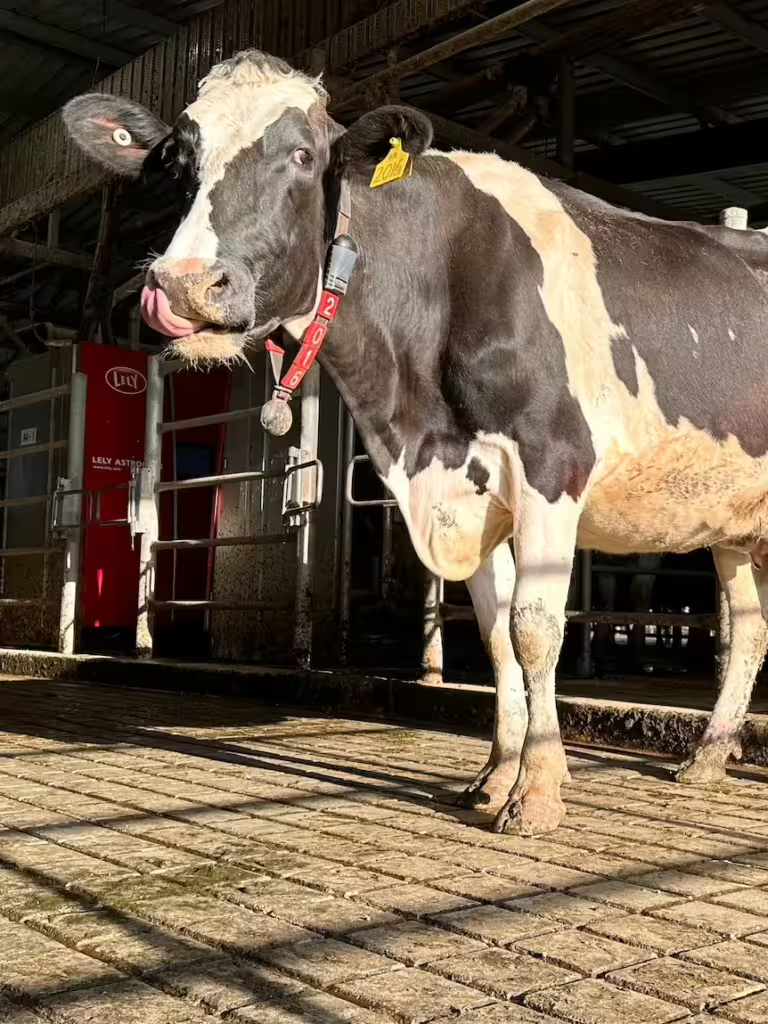
How AI is allowing cows to send messages to farmers when they’re giving birth
Artificial intelligence (AI) is no longer confined to futuristic laboratories or space exploration missions; it is making significant inroads into everyday agricultural practices in Australia. From monitoring cows during calving to precisely targeting weeds in vast paddocks, AI technologies are reshaping how farmers manage their operations. This article explores the various ways AI is being integrated into Australian farms, highlighting key innovations, benefits, and implications for the future of food production.
AI’s Growing Role in Australian Agriculture
Artificial intelligence is a discipline that uses digital technologies to collect and analyze data, identify patterns, and provide actionable insights. In Australian agriculture, AI adoption is accelerating, driven by the need to increase efficiency, improve animal welfare, and reduce environmental impact.
Associate Professor Sigfredo Fuentes of Melbourne University, who collaborates with NASA on AI projects including robotics designed for space missions, notes that Australian agriculture is among the fastest sectors to embrace these technologies. AI is embedded in devices ranging from smartphones to drones and robotic systems, enabling farmers to gather and process vast amounts of data that would be impossible to handle manually.
This rapid adoption reflects the broader trend of AI moving from experimental applications to practical, real-world tools that support farmers’ decision-making and operational efficiency.
Enhancing Livestock Management with AI
One of the most promising applications of AI in agriculture is in livestock monitoring and management. AI-powered sensors and cameras can detect subtle changes in animal behavior and health, often before symptoms become visible to farmers. This early detection capability is crucial for timely interventions that improve animal welfare and productivity.
For example, Dutch dairy technology company Lely has developed robotic milking machines equipped with sensors that continuously monitor cows' behavior. Their latest model, the Zeta, can identify cows about to give birth and alert farmers, allowing for prompt assistance during calving. This represents a significant advancement over traditional milking machines, which have been in use for decades but lacked such intelligent monitoring.
At Melbourne University’s Dookie agricultural campus, a three-robot dairy system uses radio collars to identify individual cows, control milking schedules, allocate precise feed rations, and record milk output. Dairy manager Stuart Beverley highlights that this system improves animal welfare by allowing cows to be milked on their own schedule, which positively affects their health. The system’s continuous monitoring ensures that any signs of illness or distress are quickly detected, enabling early treatment and reducing the risk of disease spread.
These AI-driven innovations not only enhance productivity but also align with growing consumer expectations for ethical and sustainable farming practices.
Precision Agriculture: Targeted Weed Control
AI is also transforming crop management through precision agriculture techniques that minimize chemical use and environmental impact. At Dookie agricultural campus, farm manager Tim Reeks operates a large tractor fitted with a 36-metre-wide spray boom equipped with tiny cameras that capture images eight times per second.
This technology enables the tractor to selectively spray only the weeds scattered throughout the pasture, significantly reducing herbicide application. In trials, chemical use was cut by up to 96% for grass weeds in canola and 84% in other paddocks. Such precision not only benefits the environment by reducing chemical runoff but also improves crop quality and lowers costs for farmers.
The system’s ability to distinguish between crops and weeds in real time is a major step forward from traditional blanket spraying methods, which often waste chemicals and can harm beneficial plants and soil health.
By integrating AI with advanced imaging and spraying technologies, farmers can achieve more sustainable land management practices that support biodiversity and long-term soil productivity.
Water Management Advances Using AI
Water is a critical resource in agriculture, and AI is helping farmers optimize its use. CSIRO’s Dr. Rose Roche and her team have developed WaterWise, an AI-assisted program that combines plant-based sensing technologies with weather data to detect water stress in crops and forecast optimal irrigation schedules.
By accurately predicting when crops need watering, WaterWise enables growers to conserve water while maintaining crop health and yield. The technology has been commercialized through Goanna Ag and is already in use by Australian irrigators, including the cotton industry, with expansion into international markets such as the United States.
This AI-driven approach represents a shift from traditional irrigation methods that often rely on fixed schedules or manual observation, which can lead to over- or under-watering. WaterWise’s smart analytics provide real-time, precise recommendations tailored to specific crop needs and environmental conditions.
Effective water management is increasingly vital in the face of climate variability and water scarcity, making AI tools like WaterWise essential for sustainable agricultural practices.
Broader Applications and Future Prospects
Beyond livestock and crop management, AI is being deployed in greenhouses to monitor crop yields, detect pest outbreaks, and assist with pollination. Drones equipped with AI can survey large areas quickly, identifying issues that require intervention before they escalate.
In fruit packing houses, AI systems can identify overripe or defective fruit that may be missed by human workers, improving product quality and reducing waste. These capabilities enhance supply chain efficiency and help meet consumer demands for high-quality produce.
Associate Professor Fuentes emphasizes the importance of agriculture and food science as foundational to future scientific exploration, including space missions. The integration of AI in agriculture not only supports food security but also underpins broader technological advancements.
As AI continues to evolve, its role in agriculture is expected to expand further, driving innovations that will support sustainable food production on Earth and potentially in extraterrestrial environments.
What this means
Artificial intelligence is reshaping Australian agriculture by providing farmers with powerful tools to monitor livestock health, manage crops more precisely, and use resources more efficiently. These technologies offer tangible benefits such as improved animal welfare, reduced chemical use, and better water management, all of which contribute to more sustainable farming practices. As AI continues to evolve, its integration into agriculture will likely deepen, supporting food security and environmental stewardship while paving the way for innovations that extend well beyond the farm gate.
Originally reported by abc.net.au. Adapted for our readers with AI assistance.
Microsoft opens Surface Laptop Ultra pre-orders from US$2,599.99. Explore its launch date, NVIDIA RTX Spark features and implications for Nigerian businesses.
DJI’s IBC recognition puts pocket gimbal and panoramic capture in the spotlight. Here is how creators can assess framing, editing effort and recording workflows.