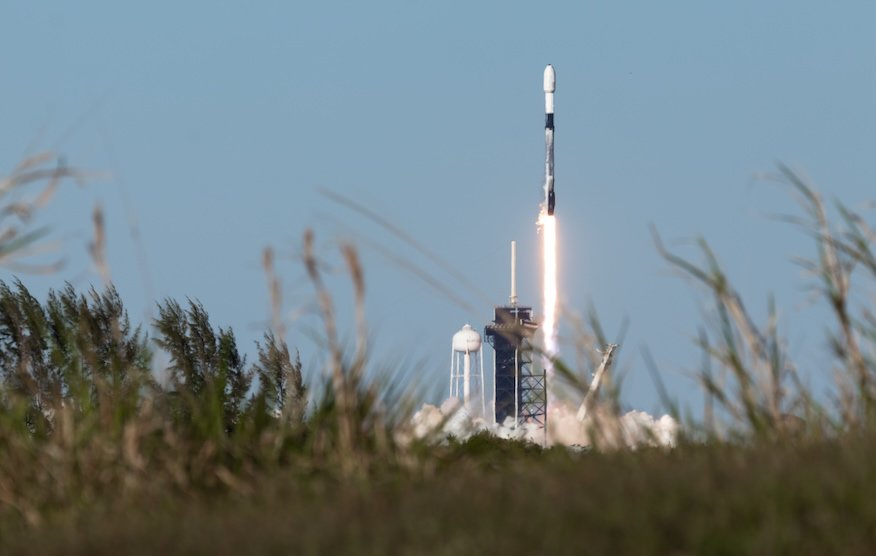
Eutelsat mission marks first of double Falcon 9 originate day for SpaceX
SpaceX continues to push the boundaries of space launch capabilities with its ambitious scheduling and advanced technology. On March 30, 2024, the company marked a significant milestone by launching the Eutelsat 36D satellite aboard a Falcon 9 rocket from NASA’s Kennedy Space Center. This launch was intended to be the first of potentially three Falcon 9 missions in less than five hours, showcasing SpaceX's growing operational tempo. Despite weather-related setbacks that postponed the third launch, the day demonstrated key advancements in booster reusability, satellite technology, and mission efficiency. This article explores the details of the Eutelsat 36D mission, the Falcon 9 rocket's performance, and the broader context of SpaceX's rapid launch cadence.
The Eutelsat 36D Launch: A New Chapter in Telecommunications
On March 30, 2024, SpaceX launched the Eutelsat 36D satellite from Launch Complex 39A at NASA’s Kennedy Space Center in Florida. Liftoff occurred at 5:52 p.m. EDT, marking a critical step in expanding global telecommunications infrastructure. The Eutelsat 36D is a geostationary satellite designed to deliver enhanced television and communication services primarily to Africa and Eurasia.
Built by Airbus on its Eurostar Neo satellite bus, Eutelsat 36D features 70 Ku-band transponders, enabling it to provide over 1,100 television channels to millions of homes. The satellite replaces the aging Eutelsat 36B at the 36° East orbital slot, ensuring continuity and improved service quality for customers in the region.
In addition to broadcasting, the satellite carries an Ultra High Frequency (UHF) payload developed in partnership with Airbus Defence and Space. This payload supports enhanced military and governmental communications across Europe, the Middle East, and Africa (EMEA), underscoring the satellite's dual commercial and strategic importance.
The Falcon 9 rocket used for the Eutelsat 36D mission was powered by first stage booster B1076, a veteran of multiple flights. This mission marked its 12th launch, highlighting SpaceX's commitment to booster reusability as a means of reducing launch costs and increasing operational efficiency.
B1076 previously supported a variety of missions, including cargo resupply flights to the International Space Station under NASA’s Commercial Resupply Services program and commercial satellite deployments. Its successful recovery after the Eutelsat 36D launch represents the 76th landing on the droneship 'Of Course I Still Love You' (OCISLY) stationed in the Atlantic Ocean.
The booster’s landing was achieved approximately 8.5 minutes after liftoff, demonstrating SpaceX’s precision in booster recovery techniques. This achievement contributes to the cumulative total of 289 booster landings, reinforcing SpaceX’s leadership in sustainable spaceflight operations.
Satellite Transport and Preparation: Airbus and the BelugaXL
The Eutelsat 36D satellite was transported from Airbus’ manufacturing facility in Toulouse, France, to Florida aboard the Airbus BelugaXL, a specialized cargo aircraft based on the A330-200 platform. This transport took place on March 11, 2024, ensuring the satellite’s safe arrival for final integration and testing before launch.
The BelugaXL’s oversized cargo hold is specifically designed to accommodate large aerospace components such as satellites and aircraft parts, allowing Airbus to efficiently move delicate payloads across continents. This capability is crucial for meeting tight launch schedules and maintaining satellite readiness.
Upon arrival, the satellite underwent rigorous pre-launch checks at Kennedy Space Center. These procedures confirm the satellite’s health and functionality, ensuring it will operate effectively once deployed into geostationary orbit.
SpaceX’s Ambitious Launch Cadence: The Quest for Multiple Launches in a Single Day
March 30, 2024, was notable for SpaceX’s attempt to conduct three Falcon 9 launches within a five-hour window. Following the successful Eutelsat 36D mission, the company planned two additional launches of Starlink satellites to further expand its global broadband network.
The second launch, Starlink 6-45, lifted off at 9:30 p.m. EDT from Launch Complex 40 at Cape Canaveral Space Force Station. This mission continued SpaceX’s rapid deployment of its Starlink constellation, aiming to provide low-latency internet access worldwide, especially to underserved areas.
Unfortunately, the third launch, scheduled from Vandenberg Space Force Base in California, was scrubbed due to adverse weather conditions caused by a storm system affecting Southern California. This delay underscores the challenges of maintaining a high launch cadence in the face of environmental constraints.
Starlink Missions: Expanding Global Connectivity
Starlink, SpaceX’s satellite internet constellation, is central to the company’s vision of global broadband access. The March 30 launches were part of the ongoing Starlink 6 series, which aims to deploy thousands of satellites to provide high-speed, low-latency internet services worldwide.
The Starlink 6-45 mission involved a Falcon 9 rocket launching from Cape Canaveral, successfully deploying dozens of small satellites into low Earth orbit. These satellites work collectively to form a mesh network, enabling internet connectivity even in remote or underserved regions.
Despite the cancellation of the third launch, SpaceX remains committed to maintaining a rapid deployment schedule. The company has yet to announce a new launch date for the postponed mission, but its ongoing efforts reflect a strategic push to expand and improve the Starlink network continuously.
Weather Challenges and Launch Scrubs: Managing Risks in Space Operations
Space launches are highly sensitive to weather conditions, which can impact vehicle safety and mission success. On March 30, while the first two Falcon 9 launches proceeded smoothly from Florida, a storm system over Southern California forced the cancellation of the third launch from Vandenberg Space Force Base.
This weather system brought strong winds, rain, and electrical activity, conditions that are incompatible with safe rocket launches. SpaceX and launch authorities prioritize safety, opting to postpone missions rather than risk hardware damage or mission failure.
The scrubbed launch highlights the importance of flexible scheduling and robust contingency planning in space operations. SpaceX’s ability to conduct multiple launches in different locations on the same day demonstrates resilience, even when faced with unpredictable weather disruptions.
The Future of Falcon 9 Launches: Increasing Frequency and Innovation
SpaceX’s achievements on March 30 reflect a broader trend toward increasing launch frequency and operational efficiency. The Falcon 9 rocket, with its reusable first stage and reliable performance, remains the backbone of SpaceX’s launch fleet, supporting a wide range of missions from commercial satellites to cargo resupply flights.
The company’s goal of conducting multiple launches per day is a testament to advancements in rocket turnaround time, ground support operations, and mission planning. These improvements enable rapid satellite deployment and support ambitious projects like Starlink and large geostationary satellite launches.
Looking ahead, SpaceX continues to innovate with next-generation vehicles like Starship. However, Falcon 9’s proven reliability and cost-effectiveness ensure it will remain a workhorse for the foreseeable future, driving the commercial space industry toward greater accessibility and sustainability.
Implications for the Satellite Industry and Global Communications
The successful deployment of Eutelsat 36D reinforces the critical role of geostationary satellites in global communications. By upgrading orbital assets, companies like Eutelsat can deliver higher-quality services and expand coverage areas, benefiting millions of users across continents.
SpaceX’s launch cadence and reusable technology reduce costs and increase launch availability, enabling satellite operators to plan and execute missions more flexibly. This dynamic is fostering competition and innovation within the satellite industry, accelerating the pace of technological advancement.
Moreover, the integration of commercial and defense payloads on satellites like Eutelsat 36D highlights the growing convergence between civilian and governmental space applications. This trend supports enhanced security communications and resilience in critical infrastructure.
Conclusion
The successful launch of the Eutelsat 36D satellite aboard Falcon 9 on March 30, 2024, exemplifies SpaceX’s growing capabilities in rapid, reliable space access. Despite weather-related challenges that prevented a third launch on the same day, the mission underscored the maturity of Falcon 9’s reusable technology and the expanding role of commercial satellites in global communications. As SpaceX continues to push the boundaries of launch cadence and satellite deployment, the industry can anticipate more frequent, cost-effective missions that will accelerate connectivity and space innovation worldwide. The Eutelsat 36D mission stands as a milestone in this evolving space landscape, highlighting the synergy between advanced aerospace manufacturing, launch technology, and communications infrastructure.
Recent advances in machine perfusion technology are not only preserving donated livers but also making them biologically younger at a molecular level. This breakthrough…
What happens when human imagination, artificial intelligence, art and technology come together? From September 1 to 6, Samsung Electronics presented a special exhibition themed…