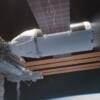
Enhanced Dragon spacecraft to deorbit the ISS at the end of its life
The International Space Station (ISS), a symbol of decades-long international cooperation in space exploration, is approaching the final chapter of its operational life. NASA has selected SpaceX to develop a specialized spacecraft variant, the United States Deorbit Vehicle (USDV), tasked with the critical mission of safely guiding the ISS back into Earth’s atmosphere. This initiative marks a significant step in responsible space station management, addressing the complex challenge of deorbiting a massive orbital structure. This article provides an in-depth look at the USDV’s design, mission profile, and the implications for future space operations.
The USDV: An Enhanced Dragon Spacecraft for a Unique Mission
NASA awarded SpaceX a contract valued at up to $843 million to develop the USDV, a heavily modified version of the company’s Dragon spacecraft. Unlike the standard Dragon used for crew and cargo missions, the USDV features a substantially redesigned trunk section that is twice as long and equipped with significantly more propulsion capabilities.
Sarah Walker, director of Dragon mission management at SpaceX, explained that the USDV will house 46 Draco thrusters—16 dedicated to attitude control and 30 designed to execute the complex maneuvers required to lower the ISS’s orbit. This is a marked increase compared to the current Dragon configuration, enabling the spacecraft to handle the substantial task of deorbiting a massive orbital platform.
The enhanced trunk will integrate engines, propellant tanks, power generation systems, and other critical subsystems, effectively making it a spacecraft within a spacecraft. It will store six times the propellant and generate three to four times the power of the existing Dragon, underscoring the scale and complexity of the mission.
Mission Profile: From Arrival to Controlled Deorbit
NASA plans to launch the USDV to the ISS shortly after the arrival of the station’s final crew. Once docked and checked out, the USDV will remain attached to the station as its orbit naturally decays from approximately 400 kilometers to about 330 kilometers in altitude.
The final crew will depart the ISS once this lower orbit is reached, marking the beginning of the station’s end-of-life phase. Over the following six months, the station’s orbit will continue to decay naturally before the USDV initiates a controlled deorbit maneuver.
The deorbit will be carefully targeted to a remote ocean area within a narrow 2,000-kilometer-long corridor, minimizing risk to populated areas. NASA anticipates that some debris, ranging in size from household appliances to small vehicles, will survive reentry and splash down within this corridor, necessitating precise planning and risk mitigation.
Technical and Logistical Challenges: Launch Vehicle and Propellant Requirements
The USDV’s estimated mass exceeds 30,000 kilograms, including 16,000 kilograms of propellant, making it significantly heavier than current Dragon missions. As a result, NASA will require a heavier-class launch vehicle than the Falcon 9, which is currently used for Dragon launches.
NASA will procure the launch vehicle separately, with a decision expected at least three years prior to the USDV launch. While SpaceX’s Falcon 9 is the workhorse for many missions, the agency is open to other options and has expressed willingness to support SpaceX if their heavier-lift vehicle becomes available.
This requirement highlights the complexity of the deorbit mission, which demands substantial propellant reserves and robust propulsion to safely lower the ISS’s orbit and guide it through reentry.
Competitive Selection and Emphasis on Flight Heritage
Only two companies submitted proposals for the USDV contract: SpaceX and Northrop Grumman. NASA’s evaluation favored SpaceX due to a combination of lower cost and higher ratings in mission suitability and past performance.
NASA emphasized the importance of flight heritage in its selection process, reflecting the critical need for reliability in a mission that involves the controlled deorbit of a large orbital asset. Both SpaceX and Northrop Grumman have existing spacecraft compatible with ISS docking, but SpaceX’s demonstrated operational experience gave it a competitive edge.
Ken Bowersox, NASA’s associate administrator for space operations, expressed satisfaction with the proposals received, noting that while more bids were expected, the quality of the submissions met NASA’s stringent criteria.
Context: Recent Falcon 9 Anomaly and Its Impact on ISS Missions
The USDV briefing occurred shortly after a Falcon 9 rocket experienced an anomaly during a Starlink satellite launch. A leak of liquid oxygen in the upper stage prevented a critical engine burn, resulting in satellites being placed in unstable orbits.
This incident temporarily grounded Falcon 9 launches, raising concerns about the schedule of upcoming ISS missions. However, NASA confirmed plans to proceed with a Cygnus cargo launch in early August and the Crew-9 mission in mid-August, both using Falcon 9 rockets.
SpaceX is conducting a thorough investigation in cooperation with the Federal Aviation Administration (FAA), which must certify the rocket’s safety before flight operations resume. NASA is actively involved in the investigation, underscoring the importance of safety and reliability for missions supporting the ISS.
What this means
The development of the United States Deorbit Vehicle represents a pivotal advancement in space station end-of-life management, combining innovative spacecraft design with rigorous safety protocols. SpaceX’s enhanced Dragon variant will provide NASA with the capability to responsibly and safely retire the ISS, mitigating risks associated with uncontrolled reentry. While challenges remain, including launch vehicle selection and ensuring reliability amid recent rocket anomalies, the USDV project exemplifies proactive planning for the sustainable use of orbital infrastructure. As the ISS approaches its final years, this mission underscores the evolving responsibilities of space agencies to manage orbital assets with precision and care.
Originally reported by spacenews.com. Adapted for our readers with AI assistance.
Recent advances in machine perfusion technology are not only preserving donated livers but also making them biologically younger at a molecular level. This breakthrough…
What happens when human imagination, artificial intelligence, art and technology come together? From September 1 to 6, Samsung Electronics presented a special exhibition themed…