
AI Trends & News
Surface Laptop Ultra Pre-orders Open: Price, Release Date and AI Features
Microsoft opens Surface Laptop Ultra pre-orders from US$2,599.99. Explore its launch date, NVIDIA RTX Spark features and implications for Nigerian businesses.
TAMFIS NIG LTDRC 8067447CAC ACTIVEFinima, Bonny Island, Rivers State

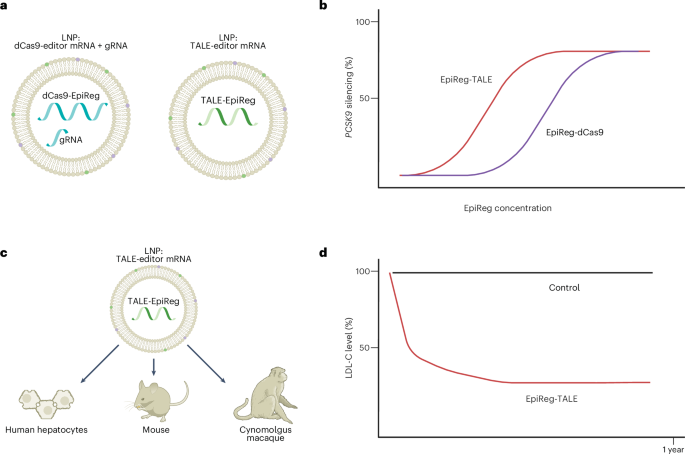
Epigenetic regulation plays a pivotal role in controlling gene expression without altering the DNA sequence itself. Recent advances have introduced programmable tools capable of modifying epigenetic marks to achieve durable gene silencing. Among these, transcription activator-like effector (TALE)-based editors have emerged as promising agents for precise and long-lasting epigenetic modulation. This article delves into the principles, applications, and implications of TALE-based epigenetic editors, emphasizing their potential to revolutionize therapeutic gene silencing strategies.
Epigenetic silencing refers to the process by which gene expression is stably repressed through modifications to chromatin structure or DNA methylation, without altering the underlying genetic code. This regulation is crucial for normal development, cellular differentiation, and maintaining genomic integrity. Aberrations in epigenetic marks can lead to diseases such as cancer, neurological disorders, and metabolic syndromes.
Conventional gene silencing methods often rely on RNA interference or gene editing technologies that may cause permanent DNA alterations or transient effects. Epigenetic silencing offers a reversible and potentially safer alternative by modulating gene activity through chromatin remodeling and histone modifications. This approach provides a durable yet flexible means of controlling gene expression, which is particularly valuable for therapeutic applications.
Targeted epigenetic editing tools enable precise control over gene silencing by directing effector domains to specific genomic loci. By harnessing these tools, researchers can induce stable repression of disease-causing genes, offering new avenues for treatment that minimize off-target effects and preserve genome integrity.
Transcription activator-like effectors (TALEs) are customizable DNA-binding proteins derived from Xanthomonas bacteria. They can be engineered to recognize specific DNA sequences through modular repeat domains, enabling precise targeting of genomic loci. This specificity makes TALEs ideal scaffolds for delivering epigenetic modifiers to desired genes.
TALE-based epigenetic editors combine the DNA-binding capability of TALEs with enzymatic domains that catalyze epigenetic modifications such as DNA methylation or histone deacetylation. By fusing TALEs to repressors like KRAB (Krüppel-associated box) or DNA methyltransferases, researchers create chimeric proteins capable of inducing durable gene silencing in a targeted manner.
Compared to other programmable systems like CRISPR-Cas, TALE-based editors offer advantages including reduced off-target activity and greater modularity in target selection, especially in regions with complex chromatin environments. Their transient expression can trigger long-lasting epigenetic changes, making them powerful tools for therapeutic gene regulation.
TALE-based editors achieve durable silencing through recruitment of epigenetic effector domains that modify chromatin states at target genes. For instance, the KRAB domain recruits histone-modifying complexes that deposit repressive marks such as histone H3 lysine 9 trimethylation (H3K9me3), leading to heterochromatin formation and transcriptional repression.
In addition to histone modifications, TALE editors fused to DNA methyltransferases can catalyze the addition of methyl groups to CpG dinucleotides within promoters, reinforcing gene silencing by inhibiting transcription factor binding. The combined effect of histone and DNA modifications establishes a stable repressive chromatin environment that persists even after the TALE editor is no longer expressed.
This durability is critical for therapeutic applications where transient delivery of the TALE editor, for example via viral vectors or mRNA, can induce long-term gene silencing without permanent genomic alterations. Such epigenetic memory reduces the need for repeated treatments and minimizes risks associated with continuous expression of gene editors.
One of the most compelling applications of TALE-based epigenetic editors lies in treating genetic and acquired diseases by silencing pathogenic genes. For example, silencing PCSK9, a gene involved in cholesterol metabolism, has been demonstrated in animal models to reduce LDL cholesterol levels, offering a promising strategy for cardiovascular disease management.
Beyond metabolic disorders, TALE editors have potential in oncology by repressing oncogenes or activating tumor suppressor genes through epigenetic modulation. Their precision and durability could improve the safety and effectiveness of cancer therapies by minimizing off-target effects and resistance mechanisms.
Neurological diseases characterized by aberrant gene expression, such as Huntington’s disease or certain epilepsies, may also benefit from TALE-mediated epigenetic silencing. By targeting disease-causing genes in neurons, these editors could provide long-lasting therapeutic effects while preserving normal cellular functions.
While CRISPR-Cas systems have revolutionized genome editing, TALE-based editors offer distinct benefits in epigenetic applications. TALEs can be designed to target sequences with high specificity, especially in repetitive or methylated regions where CRISPR targeting may be challenging.
TALE editors induce gene silencing without introducing double-strand breaks or permanent DNA mutations, reducing risks of genomic instability and unintended consequences. This feature is particularly important for clinical applications requiring high safety profiles.
Moreover, the modular nature of TALEs allows flexible fusion with diverse epigenetic effectors, enabling tailored regulation of gene expression. Their transient delivery coupled with durable silencing reduces concerns related to prolonged expression of exogenous proteins, which can trigger immune responses.
Despite their promise, several challenges remain in the development of TALE-based epigenetic editors. Designing highly specific TALE arrays can be labor-intensive and technically demanding compared to guide RNA programming in CRISPR systems.
Efficient delivery of TALE editors to target tissues, especially in vivo, requires optimization of vector systems such as adeno-associated viruses (AAV) or lipid nanoparticles. Ensuring tissue-specific expression and minimizing immune responses remain critical hurdles for clinical translation.
Additionally, long-term effects of induced epigenetic modifications need thorough evaluation to assess potential off-target silencing or unintended epigenetic remodeling. Comprehensive safety and efficacy studies in relevant animal models are essential before human applications.
Advancements in protein engineering and synthetic biology are expected to streamline the design of TALE arrays, enhancing their targeting efficiency and specificity. Integration with high-throughput screening may accelerate the discovery of optimal TALE configurations for diverse genomic loci.
Combining TALE editors with other epigenetic modulators or delivery platforms could expand their therapeutic scope. For instance, multiplexed epigenetic editing might enable simultaneous regulation of multiple genes involved in complex diseases.
Emerging technologies such as inducible or reversible TALE systems offer prospects for fine-tuned temporal control over gene silencing. These innovations will improve safety and adaptability, paving the way for personalized epigenetic therapies with durable outcomes.
TALE-based epigenetic editors represent a significant leap forward in precise, durable gene regulation. By harnessing their unique DNA-binding specificity and ability to recruit chromatin-modifying effectors, these tools provide a powerful platform for therapeutic gene silencing without permanent DNA alteration.
Their applications span a broad spectrum of diseases, from metabolic and cardiovascular disorders to cancer and neurological conditions. While challenges in delivery and design remain, ongoing research continues to enhance their efficacy and safety profiles.
As the field progresses, TALE-based epigenetic silencing holds great potential to transform gene therapy paradigms, enabling long-lasting, controllable, and reversible modulation of gene expression tailored to individual patient needs.
The advent of TALE-based epigenetic editors marks a transformative advance in gene regulation technology, offering a robust and durable approach to silencing disease-associated genes. By combining precise DNA targeting with the ability to induce lasting epigenetic modifications, these editors circumvent the risks of permanent genome editing while achieving sustained therapeutic effects. Continued innovation in design, delivery, and safety assessment will be critical to fully realize their clinical potential. Ultimately, TALE-based epigenetic silencing paves the way for next-generation therapies that are both effective and safe, heralding a new era in personalized medicine.
Originally reported by nature.com. Adapted for our readers.
Keep reading
AI Trends & News
Microsoft opens Surface Laptop Ultra pre-orders from US$2,599.99. Explore its launch date, NVIDIA RTX Spark features and implications for Nigerian businesses.
Science & Technology
DJI’s IBC recognition puts pocket gimbal and panoramic capture in the spotlight. Here is how creators can assess framing, editing effort and recording workflows.
Business News
App store steering is about more than permission to add a link. Explore fees, renewal terms, customer experience and the UK consultation.
TAMFIS NIG LTD
Electrical and instrumentation engineering, bid preparation and consulting, IT and software.

