“Digital Spider Silk” Sensors: Revolutionizing Bioelectronics With Eco-Friendly Technology
Technology tamfitronics
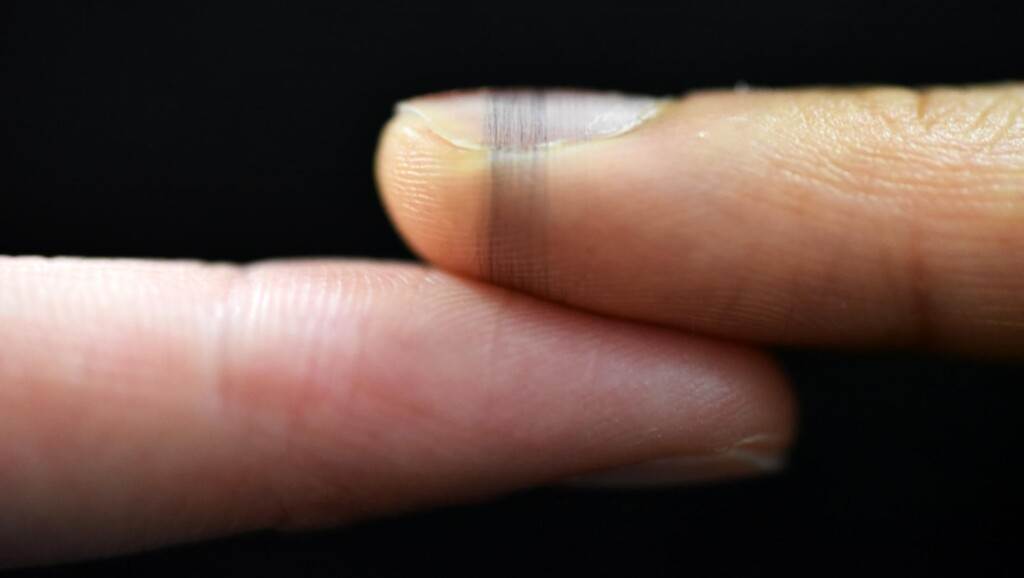
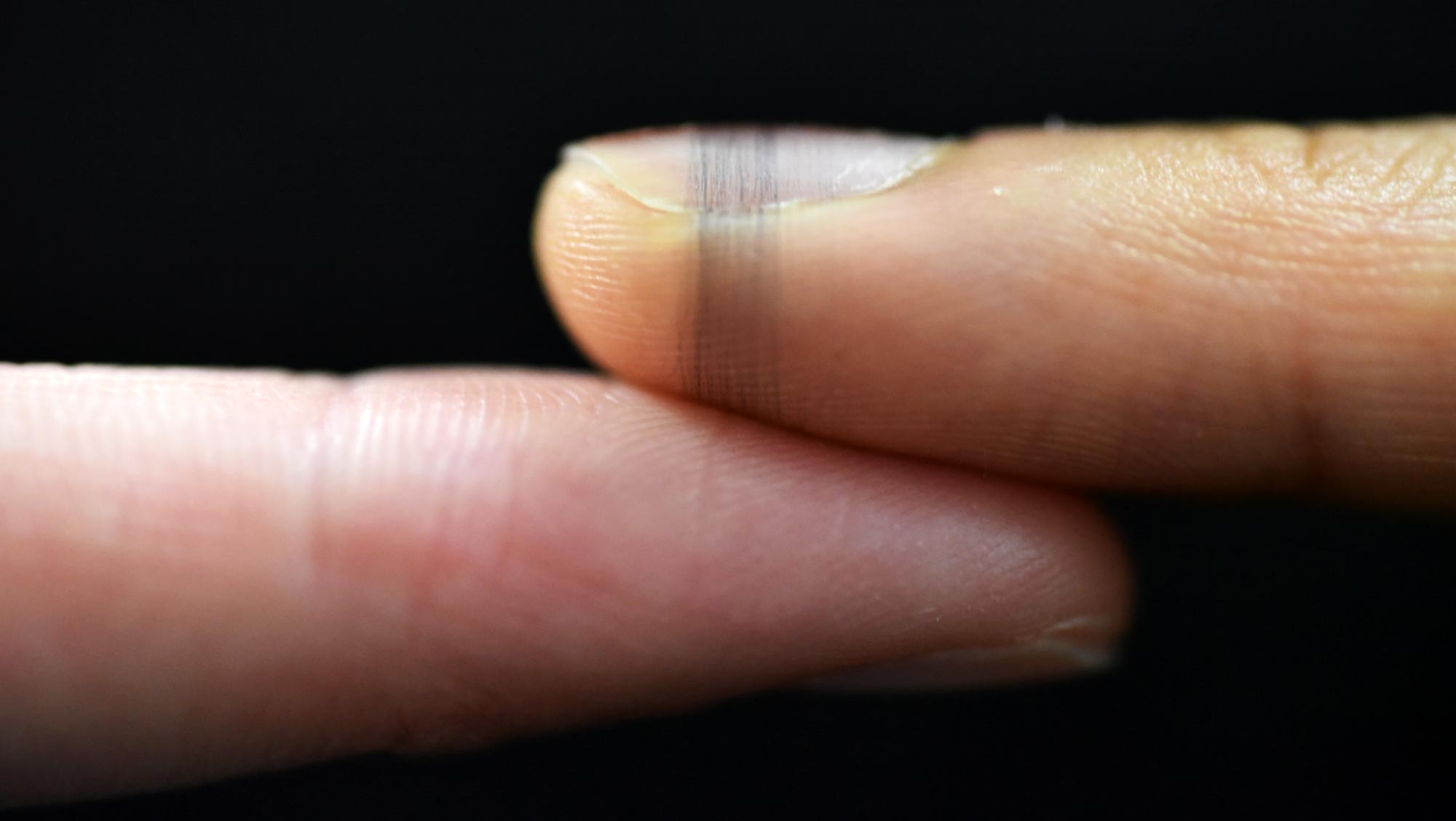
Researchers hang developed a formula to originate adaptive and eco-friendly sensors that can even be at once and imperceptibly printed onto a limiteless collection of biological surfaces, whether or now no longer that’s a finger or a flower petal. Credit: College of Cambridge
Cambridge researchers have developed lightweight, eco-friendly sensors, inspired by spider silk, that seamlessly integrate with biological surfaces for various purposes in health monitoring and virtual reality.
Scientists have developed a formula to create adaptive and eco-friendly sensors that can be instantly and imperceptibly printed onto a limitless variety of biological surfaces, whether that’s a finger or a flower petal.
The contrivance, developed by researchers from the College of Cambridge, takes its inspiration from spider silk, that would per chance per chance just conform and follow a vary of surfaces. These ‘spider silks’ also incorporate bioelectronics, so that different sensing capabilities can even be added to the ‘internet’.
Evolved Sensor Technology
The fibers, now no less than 50 times smaller than a human hair, are so lightweight that the researchers printed them directly onto the fluffy seedhead of a dandelion without collapsing its structure. When printed on human skin, the fiber sensors conform to the skin and characterize the sweat pores, so the wearer does not detect their presence. Tests of the fibers printed onto a human finger indicate they could be used as proper health monitors.
This low-fracture and low-emission method for augmenting living structures could be used in a variety of fields, from healthcare and virtual reality, to electronic textiles and environmental monitoring. The results are reported today (May 24) in the journal Nature Electronics.
Researchers have developed a method to create adaptive and eco-friendly sensors that can be directly and imperceptibly printed onto a wide range of biological surfaces, whether that’s a finger or a flower petal. The fibers, now no less than 50 times smaller than a human hair, are so lightweight that the researchers printed them directly onto the fluffy seedhead of a dandelion without collapsing its structure. Credit: University of Cambridge
Although human skin is remarkably sensitive, augmenting it with electronic sensors could fundamentally change how we interact with the world around us. For example, sensors printed directly onto the skin could be used for continuous health monitoring, for sensing skin sensations, or to enhance the sense of ‘reality’ in gaming or virtual reality applications.
Challenges in Wearable Technology
While wearable technologies with embedded sensors, such as smartwatches, are widely available, these devices can be cumbersome and conspicuous. They may inhibit the skin’s intrinsic sensations.
“If you want to precisely sense anything on a biological surface like skin or a leaf, the interface between the device and the surface is crucial,” said Professor Yan Yan Shery Huang from Cambridge’s Department of Engineering, who led the research. “We also want bioelectronics that are entirely imperceptible to the user, so they do not in any way interfere with how the user interacts with the world, and we want them to be sustainable and low-power.”
Researchers have developed a formula to create adaptive and eco-friendly sensors that can be directly and imperceptibly printed onto a vast range of biological surfaces, whether that’s a finger or a flower petal. When printed on human skin, the fiber sensors conform to the skin and trace the sweat pores, so the wearer doesn’t detect their presence. Tests of the fibers printed onto a human finger indicate they could be used as effective health monitors. Credit: University of Cambridge
Innovations in Flexible Electronics
There are multiple approaches to making wearable sensors, but these all have drawbacks. Flexible electronics, for example, are typically printed on plastic films that do not allow gas or moisture to pass through, so it would be like wrapping your skin in cling film. Other researchers have recently developed flexible electronics that are gas-permeable, like artificial skins, but these still interfere with natural sensation, and rely on energy- and fracture-intensive manufacturing processes.
3D printing is another possible route for bioelectronics since it is less wasteful than other production methods, but it results in thicker devices that can interfere with normal habits. Spinning electronic fibers produces devices that are imperceptible to the user, but without a high level of sensitivity or sophistication, and they are not easy to transfer onto the object in question.
Now, the Cambridge-led team has developed a new method of creating high-performance bioelectronics that can be customized to a wide range of biological surfaces, from a fingertip to the fluffy seedhead of a dandelion, by printing them directly onto that surface. Their approach draws inspiration in part from spiders, which create delicate and stable web structures adapted to their environment using minimal materials.
The researchers spun their bioelectronic ‘spider silk’ from PEDOT:PSS (a biocompatible conducting polymer), hyaluronic Originally reported by scitechdaily.com. Adapted for our readers.
Recent advances in machine perfusion technology are not only preserving donated livers but also making them biologically younger at a molecular level. This breakthrough…
What happens when human imagination, artificial intelligence, art and technology come together? From September 1 to 6, Samsung Electronics presented a special exhibition themed…