Could a self-sustaining starship lift humanity to distant worlds?
NASA Space Technology
Generation ships offer a inspiring probability: transporting folks on a permanent voyage to a brand contemporary dwelling among the many celebrities.
By Christopher Mason / MIT Press Reader |
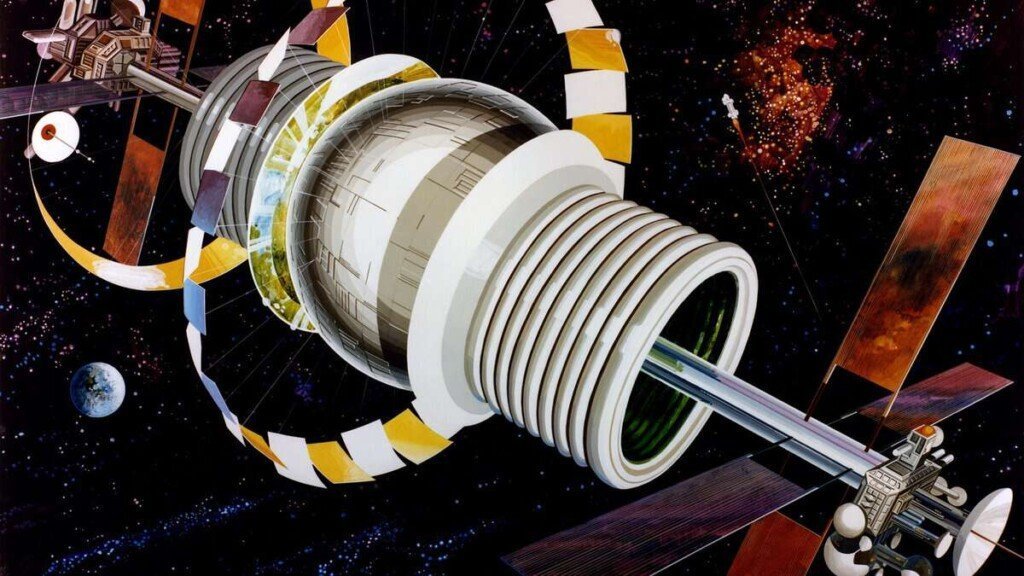
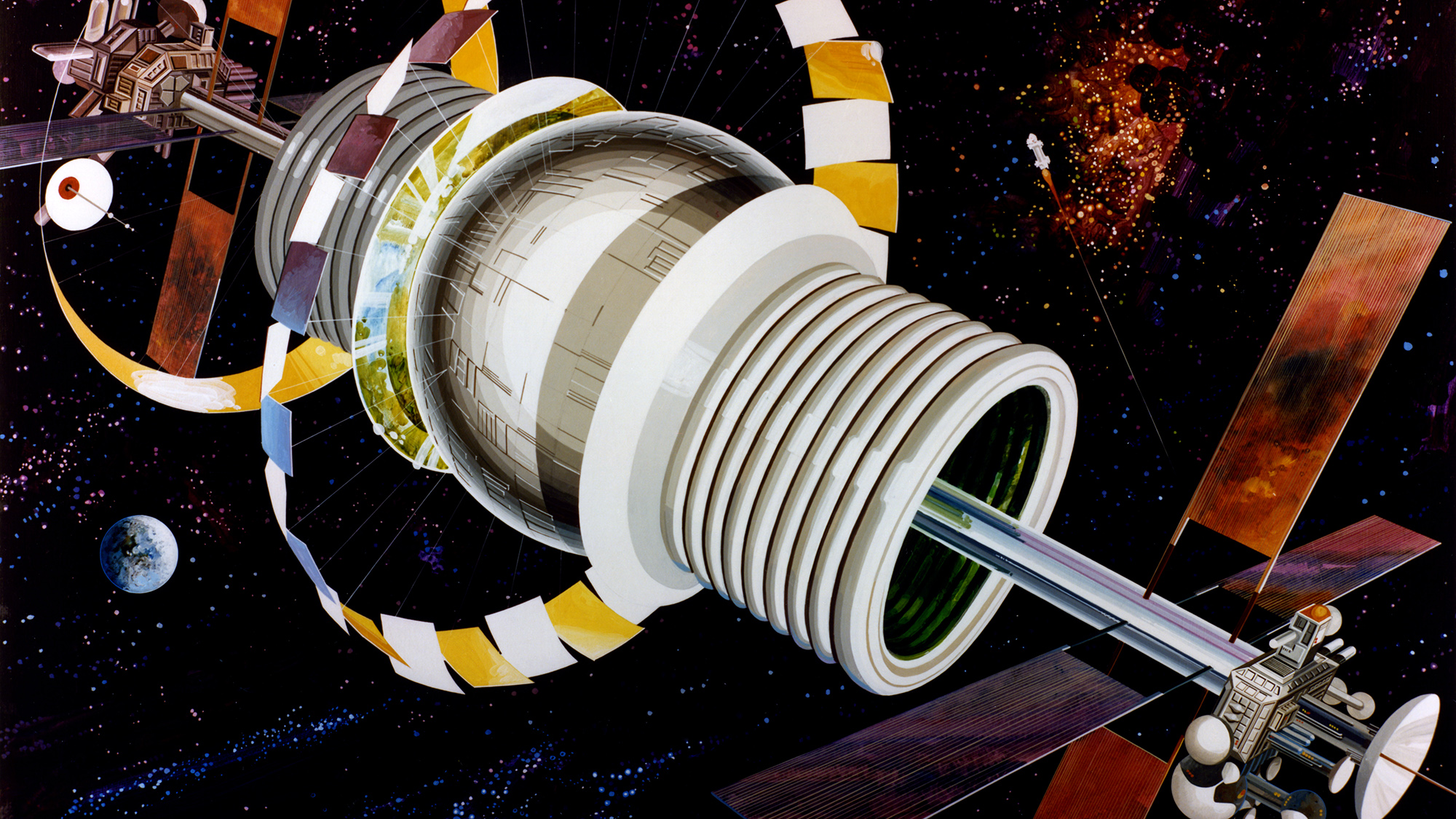
The idea of a species being liberated from its home planet has been the dream of sailors and stargazers since the beginning of recorded history. NASA/Rick Guidice, Public Domain, via Wikimedia CommonsSHARE
“The only barrier to human progress is lack of awareness, and it is not insurmountable.“
Robert Goddard
Until 1992, when thefirst exoplanets were found, there had never been any proof of a planet discovered outside our solar system. Thirty years after this first discovery,thousands of additional exoplanets were identified. Furthermore, a significant number of those planets lie within the “habitable zone,” indicating a region where liquid water, and possibly life, could exist. However, to reach them, we need a courageous crew to leave our solar system, and an even braver intergenerational crew to be born into a mission that, by definition, they may never complete. They would likely never view our solar system as anything more than a speck of dust among countless others.
The idea of multiple generations of people living and dying aboard the same spacecraft is actually an old one, first described by rocket engineer Robert Goddard in 1918 in his essay “The Final Migration.” As he began developing rockets capable of traveling into space, he naturally envisioned a craft that could continue onward, farther, and eventually reach a distant star. More recently, the Defense Advanced Research Projects Agency (DARPA) and NASA launched a mission known as the100 Year Starship with the goal of fostering the research and technology needed for interstellar travel by 2100.
This thought of a species being liberated from its dwelling planet became charming to Goddard, however it has furthermore been the dream of sailors and stargazers for the reason that starting of recorded history. Every youngster staring into the night sky envisions flying thru it. However, in most cases, they furthermore are seeking to return to Earth. In the end, we could perhaps well also simply believe to create a human-pushed metropolis aboard a spacecraft and embark on a generational voyage to 1 other solar system—never intended to return.
Distance, energy, particle assault
Such a massive undertaking would need to overcome many significant challenges, the first and perhaps most obvious being distance. Excluding the Sun, the nearest known star to Earth (Proxima Centauri) is 4.24 light-years away, or about 25 trillion miles. Although 4.24 light-years is a mere hop on the cosmic scale, it would still take considerable time to reach with our current technology.
The Parker Solar Probe, launched by NASA in 2018, is the fastest human-made object ever built, reaching speeds of 430,000 miles per hour. Yet even at this velocity, it would take approximately 6,617 years to reach Proxima Centauri. Put another way, that’s roughly 220 human generations to complete the journey.
The usage of current technology, it could take roughly 220 human generations to make the journey to Proxima Centauri.
The most effective way to reduce this number would be to travel faster. This brings us to our second challenge: finding the necessary energy for propulsion and sustenance. To shorten the time (and the number of generations) required to reach the nearest star, our speed would need to increase by either burning more fuel or developing advanced spacecraft with capabilities orders of magnitude beyond what is currently available. Regardless of the technology used, acceleration would likely need to come from one or a combination of these sources: prepackaged (nonrenewable) fuel, energy harvested from starlight (which would be more difficult between stars), elements like hydrogen in the interstellar medium, or by slingshotting off celestial bodies.
Recent advancements in propulsion technology can help refocus this challenge. Nuclear fusion offers a promising solution, as it produces less radiation and converts energy more efficiently than other systems, enabling spacecraft to achieve much higher speeds. Utilizing nuclear fusion, as envisioned byProject Daedalus(British Interplanetary Society) andProject Longshot(U.S. Naval Academy/NASA), provides a pathway to interstellar travel within a single human lifetime. These studies suggest that a fusion-powered spacecraft could reach speeds exceeding 62 million miles per hour, potentially reducing travel times to nearby stars to as little as forty-five years.
But even if we address the challenges of distance and energy by designing an incredibly rapid, say, an incredibly rapid, fuel-efficient engine, we’re faced with another problem: the ever-present threat of micrometeoroids. Consider that a grain of sand traveling at 90 percent of the speed of light contains enough kinetic energy to equal a miniature nuclear bomb (two kilotons of TNT). Given the variable particle sizes floating around in space and the extraordinarily high velocities proposed for this mission, any encounter could be catastrophic. This, too, would require further engineering to overcome, because the thick shielding we have available to us now would not only degrade over time but would likely be far too heavy. One alternative is to develop lighter polymers, which could be repaired and replaced as needed in flight; using long-distance monitoring to detect large objects before impact; or creating some kind of protective field from the spacecraft’s front, capable of deflecting or absorbing the impact of incoming particles.
Physiological and psychological risks
As exemplified by the NASATwins Studythe SpaceXInspiration4 missionand further NASA one-year and 6-month missions, the crews of a generation ship would face one other serious challenge: physiological and psychological stress. One approach to overcome the technological limitation of both increasing the speed of our ships or preventing the ships from colliding with debris is to, instead, turn to biology through the use of hibernation or diapause. However, those who overeat and lie around all day with minimal activity in simulated hibernation or bed-rest studies can increase their risk of developing type 2 diabetes, obesity, heart disease, and even death. So, how do bears achieve this?
During hibernation or torpor, bears are nothing short of remarkable. Their body temperature drops, their heart rate plummets to as low as 5 beats per minute, and for months, they do not eat, urinate, or defecate. Remarkably, they are able to maintain their bone density and muscle tissue. Part of their hibernation strategy appears to come from reducing their sensitivity to insulin while maintaining stable blood glucose levels. Their heart also becomes more efficient. A protein actually activates an energy-saving, “orderly heart” mode, relying on only two of its four chambers to pump thicker blood.
In 2019, a seminal study led by Joanna Kelley at Washington State Universityrevealed striking gene expression changes in bears during hibernation. Researchers used the same Illumina RNA-sequencing method employed in NASA’s Twins Study to examine grizzly bears as they entered hyperphagia (when bears consume large quantities of food to store energy as fat) and throughout hibernation. They found that tissues throughout the body underwent coordinated, dynamic gene expression changes during hibernation. Although the bears were deeply asleep, their fatty tissue was far from inactive. This tissue showed extensive signs of metabolic activity, including changes in more than 1,000 genes during hibernation. These “hibernation genes” are prime targets for researchers seeking to induce stasis for generation ships rather than remain awake.
One other organic mechanism that we could also can make use of on the generation ship is diapause, which enables organisms to prolong their own development in order to survive harsh environmental conditions (e.g., extreme temperature, drought, or food scarcity). Many moth species, including the Indian meal moth, can enter diapause at different developmental stages depending on environmental cues. If there is no food available, as in a barren field, it is beneficial to wait until conditions improve and nutrients become available.
Diapause is in actuality not a rare tournament; embryonic diapausehas been seen taking place in better than 100 mammals. Even after fertilization, some mammalian embryos can resolve “to abet.” Reasonably than straight implanting into the uterus, the blastocyst (early embryo) can cease in a articulate of dormancy, where miniature or no pattern takes region. Here is a miniature bit like a rock climber pausing all over an ascent, comparable to when a storm arrives, then inspecting all of the skill routes they could perhaps well also simply rob and waiting till the storm passes. In diapause, even supposing the embryo is unattached to the uterine wall, the embryo can wait out a tainted anguish, comparable to a scarcity of food. Thus, the pregnant mother can remain pregnant for a variable gestational period, in checklist to await improved environmental instances. The abilities to have interaction human hibernation or diapause doesn’t exist in the 21st century, but one day could perhaps.
The impact of weightlessness, radiation, and mission stress on the muscle tissues, joints, bones, immune system, and eyes of astronauts cannot be underestimated. The physiological and psychological risks of this sort of mission are especially concerning given that the majority of similar missions have been relatively short and largely protected from radiation by the Earth’s magnetosphere, with the most extensive data to date coming from CaptainScott Kelly’s 340-day mission.
Artificial gravity—in fact constructing a spacecraft that spins to simulate the effects of Earth’s gravity—would address many of these issues, though not all. Another major concern could be radiation. There are several ways to study and mitigate this risk, including shielding throughout the spacecraft, preventive medications (currently beingstudied by NASA), regular monitoring of cell-free DNA (cfDNA) for early detection of actionable mutations, or cellular and genetic engineering of astronauts to better protect against or respond to radiation. The most effective defense against radiation, particularly on long-term missions beyond our solar system, would likely involve a combination of these approaches.
However even if the radiation problem is solved, the psychological and cognitive strain of isolation and restricted social interaction must be addressed. Just imagine if you had to work and live with your coworkers and family, for your entire life, in thesame building. While we can carefully select the first generation of astronauts for a long-duration generation ship mission, their children could struggle to adapt to the social and environmental conditions of their new home.
Analog missions conducted on Earth have shown that after 500 days in isolation with a small crew, many relationships became strained and even hostile.
Analog missions conducted on Earth, such as theMars-500 missionhave shown that after 500 days in isolation with a small crew, many relationships became strained and even hostile. There are many descriptions of “space madness” appearing in both fiction and nonfiction, but their modeling and connection to risk is limited. There is simply no way to predict how the same crew and its descendant generations would fare over 10 or 100 years, and certainly not over thousands of years. Human history is full of examples of conflict, warfare, factions, and political betrayal, but also of cooperation, symbiosis, and shared governance in pursuit of large goals (such as inresearch stations in Antarctica).
Selecting our contemporary dwelling
Before we initiate the first-ever generation ships, we can expect to gather a vast amount of data concerning the candidate planets to which we’re sending the first settlers. One way to achieve this is by sending probes to viable solar systems, gathering as much detail as possible to ensure that ships have what they need before they are launched. Work on such approaches has already begun, as with theBreakthrough Starshot missionproposed by Yuri Milner, Stephen Hawking, and Mark Zuckerberg.
The premise is straightforward, and the physics wasdetailed by Kevin Parkin in 2018. If there were a swarm of extremely lightweight spacecraft that contained miniaturized cameras, navigation tools, communication tools, thrusters, and a power source, they could potentially be “beamed” forward with lasers to accelerate their speed. If each minispacecraft had a “lightsail” targetable by lasers, they could all be accelerated to reduce transit time. This kind of “StarChip” could potentially make the journey to the exoplanet Proxima Centauri b—an exoplanet orbiting within the habitable zone of Proxima Centauri—in approximately 25 years and transmit data back for us to analyze, following another 25 years of data transmission to Earth. Then, we would have more information about what might await a crew if that destination were selected. The foundation for this concept is credited to physicist Philip Lubin, who proposed in his 2015 paper, “A Roadmap to Interstellar Flight,” an array of adjustable lasers that could focus on the StarChip with a combined power of 100 gigawatts to propel the probes toward our nearest known stellar neighbor.
The greatest challenge could be seeding the area in preparation for people, similar to missions being conducted on Mars. If these StarChips work, then they are likely to be used to send microbes to other planets as well as sensors. They also face many challenges, requiring them to survive the journey, slow down, and then land on the new planet—no small feat. However, this round-trip understanding is based on the duration of the range of tolerable conditions for known extremophiles on Earth that routinely survive extreme temperatures, radiation, and pressure. The tardigrades, for one, havealready survived the vacuum of spaceand could be ready to make the trip to another planet, and we could also send other “seed” organisms along, too. This idea of a “genesis probe” that could seed other planets with Earth-based microbes,first proposed by Claudius Gros in 2016would obviously violate all current planetary-protection guidelines, but it would also be the clearest way to prepare a planet for our arrival. Ideally, this could be done most effectively once robotic probes have conducted an intensive evaluation of the planet to reduce the risk of causing harm to any life that may already exist there.
The ethics of a generation ship
These organic, tactical, and psychological points are pushed by one key, final constraint on the generation ship:The passengers are caught there. As such, this field represents one other issue that must be addressed: the ethical issue. What are the ethics of inserting a total neighborhood of oldsters on a single spacecraft, with the expectation that they further procreate further generations of oldsters, on that ship? They’d believe to stay with the info that the ship on which they stay, or are born, is the categorical world they’re going to ever rep to clutch. Obvious social, economic, and cultural infrastructure would must be built into a generation ship, alongside with recreational activities.
Bodysuits, digital/augmented reality camera sets, and immersive experience sets were built for recreational functions on Earth, and these could perhaps well be mandatory for the generation ship’s crews. Groups could perhaps well also play one yet another in a digital ambiance, which would require less infrastructure than extinct wearing occasions and tools attain. Video video games are, after all, not factual exploratory and recreational occasions; they are atechnological glue of society. For certain, video games are factual a single piece of the puzzle. Existence aboard a generation ship could perhaps well be essentially different and undeniably tougher than one thing experienced on Earth.
Some critics of sending spacecraft with people argue that if an interstellar mission cannot be completed within the lifetime of the crew, then it is not going to be undertaken in any case. Instead, since capabilities for propulsion, ship repair, and rocketry (in addition to our systems for genome and biological engineering) will all continue to improve, it may be better to wait. It is even possible that if we sent a generation ship to Proxima Centauri b in the year 2500, it could be overtaken by another spacecraft with more advanced propulsion sent in the year 3000.
This “incessant obsolescence postulate,” first framed by Robert Ahead in 1996, is compelling as a thought experiment. Most technologies tend to become greater, and abilities have endured to strengthen in practically all human societies. So how can one know when the right time is? Predicting the future is notoriously difficult.
The extinction we are trying to avoid could occur during that 500-year span, leading to the obliteration of all life without a backup.
However, a perfect option should not be the enemy of a truly good one. We can send two ships—the first in 2500 and the second in 3000—not just one. If the newer ship catches up to the older one, they could potentially assist each other and would likely want to do so. Furthermore, this obsolescence argument overlooks the serious risk of waiting too long to act. The extinction we are trying to avoid could occur during that 500-year span, leading to the obliteration of all life without a backup.
However even with superior entertainment and the hope of a brand-new, enhanced ship at any moment, would the crew still look out the dwelling windows into the vast star-filled skies thinking of blue oceans? Or would they perhaps be elated about being the “chosen ones” with a special opportunity to explore and, quite literally, create a brand-new world? The truth is this ship could be their world, and, for many, it could be the only world they would ever experience.
But this limitation of experience is actually not that different from the lives of all people in history. All people were confined to one world, looking to the stars and wondering, “What if?” This vessel, Earth, while vast and diverse, is still just a single ship with a limited landscape, atmosphere, and resources, in which all people up to the 21st century lived and died without the opportunity to leave. About a hundred astronauts have left Earth, briefly, but all of them had to return. The generation ship is simply a smaller version of the one on which we grew up, and, if done well, it could even be capable of producing a planet that isgreaterthan what we inherited. The new planet could very well be fertile ground for expanding life in the universe, while also providing lessons on how to protect life on Earth.
Recent advances in machine perfusion technology are not only preserving donated livers but also making them biologically younger at a molecular level. This breakthrough…
What happens when human imagination, artificial intelligence, art and technology come together? From September 1 to 6, Samsung Electronics presented a special exhibition themed…