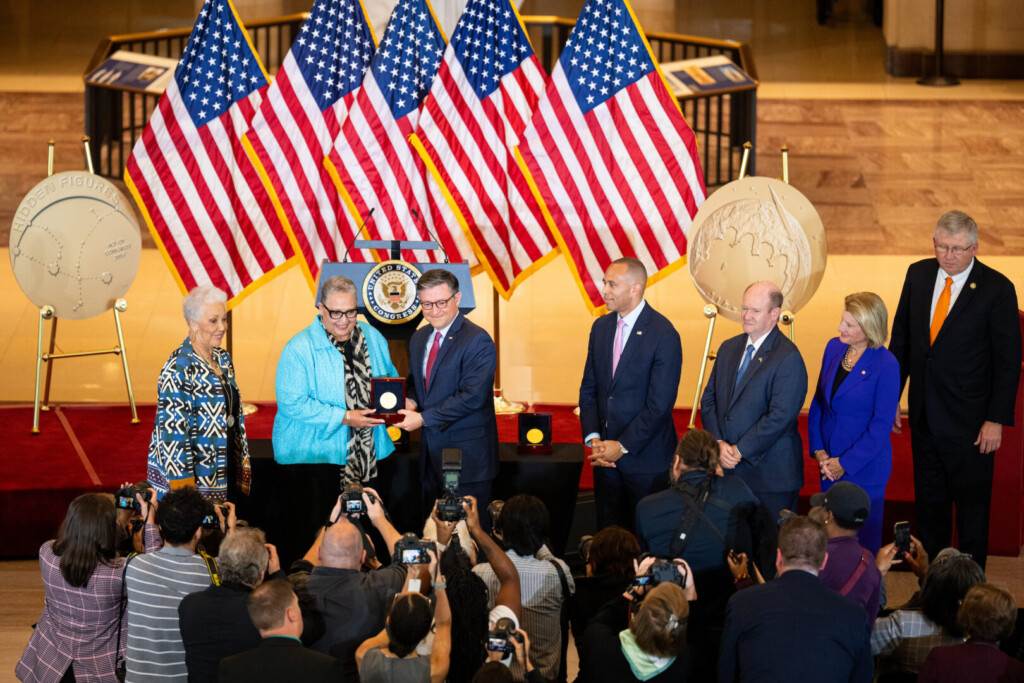
In a historic ceremony held in the Capitol’s Emancipation Hall, NASA’s pioneering women mathematicians and engineers—once referred to as 'Hidden Figures'—were formally honored, shedding light on their critical contributions to space exploration. These 'Not-So-Hidden Figures' played indispensable roles during the early years of NASA, helping to launch astronauts safely into orbit and back to Earth. This recognition reflects a broader movement toward acknowledging the diverse talents that shaped America’s scientific achievements. This article delves into the significance of this event, the figures celebrated, and the broader impact of their legacy on STEM and society.
The Legacy of NASA’s Hidden Figures
The term 'Hidden Figures' gained widespread attention through the 2016 film that highlighted the stories of African American women mathematicians who contributed to NASA’s early space missions. These women, including Katherine Johnson, Dorothy Vaughan, and Mary Jackson, broke racial and gender barriers in a predominantly male and segregated environment. Their work was crucial in calculating trajectories, launch windows, and safe re-entry paths for astronauts during the Mercury and Apollo missions.
Despite their monumental contributions, these women’s achievements remained largely unrecognized for decades. Their stories symbolize resilience and brilliance in the face of systemic discrimination. The recent congressional recognition marks a turning point in how history acknowledges the diverse contributors to America’s space program.
Honoring these women at the Capitol serves not only as a tribute but also as an educational moment, inspiring future generations to pursue STEM fields. It highlights the importance of inclusion and diversity in innovation and scientific progress.
The Capitol Ceremony: A Historic Recognition
On September 18, 2024, a ceremony took place in the Capitol’s Emancipation Hall to honor NASA’s 'Not-So-Hidden Figures.' Daughters of Katherine Johnson, including Joylette Hylick and Katherine Moore, accepted the Congressional Gold Medal on behalf of their mother, symbolizing national recognition of her legacy. The event was attended by prominent lawmakers and leaders, underscoring bipartisan support for celebrating these trailblazers.
Speaker Mike Johnson presided over the ceremony, with House Minority Leader Hakeem Jeffries, Delaware Senator Chris Coons, West Virginia Senator Shelley Moore Capito, and Oklahoma Representative Frank D. Lucas among the dignitaries present. Their participation emphasized the importance of acknowledging contributions that transcend political divides.
The Congressional Gold Medal is one of the highest civilian honors in the United States, traditionally awarded to individuals whose achievements have significantly impacted the nation. Awarding this medal to the 'Not-So-Hidden Figures' formally integrates their stories into the national narrative of American innovation and civil rights progress.
Katherine Johnson: The Mathematical Genius
Katherine Johnson’s extraordinary ability to perform complex orbital mechanics calculations by hand was instrumental in ensuring the success of multiple NASA missions. Her work on the trajectory analysis for John Glenn’s historic 1962 orbital flight was pivotal, as Glenn personally requested her to verify the computer-generated calculations.
Johnson’s precision and dedication helped minimize risks during missions, contributing to the safety of astronauts and the overall success of the space program. Her story is a testament to the power of perseverance and intellectual excellence in overcoming societal barriers.
Beyond her technical contributions, Johnson became a symbol of breaking barriers for women and African Americans in STEM. Her legacy continues to inspire educational initiatives aimed at increasing diversity in science and engineering fields.
The Role of Family and Legacy in the Recognition
The presence of Katherine Johnson’s daughters at the Capitol ceremony highlighted the personal dimension of this recognition. Family members often serve as custodians of legacies, ensuring that stories of achievement and struggle are passed down through generations.
By accepting the Congressional Gold Medal, Johnson’s daughters not only honored their mother’s memory but also emphasized the importance of acknowledging historical injustices and celebrating progress. Their role underscores how familial narratives intersect with national history.
This familial involvement also humanizes the scientific achievements, reminding the public that behind every milestone are individuals with personal stories, sacrifices, and triumphs.
Bipartisan Support and Political Significance
The ceremony’s bipartisan attendance illustrates how the recognition of NASA’s 'Not-So-Hidden Figures' transcends political boundaries. It reflects a shared commitment to honoring contributions that have shaped American innovation and progress.
Lawmakers from different states and political affiliations came together to celebrate a story of inclusion and excellence, highlighting the unifying power of science and history. This collaborative spirit is crucial in fostering national pride and promoting STEM education.
Such bipartisan support also signals the growing acknowledgment of diversity’s role in strengthening America’s scientific and technological leadership on the global stage.
Impact on STEM Education and Diversity Initiatives
The recognition of the 'Not-So-Hidden Figures' has energized efforts to promote STEM education among underrepresented groups. Their stories serve as powerful examples for young women and minorities aspiring to careers in science, technology, engineering, and mathematics.
Educational programs and scholarships inspired by these pioneers aim to dismantle barriers and provide opportunities for diverse talent to flourish. Highlighting historical figures who overcame adversity helps create a more inclusive narrative in STEM fields.
This renewed focus on diversity is essential for cultivating innovation, as varied perspectives drive creative solutions and breakthroughs in science and technology.
Continuing the Journey: Beyond Recognition
While the Congressional Gold Medal honors past achievements, the journey toward full equality and representation in STEM continues. The ceremony serves as a call to action for institutions, educators, and policymakers to sustain efforts that support marginalized communities.
Advocating for equitable access to education, mentorship, and career opportunities remains critical to building on the legacy of NASA’s trailblazing women. Their stories highlight the potential unlocked when talent is recognized and nurtured regardless of background.
Ultimately, the celebration of these 'Not-So-Hidden Figures' is both a tribute and an inspiration, encouraging society to embrace diversity as a cornerstone of future scientific and technological advancements.
Conclusion
The honoring of NASA’s 'Not-So-Hidden Figures' at the Capitol represents a powerful acknowledgment of the vital contributions made by women who were once overlooked in the annals of space exploration. This recognition not only rectifies historical oversights but also inspires a new generation to pursue STEM careers with confidence and pride. As the nation celebrates these trailblazers, it also commits to fostering a more inclusive and innovative future where talent from all backgrounds can thrive. The legacy of these pioneers endures, reminding us that true progress is achieved when every voice and every mind is valued.
Originally reported by rollcall.com. Adapted for our readers.
Recent advances in machine perfusion technology are not only preserving donated livers but also making them biologically younger at a molecular level. This breakthrough…
What happens when human imagination, artificial intelligence, art and technology come together? From September 1 to 6, Samsung Electronics presented a special exhibition themed…