Boeing Starliner 1st astronaut flight: Dwell updates
After years of development and testing, Boeing’s Starliner spacecraft is preparing for its first crewed mission to the International Space Station (ISS). Scheduled for launch on May 6, 2024, this weeklong test flight will demonstrate the capsule’s capability to safely transport astronauts to and from orbit. As NASA seeks to diversify its crew transportation options beyond SpaceX’s Crew Dragon, the success of Starliner’s Crew Flight Test (CFT) is crucial. This article provides a comprehensive overview of the upcoming mission, the astronauts involved, and the broader implications for NASA’s human spaceflight program.
The Starliner Crew Flight Test Mission: Objectives and Timeline
The Crew Flight Test (CFT) is Boeing’s first mission carrying astronauts aboard the Starliner spacecraft. Launching from Space Launch Complex 41 at Cape Canaveral Space Force Station in Florida, the mission is set for liftoff at 10:34 p.m. EDT on May 6, 2024. The Starliner capsule will be propelled into orbit atop a United Launch Alliance Atlas V rocket, embarking on a roughly weeklong journey to the ISS.
The primary objective of CFT is to validate the spacecraft’s systems and operational readiness for crewed missions. This includes demonstrating safe launch, docking with the ISS, onboard operations, and re-entry procedures. Following the mission, Starliner will return to Earth with a parachute-assisted, land-based landing in the southwestern United States, a distinctive feature compared to the ocean splashdowns used by other capsules.
Successfully completing this mission is a prerequisite for Boeing to begin regular six-month crew rotations to the ISS starting in 2025, with the Starliner-1 mission. The data and experience gained will inform NASA’s certification process, ensuring the spacecraft meets stringent safety standards.
Meet the Crew: Astronauts Butch Wilmore and Sunita Williams
The Starliner’s first astronauts are NASA veterans Barry “Butch” Wilmore and Sunita “Suni” Williams. Wilmore serves as the mission commander, bringing extensive experience from previous spaceflights, while Williams is the pilot, renowned for her time aboard the ISS and her leadership in spacewalks and scientific operations.
In the weeks leading up to launch, both astronauts have engaged in rigorous preparations, including a full dress rehearsal at NASA’s Kennedy Space Center. On April 26, 2024, Wilmore and Williams conducted a comprehensive simulation of launch day activities, including suiting up, working in the flight deck simulator known as the Boeing Mission Trainer, and practicing the countdown sequence alongside the Starliner spacecraft.
The Boeing Mission Trainer, located at NASA’s Johnson Space Center in Houston, is a critical tool for rehearsing launch and landing procedures. The astronauts recently provided a video tour of this simulator, showcasing the complex systems they will operate during the mission.
Testing and Readiness: Flight Readiness Reviews and Safety Protocols
The Starliner CFT mission passed its latest flight readiness review on April 25, 2024, a key milestone confirming the spacecraft, rocket, and ground systems are prepared for launch. These reviews involve detailed assessments of hardware, software, and operational procedures to ensure all elements meet NASA’s rigorous safety and performance criteria.
Despite this clearance, NASA and Boeing will continue to monitor weather conditions and conduct final safety checks up to the moment of liftoff. The dynamic nature of spaceflight necessitates constant vigilance to mitigate risks associated with launch delays or technical anomalies.
The mission’s success is not only dependent on the spacecraft’s design but also on the coordination between NASA, Boeing, United Launch Alliance, and other partners. This collaboration underscores the complexity of modern space missions and the importance of integrated systems management.
Starliner’s Unique Features and Its Role in NASA’s Commercial Crew Program
Boeing’s Starliner is designed as a reusable crew capsule capable of carrying up to seven astronauts, though NASA missions typically fly four. One of its distinguishing characteristics is its land-based landing approach using parachutes and airbags, contrasting with SpaceX’s ocean splashdowns. This method allows for quicker crew recovery and refurbishment turnaround.
The Starliner program is a cornerstone of NASA’s Commercial Crew Program, which aims to foster private-sector partnerships to provide reliable and cost-effective access to low Earth orbit. After the success of SpaceX’s Crew Dragon, Starliner’s certification will offer NASA redundancy and competition, enhancing crew transportation resilience.
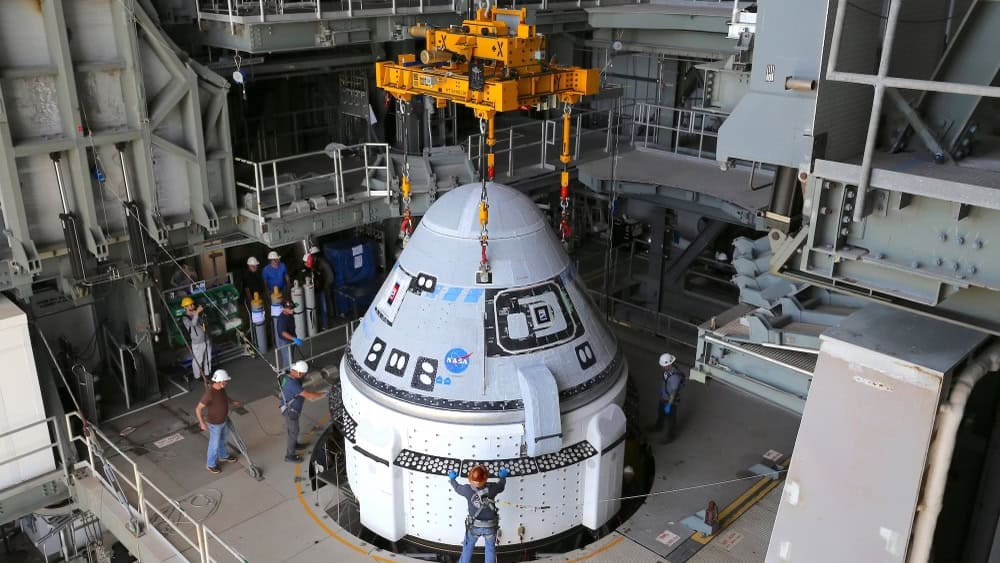
The spacecraft’s development has faced challenges, including a previous uncrewed Orbital Flight Test in 2019 that encountered issues during re-entry. However, Boeing has since addressed these concerns, as evidenced by the scorch marks preserved on the spacecraft used during the dress rehearsal, symbolizing lessons learned and progress made.
Looking Ahead: The Future of Starliner Missions and Human Spaceflight
If the Crew Flight Test proceeds as planned, Boeing will transition to operational missions with Starliner-1 in 2025, initiating regular crew rotations to the ISS. This will complement SpaceX’s ongoing missions and contribute to a sustainable human presence in low Earth orbit.
Beyond the ISS, the capabilities demonstrated by Starliner could support NASA’s Artemis program and other deep space exploration initiatives, providing a tested platform for crew transport and emergency evacuation scenarios.
The success of Starliner also has broader implications for the commercial space industry, showcasing how public-private partnerships can accelerate technological innovation and expand human access to space.
What this means
The upcoming Boeing Starliner Crew Flight Test represents a pivotal moment in NASA’s ongoing efforts to establish a robust and diversified human spaceflight capability. With experienced astronauts at the helm and rigorous preparations underway, this mission seeks to demonstrate that Starliner is ready to safely ferry crews to the International Space Station. Its success will not only bolster NASA’s Commercial Crew Program but also strengthen the foundation for future exploration beyond low Earth orbit. As the countdown to May 6 continues, the space community and public alike watch with anticipation, hopeful that Starliner will mark a new chapter in crewed spaceflight.
Originally reported by space.com. Adapted for our readers with AI assistance.
Recent advances in machine perfusion technology are not only preserving donated livers but also making them biologically younger at a molecular level. This breakthrough…
What happens when human imagination, artificial intelligence, art and technology come together? From September 1 to 6, Samsung Electronics presented a special exhibition themed…