
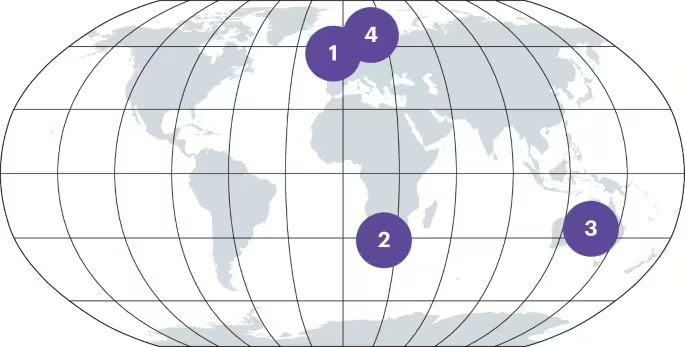
The biotechnology sector continues to be a powerhouse of innovation and scientific breakthroughs, driving progress in healthcare, agriculture, and environmental solutions. Around the world, biotech companies and research institutions are making significant advances, from pioneering gene editing techniques to expanding global research infrastructures. This article provides a detailed overview of the most impactful biotech news from various regions, reflecting the dynamic nature of this industry and its potential to transform lives globally.
United Kingdom: Merck’s Expanding Presence in Neuroscience and Immunology
Merck has recently inaugurated a cutting-edge research laboratory on the top floor of the Crick Institute in London’s Kings Cross district. This new facility is dedicated to the preclinical development of novel therapies targeting neuroscience and immunology, areas that remain critical in addressing complex diseases.
The London lab complements Merck’s ambitious $1.3 billion investment in a ten-story research and development center, also located in Kings Cross, which is slated to open in 2027. This expansion underscores Merck’s commitment to strengthening its footprint in the UK’s biotech ecosystem.
By situating these facilities within a renowned scientific hub like the Crick Institute, Merck aims to foster collaborative research efforts with leading academic institutions, accelerating the translation of scientific discoveries into effective treatments.
United States: Advances in Gene Editing and Personalized Medicine
The US biotech sector continues to lead in gene editing innovations, particularly with CRISPR technology. Several startups and established companies are advancing clinical trials that target genetic disorders such as sickle cell anemia and cystic fibrosis, showing promising therapeutic outcomes.
Personalized medicine is also gaining momentum, with new diagnostic tools enabling tailored treatment plans based on individual genetic profiles. These advances are improving efficacy and reducing side effects for patients across a range of conditions, including cancer and autoimmune diseases.
Moreover, federal funding and regulatory frameworks are evolving to support rapid development and approval of gene therapies, ensuring that groundbreaking treatments reach patients faster while maintaining safety standards.
Europe: Collaborative Biotech Initiatives and Sustainable Innovations
Across Europe, biotech firms are increasingly engaging in cross-border collaborations to tackle global health challenges. The European Commission has launched several funding programs encouraging joint projects in vaccine development and antimicrobial resistance.
Sustainability is another key focus, with companies developing bio-based alternatives to traditional plastics and chemicals. These bioproducts not only reduce environmental impact but also open new markets for green biotechnology solutions.
Countries like Germany, France, and the Netherlands are investing heavily in biotech infrastructure, including incubators and innovation hubs, to nurture startups and scale up production capabilities for next-generation biotech products.
Asia-Pacific: Rapid Growth and Emerging Biotech Hubs
The Asia-Pacific region is experiencing rapid biotech industry growth, driven by increased government investment and a growing pipeline of innovative therapies. Countries such as China, South Korea, and Singapore are at the forefront, establishing themselves as major biotech hubs.
China’s biotech sector is particularly notable for its focus on cell and gene therapies, with multiple candidates entering late-stage clinical trials. The country’s large patient population provides a unique advantage for clinical research and market potential.
Singapore’s emphasis on precision medicine and digital health is fostering a vibrant ecosystem where biotech companies leverage advanced data analytics and artificial intelligence to accelerate drug discovery and development.
Latin America: Expanding Biotech Capabilities and Public Health Initiatives
Latin America is witnessing a steady expansion in biotech capabilities, with Brazil, Mexico, and Argentina leading efforts in vaccine production and agricultural biotechnology. These advancements are crucial for improving public health and food security in the region.
Public-private partnerships are playing a pivotal role in scaling biotech innovations, particularly in developing vaccines for infectious diseases prevalent in tropical climates. This collaboration is enhancing regional self-sufficiency and global health contributions.
Investment in biotech education and workforce development is also increasing, ensuring that Latin America can sustain growth and innovation in this competitive sector.
Africa: Biotechnology for Health and Agricultural Resilience
In Africa, biotechnology is being leveraged to address pressing challenges such as infectious diseases and food insecurity. Countries like South Africa and Kenya are pioneering research in vaccine development and genetically improved crops resistant to drought and pests.
International collaborations and funding from global health organizations are supporting local biotech startups and research institutions, fostering innovation tailored to the continent’s unique needs.
Efforts to build biotech infrastructure and regulatory frameworks are underway, aimed at creating a conducive environment for research, clinical trials, and commercialization of biotech products.
Emerging Technologies and Future Trends in Biotechnology
Emerging technologies such as synthetic biology, AI-driven drug discovery, and advanced cell therapies are poised to redefine the biotech landscape. These innovations promise to enhance precision, reduce development timelines, and open new therapeutic avenues.
The integration of digital technologies with biotechnology is enabling real-time monitoring of clinical trials and personalized treatment adjustments, improving patient outcomes and operational efficiencies.
Looking ahead, increased global collaboration and investment will be critical to overcoming scientific and regulatory challenges, ensuring that biotech innovations translate into accessible and affordable healthcare solutions worldwide.
Conclusion
Biotechnology is a dynamic and rapidly evolving field with far-reaching impacts across healthcare, agriculture, and environmental sustainability. The global biotech landscape is marked by significant investments, innovative research, and collaborative initiatives that transcend borders. From Merck’s new UK labs to groundbreaking gene therapies in the US and sustainable biotech solutions in Europe, the world is witnessing a biotech revolution. As emerging markets in Asia, Latin America, and Africa continue to grow, and as new technologies mature, the future of biotechnology promises to deliver transformative advances that improve quality of life worldwide.