
AI Trends & News
Surface Laptop Ultra Pre-orders Open: Price, Release Date and AI Features
Microsoft opens Surface Laptop Ultra pre-orders from US$2,599.99. Explore its launch date, NVIDIA RTX Spark features and implications for Nigerian businesses.
TAMFIS NIG LTDRC 8067447CAC ACTIVEFinima, Bonny Island, Rivers State

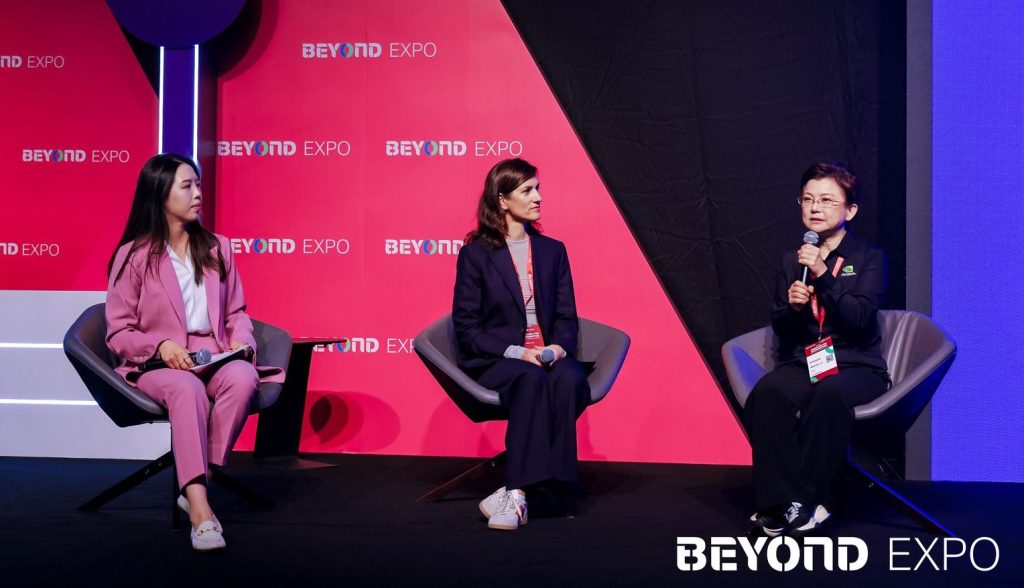
The technology sector continues to evolve at pace, shaped not only by breakthrough innovations but also by the leaders who steer them. At BEYOND EXPO 2024, the inaugural SheTech Summit brought together influential women from biotechnology, venture capital, and elite sport to discuss the evolving role of gender in tech leadership. Their collective insights offer valuable lessons for shoppers, investors, and business leaders navigating today’s competitive markets. Far from being a niche discussion on diversity, the summit highlighted how traits often associated with women in leadership — such as empathy, intuition, and resilience — translate into measurable business advantages. These perspectives are increasingly relevant as consumers demand ethical supply chains, investors seek sustainable returns, and companies strive for adaptive strategies in uncertain economic climates.
Michelle Chen, co-founder and CEO of Biosyngen, drew on nearly two decades of experience in Fortune 500 enterprises and biopharmaceutical leadership to explain how emotional intelligence contributes to organisational stability. She noted that women leaders often demonstrate a broader focus when it comes to self-motivation and engagement in meaningful work, particularly in complex, people-driven industries like biotech. This tendency, she argued, is not about stereotyping but about observable patterns in how leaders connect with their teams.
Chen explained that her approach — characterised by attentiveness to employee well-being and sensitivity to workplace dynamics — has directly contributed to low staff turnover at her company. In an industry where talent retention is critical to long-term research outcomes, this represents a tangible competitive advantage. By fostering loyalty through genuine engagement, Biosyngen has maintained operational continuity even during periods of market volatility.
Importantly, Chen cautioned against framing these traits as exclusive to women or as justification for favouritism. Instead, she urged leaders of all genders to recognise that effective management stems from passion, adaptability, and the willingness to seize opportunities as they arise. The takeaway for businesses is clear: leadership styles that prioritise human insight can enhance resilience, reduce recruitment costs, and support sustained innovation.
Lu Zhang, founder and managing partner of Fusion Fund, brought a Silicon Valley perspective to the discussion, linking gender diversity to sharper investment outcomes. Drawing from her background in AI, enterprise technology, and data privacy, Zhang challenged cultural stereotypes that often discourage women from pursuing assertive leadership roles. In many Asian contexts, she observed, girls are still socialised to prioritise being 'likable' over being respected — a dynamic that can undermine confidence in high-stakes environments.
Her response was direct: leadership requires making tough decisions that may not win popularity. For entrepreneurs and executives alike, earning respect must come before seeking admiration. Yet Zhang also highlighted a less-discussed strength — the role of intuition in high-pressure decision-making. She cited research suggesting that over 90% of human decisions are processed subconsciously, and argued that women’s heightened awareness, often shaped by lived experience, enables richer data collection in uncertain situations.
Using the example of walking alone at night, Zhang explained that women frequently engage in active environmental scanning — a form of subconscious risk assessment — whereas men may rely on assumptions of safety. In business terms, this translates to a greater likelihood of spotting early warning signs in market trends, supply chain vulnerabilities, or team morale. For investors, backing teams with diverse cognitive approaches can improve due diligence and reduce blind spots in portfolio management.
Tina Tao, president and partner at Sinovation Ventures, provided a historical lens on the advancement of women in education and its ripple effects into the tech economy. Reflecting on three decades of venture capital activity, she noted a dramatic increase in female participation in university-level STEM programmes — a shift that would have been unthinkable just a generation ago.
Tao pointed out that while women have only had access to university education for just over a century, their representation has grown rapidly. In many parts of the world, women now comprise nearly half of all university students — a transformation that, when viewed against millennia of human history, constitutes extraordinary progress. This demographic shift is already feeding into the talent pipeline for technology firms, venture funds, and innovation hubs across Asia and beyond.
The implication for businesses and policymakers is sustained investment in education access yields long-term economic returns. As more women enter fields like AI, robotics, and data science, the diversity of thought in product development increases — potentially leading to solutions that better serve broader consumer bases. For retailers and e-commerce platforms, this means anticipating needs that might otherwise be overlooked in homogenous design teams.
The summit also featured a dialogue with Deng Yaping, the iconic table tennis player whose career included 18 world championships and four Olympic gold medals. Her post-retirement journey — spanning academic study at Tsinghua, Nottingham, and Cambridge — offered a powerful narrative about perseverance beyond the arena. Deng spoke candidly about the contrast between her fierce on-court reputation and her off-duty demeanour, describing herself as approachable and gentle.
She attributed her success not to innate talent alone, but to the resilience forged through early challenges and her father’s encouragement during setbacks. Deng emphasised that failure — such as losing a pivotal match — was not a endpoint but a critical learning opportunity, teaching her how to prepare more thoroughly and bounce back stronger. This mindset, she argued, is transferable to any high-pressure field, including entrepreneurship and technological innovation.
On the broader cultural context, Deng highlighted how traditional Chinese values, despite historical restrictions on women, have cultivated a deep-rooted endurance in female athletes. The teachings passed down through generations — emphasising grit, perseverance, and hard work — have translated into exceptional training intensity and mental fortitude. For businesses operating in or with China, this insight underscores the importance of recognising culturally shaped strengths when evaluating talent, particularly in markets where long-term commitment and adaptability are valued.
The SheTech Summit at BEYOND EXPO 2024 offered more than inspirational stories — it delivered practical insights for businesses aiming to thrive in complex, fast-changing markets. The contributions of Michelle Chen, Lu Zhang, Tina Tao, and Deng Yaping collectively illustrate how leadership qualities often under-discussed in mainstream business discourse — empathy, intuition, historical perspective, and resilience — can drive real-world outcomes. For investors, this means looking beyond financial metrics to assess team dynamics and decision-making depth. For employers, it reinforces the value of inclusive cultures that allow diverse leadership styles to flourish. And for consumers, it signals a future where products and services are shaped by broader human experiences, potentially leading to innovations that are not only technologically advanced but also socially attuned. As global supply chains tighten and consumer expectations rise, businesses that listen to these voices may find themselves better equipped to adapt, innovate, and endure.
Originally reported by technode.com. Adapted for our readers with AI assistance.
Keep reading
AI Trends & News
Microsoft opens Surface Laptop Ultra pre-orders from US$2,599.99. Explore its launch date, NVIDIA RTX Spark features and implications for Nigerian businesses.
Science & Technology
DJI’s IBC recognition puts pocket gimbal and panoramic capture in the spotlight. Here is how creators can assess framing, editing effort and recording workflows.
Business News
App store steering is about more than permission to add a link. Explore fees, renewal terms, customer experience and the UK consultation.
TAMFIS NIG LTD
Electrical and instrumentation engineering, bid preparation and consulting, IT and software.

