Astronaut’s photo shows Earth as you’ve never seen it before
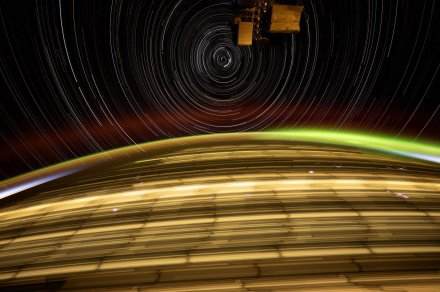
Astronaut Don Pettit, renowned for his exceptional space photography, has once again mesmerized the world with an extraordinary image of Earth. Captured from the International Space Station (ISS) during his fourth orbital mission, this photograph unveils our planet in a way few have ever witnessed. By using advanced photographic techniques and cutting-edge equipment, Pettit documented a 30-minute exposure showcasing a breathtaking panorama that includes city lights, star trails, auroras, and both a sunset and sunrise in a single frame. This article delves into the details behind this remarkable image, the technology used, and the unique celestial phenomena it reveals.
The Photographer: NASA Astronaut Don Pettit
Don Pettit is a veteran NASA astronaut celebrated for his remarkable space photography. With four missions aboard the International Space Station, Pettit has developed a unique perspective on capturing Earth’s beauty from orbit. His passion for photography and space exploration combines to produce images that are not only scientifically valuable but also artistically stunning.
Pettit’s latest photograph, taken during his most recent mission, highlights his continued innovation and dedication to space photography. At 69 years old, he remains NASA’s oldest serving astronaut, demonstrating that age is no barrier to pushing the boundaries of exploration and creativity.
Throughout his career, Pettit has cultivated a reputation for using innovative photographic techniques to showcase Earth’s dynamic nature. His images often reveal aspects of our planet that are invisible to the naked eye, inspiring people worldwide to appreciate the fragile beauty of our home from an orbital vantage point.
Capturing Earth from the International Space Station
The International Space Station orbits Earth roughly every 90 minutes, providing astronauts with a unique, constantly changing view of the planet below. This vantage point allows for extraordinary photographic opportunities, including capturing vast landscapes, weather phenomena, and city lights as they transition from night to day.
Pettit’s recent photograph was taken using a Nikon Z9 camera equipped with an Arri-Zeiss 15mm T1.8 lens, a powerful combination that enables sharp, wide-angle shots in low-light conditions. The use of a wide-angle lens is crucial for capturing expansive views that include multiple geographic and atmospheric features in a single frame.
By opening the camera shutter for multiple 30-second exposures and later combining them through sophisticated image processing, Pettit created a composite that simulates a 30-minute time exposure. This technique reveals dynamic elements such as the progression from sunset to sunrise, star trails, and moving city lights, which would otherwise be impossible to capture in a single shot.
A Unique Moment: Sunset and Sunrise in One Frame
One of the most striking features of Pettit’s photograph is the simultaneous capture of both sunset and sunrise on Earth. This rare occurrence is possible because of the ISS’s rapid orbit around the planet, allowing it to witness the transition between night and day across different regions.
On the left side of the image, the sun is setting, casting warm hues over the horizon, while on the right, the sun is rising, illuminating the atmosphere with soft light. This seamless transition showcases Earth’s rotation and the continuous cycle of day and night from a perspective inaccessible to those on the ground.
The ability to capture both phenomena in one frame not only highlights the technical prowess behind the photograph but also serves as a poetic reminder of Earth’s constant motion and the delicate balance that sustains life on our planet.
The Science Behind the Star Trails and Orbital Motion
Above the Earth’s limb in the photograph, circular star trails are visible, which differ from typical star trails caused by Earth’s rotation. Instead, these trails result from the ISS’s orbital motion and its pitch axis rotation, creating a unique celestial pattern that reflects the station’s movement through space.
Unlike stationary observers on the ground who see stars appear to rotate around the celestial poles, Pettit’s vantage point aboard the ISS produces star trails that curve in distinctive circles due to the spacecraft’s orbit around Earth approximately every 90 minutes.
These star trails provide valuable insights into the dynamics of orbital motion and demonstrate how human-made objects like the ISS interact with the natural cosmic environment. The photograph thus serves as both an artistic masterpiece and a scientific illustration.
Illuminating Earth’s Nightscape: City Lights and Atmospheric Phenomena
The streaks of light across the photograph represent cities and urban areas as they pass beneath the ISS. Because the station moves at about 28,000 kilometers per hour, the lights appear as continuous streaks in the long exposure, painting a vibrant tapestry of human civilization.
In addition to city lights, Pettit’s image reveals atmospheric phenomena such as lightning flashes, auroras, and airglow. The auroras, caused by charged particles interacting with Earth’s magnetic field, manifest as glowing curtains of green and red light near the poles, adding a magical quality to the scene.
Airglow, a faint emission of light by Earth’s atmosphere, is also visible in the photograph. This phenomenon, often unnoticed from the ground, results from chemical reactions in the upper atmosphere and contributes to the subtle hues that enrich the image’s color palette.
Technological Innovations in Space Photography
Pettit’s use of the Nikon Z9 camera combined with the Arri-Zeiss 15mm T1.8 master prime lens exemplifies the cutting-edge technology employed in modern space photography. These tools offer exceptional sensitivity and clarity, essential for capturing detailed images in the challenging environment of space.
The fast aperture lenses allowed Pettit to gather more light during short exposure intervals, crucial for photographing faint atmospheric effects and city lights without excessive motion blur. This technological advancement enabled the creation of the composite image that mimics a 30-minute exposure.
Image processing techniques, including the use of Photoshop to merge multiple exposures, played a key role in assembling the final photograph. This blend of hardware and software innovation pushes the boundaries of what is possible in capturing the beauty and complexity of Earth from orbit.
The Impact of Pettit’s Photograph on Public Perception
Images like Pettit’s have a profound effect on how the public perceives Earth and space exploration. By presenting our planet in a new light, these photographs inspire awe, curiosity, and a deeper appreciation for the fragility and interconnectedness of life on Earth.
The photograph also highlights the importance of the ISS as a platform for scientific research and public engagement. Visual storytelling through stunning images connects people worldwide to the realities of space and the ongoing efforts of astronauts and scientists.
Furthermore, Pettit’s work encourages support for space programs and environmental stewardship by showcasing the planet’s beauty and vulnerability. Such images remind us of the urgency to protect our shared home while advancing human knowledge beyond our atmosphere.
Looking Forward: The Future of Earth Photography from Space
As technology continues to evolve, future astronauts and satellites will capture even more detailed and dynamic images of Earth. Innovations in camera sensors, lenses, and image processing promise to unveil new perspectives and phenomena previously unseen.
The integration of artificial intelligence and machine learning in image analysis will enhance the scientific value of space photography, enabling better monitoring of environmental changes, weather patterns, and natural disasters from orbit.
Pettit’s photograph sets a high standard for future endeavors, inspiring both professional astronauts and private space travelers to document Earth’s wonders. These efforts will continue to enrich our understanding of the planet and foster a global sense of connection and responsibility.
Conclusion
Don Pettit’s breathtaking photograph from the International Space Station offers an unparalleled view of Earth, blending scientific insight with artistic wonder. By capturing both sunset and sunrise, alongside star trails, city lights, and atmospheric phenomena, the image reveals the planet’s dynamic nature and the unique vantage point afforded by human spaceflight. This remarkable achievement not only advances space photography but also deepens our connection to Earth, inspiring a renewed commitment to exploration and environmental stewardship. As technology progresses, such images will continue to transform our understanding and appreciation of the world we call home.
Recent advances in machine perfusion technology are not only preserving donated livers but also making them biologically younger at a molecular level. This breakthrough…
What happens when human imagination, artificial intelligence, art and technology come together? From September 1 to 6, Samsung Electronics presented a special exhibition themed…