
AI Trends & News
Surface Laptop Ultra Pre-orders Open: Price, Release Date and AI Features
Microsoft opens Surface Laptop Ultra pre-orders from US$2,599.99. Explore its launch date, NVIDIA RTX Spark features and implications for Nigerian businesses.
TAMFIS NIG LTDRC 8067447CAC ACTIVEFinima, Bonny Island, Rivers State

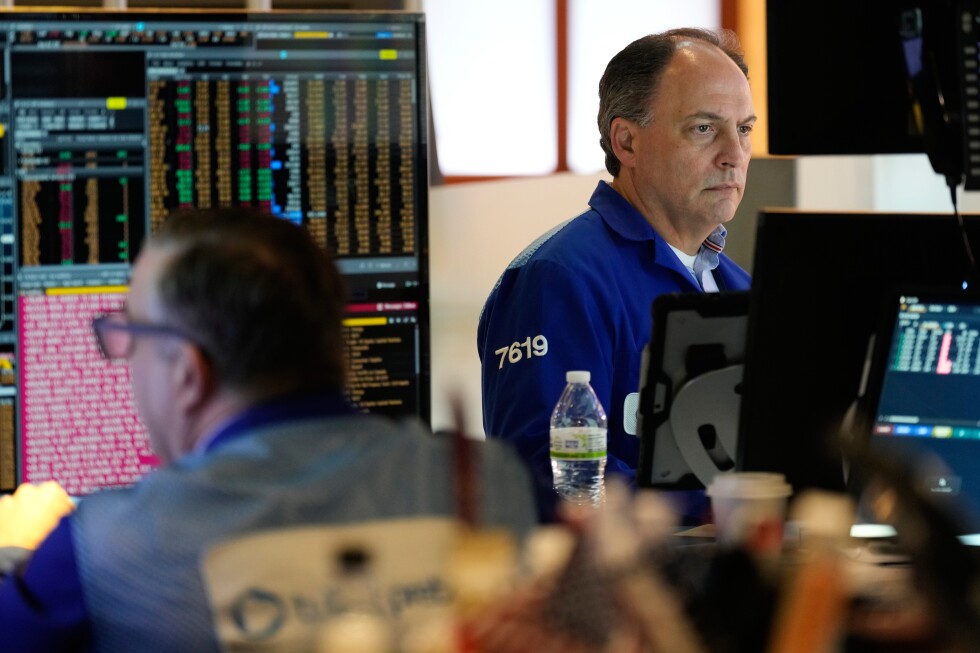
The stock market recently faced a notable shakeup as fears surrounding artificial intelligence (AI) disruption weighed heavily on US technology stocks, even as strong employment data in the United States supported broader market optimism. This juxtaposition highlights the complex dynamics investors are navigating amid rapid technological change and economic uncertainty. Understanding these developments is crucial for investors and observers seeking clarity on market direction and the implications of AI on various industries.
On Thursday, US equity markets experienced significant downturns, with the S&P 500 falling 1.6%, marking its second-largest drop since Thanksgiving. The Dow Jones Industrial Average declined by 669 points (1.3%), and the Nasdaq composite, heavily weighted with technology stocks, dropped 2%. This sell-off was largely driven by investor concerns about how artificial intelligence might disrupt existing business models, particularly within the software sector.
Companies such as AppLovin and Cisco Systems saw their shares plunge despite reporting quarterly profits that exceeded analysts’ expectations. AppLovin’s stock fell nearly 20%, extending its year-to-date losses to over 30%. The company’s CEO, Adam Foroughi, contested the negative market sentiment during a conference call, emphasizing that business indicators remain strong. However, investor skepticism persists, reflecting broader uncertainty about AI’s impact on traditional software services.
Cisco’s stock dropped 12.3% even after beating earnings estimates, as the company indicated that profit margins might compress due to rising costs for computer memory components driven by AI demand. This points to a wider concern that while AI investments are accelerating, the profitability and productivity gains from these expenditures remain uncertain.
The apprehension about AI’s disruptive potential is not confined to technology stocks. According to UBS strategists led by Matthew Mish, the risk of AI disruption is beginning to affect other asset classes, including bonds. They warn that the uncertainty surrounding AI’s timing and impact could lead to increased defaults in lower-rated credit markets, potentially raising borrowing costs even for financially stable companies.
This scenario could have a chilling effect on capital spending and investment plans, possibly undermining the very AI boom that is driving current market enthusiasm. The strategists highlight that the ripple effects of AI disruption risk might be significant enough to stall broader economic growth and corporate expansion.
Despite these concerns, some companies positioned to benefit from AI-related demand are seeing positive market reactions. Equinix, a digital infrastructure provider, saw its shares rise over 10% after issuing optimistic financial forecasts for 2026. CEO Adaire Fox-Martin noted unprecedented demand for the company’s data center solutions, which are integral to supporting AI workloads globally.
Outside the tech sector, companies like McDonald’s and Walmart reported stronger-than-expected quarterly profits, contributing to some market resilience. McDonald’s attributed its improved performance to strategic pricing adjustments aimed at enhancing value and affordability, which helped boost customer traffic.
Walmart’s stock rallied nearly 4%, offsetting earlier weekly losses despite reports indicating that overall retail spending in the US stalled in December. These results suggest that while technology stocks face headwinds from AI-related uncertainties, consumer-focused companies with effective operational strategies continue to perform well.
In the bond market, Treasury yields declined as investors sought safer assets amid the equity market volatility. The yield on the 10-year Treasury note dropped from 4.18% to 4.10%, influenced partly by weaker-than-expected sales of previously owned homes and a slight increase in weekly unemployment claims. Although more workers filed for unemployment benefits than economists anticipated, the number remained below the previous week’s total, suggesting a possible easing in layoffs.
These mixed signals come on the heels of a strong US jobs report showing an improved unemployment rate, which may encourage the Federal Reserve to maintain current interest rates rather than implement cuts. This stance aligns with concerns about inflation, which remains a key factor in monetary policy decisions.
Investors are now closely watching the upcoming consumer inflation report, expected to show a moderation to 2.5% from 2.7% in December. The inflation trajectory will influence the Fed’s approach to balancing economic growth with price stability.
Internationally, Asian markets responded positively to the strong US employment figures. South Korea’s Kospi index surged 3.1%, buoyed by gains in major technology companies like Samsung Electronics and SK Hynix. This reflects optimism about continued demand for technology products and components tied to AI development.
Other Asian markets experienced more modest movements, with Hong Kong’s Hang Seng index declining slightly by 0.9%. European markets showed mixed results, with France’s CAC 40 inching up 0.3%. These varied responses underscore the complex interplay between regional economic conditions and global market sentiment influenced by US data and AI-related developments.
The recent market volatility highlights the challenges investors face in assessing the economic impact of artificial intelligence. While AI promises transformative changes and significant opportunities, it also introduces uncertainty about profitability and industry disruption. Coupled with mixed economic indicators and the Federal Reserve’s cautious stance on interest rates, markets are navigating a complex environment. Investors should remain attentive to upcoming inflation data and corporate earnings reports, which will provide further clarity on the trajectory of both the AI sector and the broader economy.
Originally reported by apnews.com. Adapted for our readers with AI assistance.
Keep reading
AI Trends & News
Microsoft opens Surface Laptop Ultra pre-orders from US$2,599.99. Explore its launch date, NVIDIA RTX Spark features and implications for Nigerian businesses.
Science & Technology
DJI’s IBC recognition puts pocket gimbal and panoramic capture in the spotlight. Here is how creators can assess framing, editing effort and recording workflows.
Business News
App store steering is about more than permission to add a link. Explore fees, renewal terms, customer experience and the UK consultation.
TAMFIS NIG LTD
Electrical and instrumentation engineering, bid preparation and consulting, IT and software.

