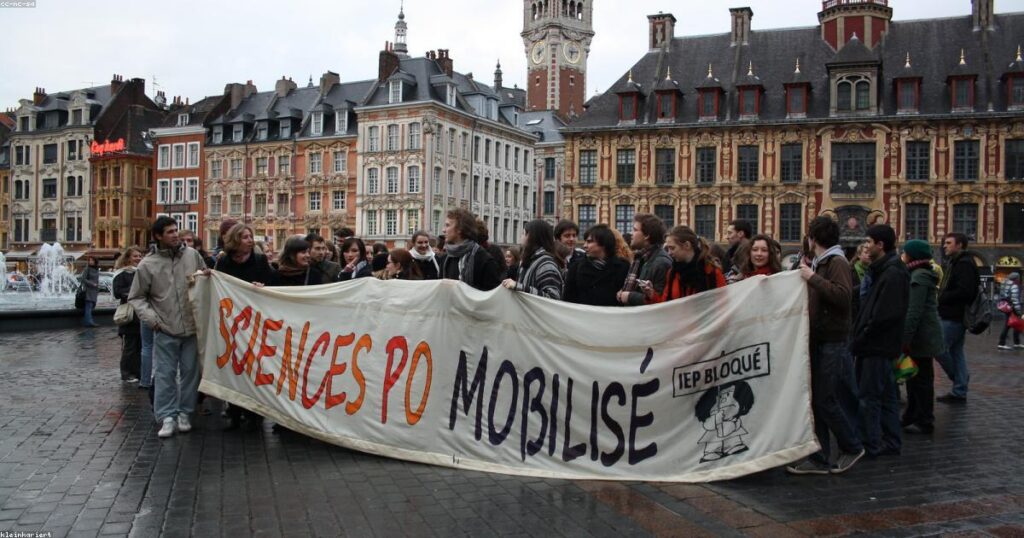
Anti -Semitic posts, survey … The point on the Gazan student fired from Sciences Po Lille
In September 2023, the Political Science Institute of Lille (Sciences Po Lille) canceled the registration of a student from Gaza, citing social media posts attributed to her that allegedly called for violence against Jewish people. This decision has ignited a fervent debate in France, touching on the boundaries between freedom of expression and hate speech, the responsibilities of educational institutions, and the government's stance on anti-Semitism and terrorism. The case has escalated to the judicial level, with investigations launched for 'apology of terrorism' and 'praise of crimes against humanity.' This article delves into the details surrounding the incident, the governmental and public reactions, and its implications for French society and international relations.
Background of the Incident at Sciences Po Lille
The controversy began when Sciences Po Lille discovered social media posts linked to a Gazan student who was scheduled to begin her studies in September. These posts reportedly contained anti-Semitic rhetoric, including calls for violence against Jews. In response, the institution swiftly canceled her registration, emphasizing zero tolerance for hate speech within its academic environment.
This action reflects the broader context in which French universities are increasingly vigilant about extremist content and hate speech, particularly in relation to the ongoing Israeli-Palestinian conflict. The university’s decision underlines the challenge educational institutions face in balancing inclusivity with maintaining a safe and respectful atmosphere for all students.
The student’s dismissal has sparked a wider conversation about freedom of expression and the limits imposed by the law when speech incites hatred or violence. It also raises questions about the vetting process for international students and the responsibilities of academic institutions in monitoring online behavior.
Governmental Response and Political Statements
French government officials reacted strongly to the incident. Interior Minister François-Noël Buffet announced the opening of a judicial investigation for 'apology of terrorism' and 'praise of crimes against humanity' facilitated through online communication platforms. He also suggested that the student might be deported, highlighting the serious legal consequences of such social media activity.
Foreign Minister Jean-Noël Barrot condemned the anti-Semitic remarks and emphasized that individuals expressing such views have no place in France. He called for an internal investigation to prevent similar cases in the future, signaling a zero-tolerance policy toward hate speech and extremist propaganda within French borders.
Similarly, Bruno Retailleau, Minister of the Interior, reinforced the government's stance on social media propaganda linked to Hamas and other extremist groups. He stressed that propagandists promoting violence and hatred are unwelcome in France, reflecting the government's commitment to combating anti-Semitism and terrorism at multiple levels.
Legal Dimensions: Investigation and Possible Consequences
The Lille prosecutor’s office officially opened an investigation into the student’s social media posts, focusing on the legal definitions of 'apology of terrorism' and 'praise of crimes against humanity.' These offenses are taken seriously under French law, carrying significant penalties including fines, imprisonment, and deportation for non-citizens.
The use of online platforms to disseminate such content complicates enforcement but also expands the scope of legal accountability. France has stringent laws against hate speech and terrorism-related propaganda, reflecting the country’s broader commitment to national security and social cohesion.
If found guilty, the student faces prosecution and likely expulsion from French territory. This potential deportation aligns with the government’s policies on residence permits and immigration control, particularly for individuals involved in actions deemed threatening to public order and safety.
Impact on Academic Institutions and Student Communities
The case has sent ripples through academic circles, prompting universities to reassess their policies on student conduct, especially regarding online behavior. Institutions like Sciences Po Lille are under pressure to safeguard their campuses from extremist influences while upholding principles of academic freedom and diversity.
Student communities, particularly those from conflict zones, may feel scrutinized or unfairly targeted as a result of this incident. Universities face the delicate task of fostering dialogue and understanding without tolerating hate speech or incitement to violence.
This incident also highlights the need for enhanced digital literacy and awareness programs within academic settings, aiming to prevent the spread of extremist content and promote respectful discourse among students from diverse backgrounds.
Public and Media Reactions to the Controversy
The media coverage of the case has been extensive, with various outlets highlighting the tensions between free speech and hate speech laws. Public opinion in France is divided, with some advocating strict measures against any form of anti-Semitism, while others warn against potential overreach and the stigmatization of students from conflict regions.
Social media platforms have also become arenas for debate, with discussions about the limits of acceptable speech, the role of universities, and the responsibilities of governments in protecting citizens from hate speech and extremist propaganda.
This case has ignited broader conversations about the Israeli-Palestinian conflict’s impact on diaspora communities in France and the challenges of integrating students from politically sensitive backgrounds into French society.
Broader Context: Anti-Semitism and Extremism in France
Anti-Semitism remains a persistent issue in France, with periodic spikes linked to geopolitical events. The government has implemented various strategies to combat hate crimes and promote tolerance, but challenges persist, especially in online spaces where extremist ideologies can spread rapidly.
The rise of extremist propaganda on social media has complicated efforts to monitor and counter hate speech. France’s legal framework seeks to address this by criminalizing the promotion of terrorism and hate crimes, but enforcement requires balancing civil liberties with security concerns.
The incident involving the Gazan student is emblematic of the ongoing struggle to address anti-Semitism and extremism while respecting democratic values. It underscores the need for comprehensive approaches involving education, law enforcement, and community engagement.
International Implications and Diplomatic Considerations
The dismissal of a Gazan student and the subsequent governmental actions have international ramifications, particularly in the context of French relations with Palestinian territories and the broader Middle East. France’s firm stance against hate speech and terrorism reflects its commitment to combating extremism globally.
Diplomatic sources have indicated that the student is expected to leave French territory, highlighting the intersection between domestic security policies and international diplomatic protocols. This case may influence how France manages future admissions of students from conflict zones.
Moreover, the incident could affect perceptions of France’s openness to international students and the balance it strikes between welcoming diversity and ensuring national security. It serves as a case study in the complexities faced by countries dealing with global conflicts on their own soil.
Preventive Measures and Future Outlook
In response to this incident, French authorities and academic institutions are likely to strengthen screening processes for incoming students, particularly those from regions associated with conflict or extremist activity. Enhanced monitoring of online behavior may also be implemented to identify potential risks early.
Educational programs promoting intercultural understanding and digital citizenship are expected to gain prominence, aiming to reduce the spread of hate speech and foster respectful dialogue among diverse student populations.
Looking forward, the case serves as a catalyst for ongoing discussions about balancing security, freedom of expression, and inclusion within France’s educational and societal frameworks. The lessons learned may inform policies that better address the challenges posed by hate speech and extremism in the digital age.
Conclusion
The dismissal of the Gazan student from Sciences Po Lille over anti-Semitic posts has reverberated across France’s political, academic, and public spheres. It serves as a stark reminder of the complex interplay between freedom of expression, national security, and social cohesion in an era where online platforms amplify extremist messages. As French authorities pursue legal action and reinforce preventive measures, the case will likely influence future policies on hate speech, immigration, and the integration of students from sensitive regions. Ultimately, balancing the protection of democratic values with the need to combat hate and violence remains an ongoing challenge for France and many other nations.
Originally reported by 20minutes.fr. Adapted for our readers.
Recent advances in machine perfusion technology are not only preserving donated livers but also making them biologically younger at a molecular level. This breakthrough…
What happens when human imagination, artificial intelligence, art and technology come together? From September 1 to 6, Samsung Electronics presented a special exhibition themed…