
AI Trends & News
Surface Laptop Ultra Pre-orders Open: Price, Release Date and AI Features
Microsoft opens Surface Laptop Ultra pre-orders from US$2,599.99. Explore its launch date, NVIDIA RTX Spark features and implications for Nigerian businesses.
TAMFIS NIG LTDRC 8067447CAC ACTIVEFinima, Bonny Island, Rivers State

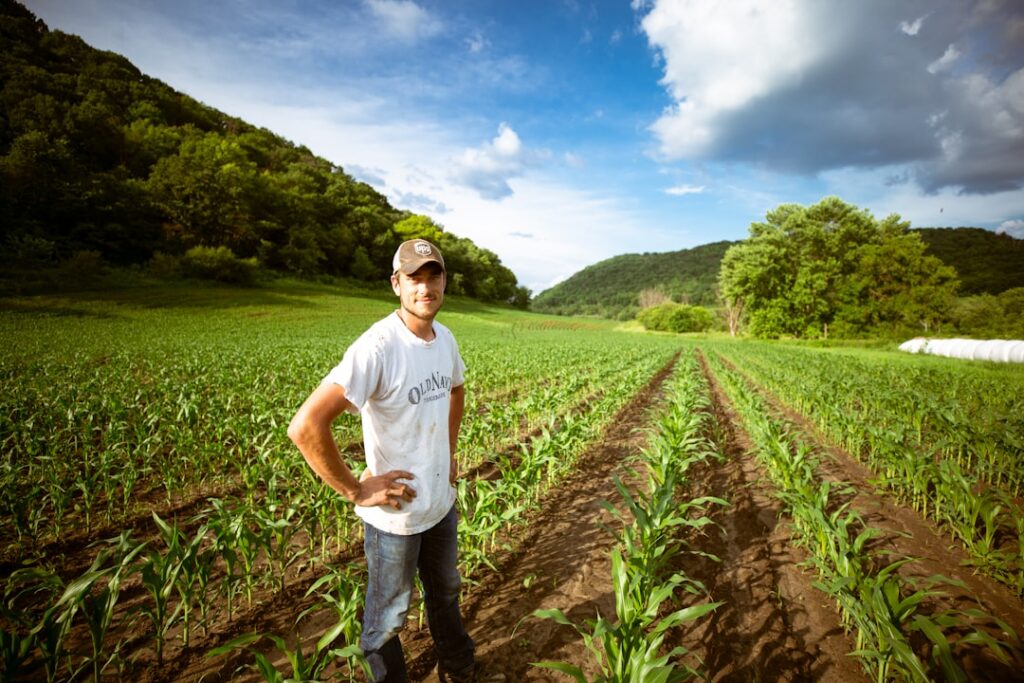
Australian agriculture has staged a remarkable confidence recovery after what industry analysts describe as one of the most challenging quarters in recent memory. The latest Rabobank Rural Confidence Survey reveals national farmer sentiment has surged 29 percentage points, climbing from a historic low of -48% in June to -19% in the September quarter. While the reading remains in negative territory, the scale of improvement represents the most significant quarterly turnaround since the survey began, signalling renewed optimism across the country's farming communities.
Nearly half of all farmers surveyed, 48%, identified positive commodity price expectations as the primary driver behind their improved outlook. This marks a substantial shift from previous quarters when input cost pressures dominated sentiment. Improved seasonal conditions ranked as the second most cited reason for optimism, nominated by 29% of respondents.
Rabobank's Group Executive for Country Banking Australia, Marcel van Doremaele, noted that the improvement reflects better seasonal conditions across several key growing regions alongside some relief on supply costs and availability. He emphasised that while input costs remain the dominant factor weighing on confidence, farming businesses have now absorbed the initial price shocks that characterised earlier quarters.
The stabilisation of key supply chains, despite ongoing geopolitical tensions in the Strait of Hormuz and Black Sea regions, has provided additional reassurance. Stronger commodity signals across global markets have further steadied sentiment, while domestic urea supply improvements have reduced the risk of fertiliser shortages heading into the critical end-of-season period.
Input costs continue to top the list of farmer concerns nationally, cited by 54% of respondents. However, this represents a meaningful decline from the 60% recorded last quarter, suggesting the most acute pressure may have passed. Concern about energy security has fallen even more sharply, dropping from 26% to just 14% of farmers.
In a notable divergence, concern about government intervention and policy has surged in the opposite direction, jumping from 23% to 38% this quarter. Van Doremaele highlighted that many producers are actively assessing the impact of changes to tax and superannuation arrangements, alongside working visa conditions that could affect the availability of seasonal harvest labour.
This policy anxiety reflects broader uncertainty about regulatory settings at a time when farming businesses are attempting to plan medium-term investments. The juxtaposition of easing cost pressures against rising policy concerns creates a complex decision-making environment for agricultural operators.
South Australia has posted the strongest turnaround of any state and stands alone in returning to positive net confidence territory, lifting to 8% from -39%. This dramatic recovery has been underpinned by beneficial winter rainfall across most regions, providing a strong foundation for the current growing season.
Queensland remains the least confident state at net -37%, though this represents a solid improvement from -54% last quarter. Commodity price expectations have provided some offset to ongoing concerns about input costs and persistent drought conditions in parts of the state.
New South Wales climbed to net -20% from -55%, while Victoria surged to -9% from -39%, bringing it close to neutral territory. Western Australia improved to -28% from -49%, and Tasmania lifted to -20% from -38%. Tasmanian farmers flagged particular concern about input prices as they head into their most input-intensive season, highlighting the regional variation in cost pressure exposure.
Sheep producers have emerged as the most optimistic commodity group nationally, with confidence rising from -27% to -6% on the back of stable prices for both sheepmeat and wool. This near-neutral reading reflects the resilience of red meat and fibre markets amid broader volatility.
Grain grower confidence has rebounded substantially from -61% to -28% as global wheat and barley prices firmed, providing much-needed relief for cropping operations. Beef confidence improved from -40% to -18%, while dairy producers saw sentiment recover from -60% to -24%.
Sugar cane and cotton growers remain the most cautious sectors, though both recorded modest improvements. The divergent recovery across commodities underscores the varying exposure to global price signals, input cost structures, and seasonal conditions that characterise Australian agriculture's diverse production systems.
With sentiment improving, investment intentions have strengthened correspondingly. Twenty-eight percent of farmers now plan to increase spending over the next 12 months, up from 21% last quarter, while only 12% expect to cut back, down from 19%. This shift signals a meaningful change in risk appetite across the sector.
Van Doremaele noted renewed vigour among Australian farmers to develop their operations, with 63% earmarking investment for capital expenditure such as yards, silos and fences. Investment intentions have also strengthened across technology and machinery, suggesting a dual focus on infrastructure renewal and productivity enhancement.
Around one in three farmers now expect their gross income to increase over the next 12 months, reflecting the overall improved mood across Australian agriculture. This income optimism, combined with easing cost pressures, creates favourable conditions for the investment cycle that typically follows confidence recoveries in the agricultural sector.
The Rabobank Rural Confidence Survey paints a picture of an agricultural sector that has weathered a perfect storm of input cost inflation, supply chain disruption, and adverse seasonal conditions, and is now emerging with renewed vigour. The breadth of improvement across every state and commodity sector suggests this is a genuine cyclical recovery rather than a narrow, commodity-specific bounce. However, the sharp rise in policy anxiety serves as a reminder that the operating environment for Australian farmers remains complex. As producers shift from survival mode to investment mode, the interplay between favourable commodity signals, easing cost pressures, and regulatory uncertainty will shape the trajectory of Australian agriculture through 2025 and beyond.
Originally reported by dynamicbusiness.com. Adapted for our readers with AI assistance.
Keep reading
AI Trends & News
Microsoft opens Surface Laptop Ultra pre-orders from US$2,599.99. Explore its launch date, NVIDIA RTX Spark features and implications for Nigerian businesses.
Science & Technology
DJI’s IBC recognition puts pocket gimbal and panoramic capture in the spotlight. Here is how creators can assess framing, editing effort and recording workflows.
Business News
App store steering is about more than permission to add a link. Explore fees, renewal terms, customer experience and the UK consultation.
TAMFIS NIG LTD
Electrical and instrumentation engineering, bid preparation and consulting, IT and software.

