
Business
Nigeria’s Economic Performance: Domestic Debt Rise and Agriculture Trade Shift in Q2 2026
Nigeria's economic landscape in the second quarter of 2026 presents a mixed picture of fiscal press...
TAMFIS NIG LTDRC 8067447CAC ACTIVEFinima, Bonny Island, Rivers State

Editor’s note: The following is AI-generated commentary and context on this topic, not original reporting.
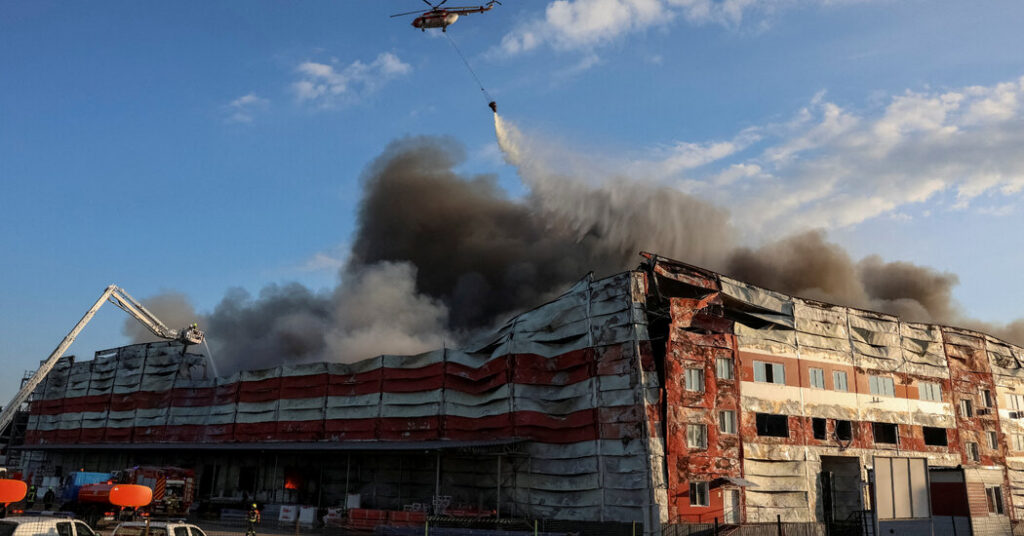
Russia Batters Kyiv in One of the Largest Missile Assaults of the War is another entry in the long and difficult record of the war in Ukraine, a conflict that continues to shape security policy, energy markets and political alliances well beyond the immediate battlefield.
Russia Batters Kyiv in One of the Largest Missile Assaults of the War underscores how the war has evolved into a contest fought as much through logistics, morale and political resilience as through territory gained or lost on any given day.
In the specific case of “Russia Batters Kyiv in One of the Largest Missile Assaults of the War,” the details below place the story in a wider frame rather than repeating claims that have not been independently verified.
Since the full-scale invasion began, the conflict has evolved through several distinct phases, from the initial assault to a protracted war of attrition involving long-range strikes, drone warfare and shifting front lines. Both sides have adapted tactics and technology considerably over that period.
International support for Ukraine, in the form of military aid, financial assistance and diplomatic backing, has remained a significant factor shaping the country’s capacity to sustain its defence, even as the political appetite for continued support has fluctuated among allied governments.
Domestic politics inside Ukraine have continued to function throughout the war, including debate over military strategy, leadership decisions and the balance between civilian oversight and command authority. That has, at times, produced visible tension between political and military leadership.
The war’s economic and humanitarian toll has been immense, with millions displaced, significant infrastructure damage, and ongoing strain on energy and logistics networks on both sides of the front line.
Developments in the war carry consequences well beyond Ukraine’s borders, affecting energy markets, defence spending across Europe, and the broader question of how the international community responds to large-scale conflict. Domestic political and military dynamics inside Ukraine also influence how sustainable the country’s war effort will prove over time.
Reaction to developments in the war typically comes from Ukrainian officials, Russian state and independent commentary, and international observers and allied governments monitoring the situation’s implications for regional and global security.
Individual developments, whether military, political or diplomatic, need to be understood within the broader arc of a war that has already lasted far longer than many initial assessments anticipated. Analysts continue to debate the balance between attrition, technological adaptation and political endurance in determining how the conflict eventually resolves. International alliances and the durability of support from partner nations remain a significant variable shaping what options are realistically available to Ukraine’s leadership going forward.
Whatever the near-term outcome, the war’s long-term consequences, for regional security architecture, for Ukraine’s reconstruction, and for the broader relationship between Russia and Western governments, are likely to be felt for years after any eventual resolution. Historians and policy analysts will likely be studying this period for a long time to come.
Reporting on an active conflict is inherently difficult: access is restricted, information from combatants on either side can be shaped by propaganda considerations, and the fog of war makes real-time verification genuinely hard even for experienced correspondents. Readers are generally best served by relying on established international news organisations with journalists and stringers on the ground, cross-referencing claims from official Ukrainian and Russian sources against independent verification where it exists, and treating any single, unverified claim, especially around casualty figures or battlefield outcomes, with appropriate caution until confirmed by multiple sources.
The months ahead are likely to bring further shifts in both the military and political dimensions of the conflict, shaped by decisions taken in Kyiv, Moscow and allied capitals alike. Analysts continue to caution against short-term predictions given how often the war’s trajectory has shifted in response to new developments on the ground and in international diplomacy.
The trajectory of the war will continue to depend on a combination of battlefield developments, the scale and consistency of international support, and the internal political and military decisions taken by Ukraine’s leadership in the weeks ahead.
Independent assessments of developments in the war typically draw on a combination of official statements from involved governments, reporting from journalists on the ground, and analysis from defence and foreign policy research institutions, all of which can vary considerably in their read of the same event.
This piece is intended as background and analysis rather than original war reporting, so specific casualty figures, troop movements and direct quotes are deliberately left to primary journalistic and official sources. Established international news organisations with correspondents on the ground remain the most reliable references for exact, verified detail.
Russia Batters Kyiv in One of the Largest Missile Assaults of the War is, at its core, a story about how a specific event connects to larger, ongoing questions in its field. The details above are offered as background rather than a substitute for primary reporting, and readers wanting the fullest, most current picture should keep an eye on official statements and established news coverage as the story continues to unfold in the days ahead.
Ultimately, how this story is remembered will depend on what follows in the days and weeks ahead, and readers are encouraged to look out for further reporting as the situation develops. Context like this is often just as important as the headline itself in understanding what actually happened and why it matters.
As with most stories of this kind, the full picture will likely become clearer with time, as more information emerges and the immediate reaction gives way to more considered analysis. Readers who want to follow the story closely should expect further updates as circumstances develop and official responses are issued.
For now, Russia Batters Kyiv in One of the Largest Missile Assaults of the War stands as a snapshot of a moment that is still unfolding, and it is one worth revisiting as further details come to light. It is a useful illustration of how quickly a single event can generate wider debate about the issues surrounding it.
Originally reported by nytimes.com. Adapted for our readers with AI assistance.
Keep reading
Business
Nigeria's economic landscape in the second quarter of 2026 presents a mixed picture of fiscal press...
Business
Liverpool manager Andoni Iraola is confronting a significant selection headache as two key forwards, Cod...
News
Health News tamfitronics [Editor’snote:[Editor’snote: This transcript was generated using both transcription ...
TAMFIS NIG LTD
Electrical and instrumentation engineering, bid preparation and consulting, IT and software.

