‘With the coalition anything can happen.’ Wike defends Okpebholo’s demand for clearance from Obi to visit Edo


Wike Defends Okpebholo’s Demand for Obi’s Clearance: A Deep Dive into Nigeria’s Political Chessboard
Abuja, Nigeria – The recent demand by Edo State Governor Monday Okpebholo for Labour Party (LP) presidential candidate Peter Obi to seek security clearance before visiting Edo State has ignited a fierce debate in Nigeria’s political circles. This controversy has been further amplified by the Federal Capital Territory (FCT) Minister, Nyesom Wike, who has vocally defended Okpebholo’s stance, arguing that “with the coalition anything can happen.”
This article delves into the various facets of this unfolding political saga, exploring the motivations behind the demand, Wike’s staunch defence, and the broader implications for Nigeria’s political landscape.
The Genesis of the Controversy
The controversy began when Governor Monday Okpebholo, a member of the All Progressives Congress (APC), issued a statement on 18 July 2025, warning Peter Obi against visiting Edo State without first obtaining security clearance. Okpebholo’s statement was a response to Obi’s earlier visit on 7 July, during which he reportedly donated ₦15 million to a hospital in Benin City. The governor’s Chief Press Secretary, Fred Itua, claimed that Obi’s visit coincided with a “resurgence of violence” that allegedly resulted in three deaths and that this would “not be tolerated.”
The Edo State government later clarified that the governor’s statement was not a threat but an emphasis on the need for high-profile individuals to notify the state’s chief security officer to ensure adequate security measures. However, this explanation did little to quell the outrage. Critics, including human rights lawyers and Labour Party senators, swiftly condemned the demand as an “executive rascality,” an “abuse of office,” and a dangerous assault on democratic norms and constitutional rights.
Wike’s Unwavering Defence
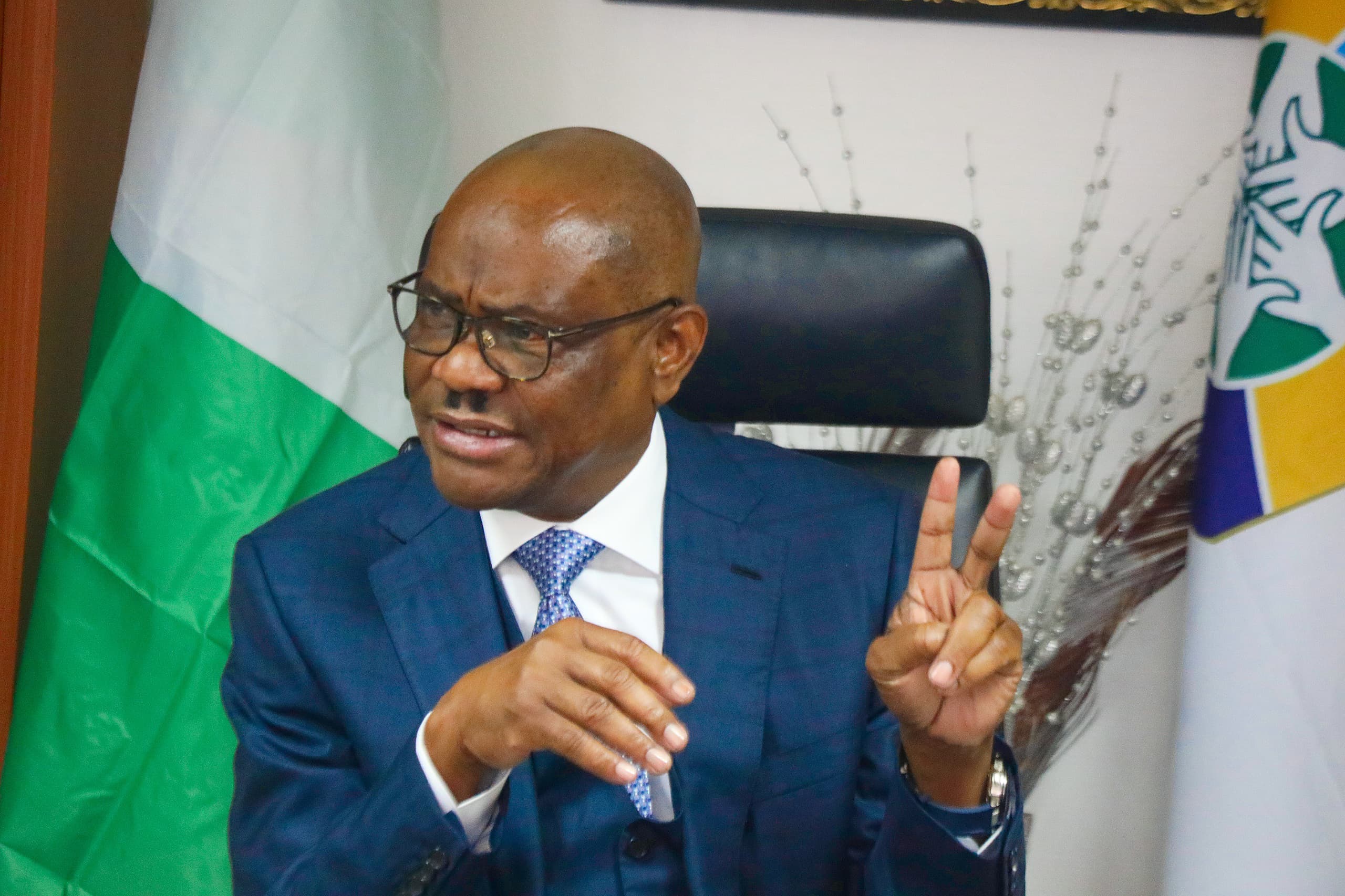
The political temperature rose significantly when FCT Minister Nyesom Wike weighed in on the matter. Speaking during the commissioning of the new Edo Line transport terminal in Benin City on 22 July 2025, Wike unequivocally defended Okpebholo’s position. His central argument was rooted in the unpredictability of political alliances, stating, “With their so-called coalition, anything can happen.”
Wike drew a parallel to his own tenure as the Governor of Rivers State, where he claimed Peter Obi had notified him of his visit. Wike emphasised that a governor’s primary responsibility is to protect lives and property, and that in the event of any harm befalling a high-profile visitor, the governor would inevitably be held accountable. “If anything happens to Obi, they would accuse the governor of being behind it. So, the statement you (Okpebholo) made, you were quite right,” Wike asserted.
The FCT Minister’s defence goes beyond administrative protocol; it hints at a deeper political calculus. By referencing the “coalition,” Wike suggests a perceived instability or unpredictability associated with the emerging opposition alliances, particularly those involving Peter Obi and the Labour Party. He urged Okpebholo to remain steadfast, dismissing the backlash as mere political grandstanding.
The Political Undercurrents
To understand the full significance of this episode, it is crucial to analyse the political affiliations and motivations of the key players.
Monday Okpebholo: As the new APC governor of Edo State, Okpebholo is keen to assert his authority as the chief security officer and prevent any incidents that could destabilise his administration. His demand for security clearance can be seen as an attempt to project strength and control, especially as the state grapples with its own security challenges.
Nyesom Wike: The FCT Minister is a former PDP governor who has become a powerful voice within the Bola Tinubu-led APC administration. His defence of Okpebholo aligns with the APC’s broader strategy of consolidating power and challenging the influence of opposition figures like Peter Obi. Wike’s statements often serve to reinforce the ruling party’s narrative, particularly against perceived threats from opposition coalitions. His repeated dismissals of these alliances suggest a robust APC strategy to dismantle any significant challenge to its dominance.
Peter Obi and the Labour Party: The demand for security clearance places Obi and the Labour Party in a difficult position. They must navigate a fine line between respecting a governor’s authority and defending their fundamental constitutional rights to freedom of movement and association. The incident could be a test case for how the party handles political pressure and potential restrictions on its activities.
Implications for Nigeria’s Democracy
The Edo State saga highlights a critical debate about security, governance, and constitutional rights. While a governor has the constitutional duty to ensure security, the demand for “clearance” for political opponents raises concerns about the potential for abuse of power. Critics argue that such a precedent could be used to stifle political activities and undermine the very essence of multi-party democracy.
The incident also underscores the complexities of coalition politics in Nigeria. Wike’s reference to the “coalition” serves as a reminder of the ruling party’s awareness of, and strategic response to, any potential opposition alliances ahead of the 2027 general elections. The ability of an incumbent party to use security concerns as a tool to restrict the movements and activities of opposition figures is a significant challenge to the principle of a level playing field.
In conclusion, the public spat between Governor Okpebholo and Peter Obi, fuelled by Wike’s assertive defence, is more than just a localised dispute. It is a microcosm of Nigeria’s broader political struggles, revealing the intense competition for power, the delicate balance between security and liberty, and the enduring challenge of building robust democratic institutions in a highly polarised environment.