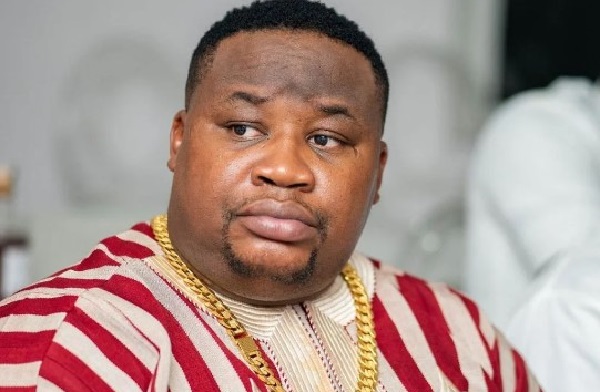
Cubana Chief Priest defends support for Tinubu amid backlash
In Nigeria's complex political landscape, where ethnic and tribal affiliations often influence voter behavior and political endorsements, Cubana Chief Priest, a prominent socialite and influencer, has taken a bold stance. His public support for President Bola Tinubu’s re-election campaign has attracted both praise and criticism, igniting debates about loyalty, identity, and progress. Chief Priest’s defense of his position challenges the entrenched tribal politics that have historically shaped Nigerian elections. This article explores the nuances of his argument, the broader implications for Nigerian unity, and the significance of prioritizing visionary leadership over ethnic allegiances.
The Context of Cubana Chief Priest’s Endorsement
Cubana Chief Priest, known for his influence in entertainment and social circles, recently voiced his support for President Bola Tinubu’s bid for re-election. This endorsement came amid a backdrop of heightened political tensions and intense tribal sensitivities in Nigeria, where ethnic identity frequently dictates political loyalties.
His position is particularly noteworthy because he is of Igbo descent, an ethnic group that has often found itself politically opposed to Yoruba leaders like Tinubu. The socialite’s support thus defies conventional expectations and challenges the deeply rooted tribalism that often polarizes Nigerian politics.
By openly backing Tinubu, Chief Priest has positioned himself as an advocate for a politics that transcends ethnic boundaries, emphasizing the need to focus on national progress and strategic leadership instead of narrow ethnic interests.
Questioning Tribal Allegiance in Nigerian Politics
Chief Priest’s defense centers on the argument that tribal allegiance should not dictate political support in a country as diverse as Nigeria. He questions the logic behind supporting candidates solely based on ethnic identity, highlighting how such divisions hinder national unity and development.
He provocatively asks, “If as an Igbo man supporting Tinubu is a betrayal, what is a Yoruba man supporting Obi?” This question underscores the hypocrisy and limitations of tribal politics, suggesting that Nigerians must redefine loyalty to encompass the entire nation rather than just their ethnic group.
His message encourages Nigerians to embrace a broader national identity, advocating for unity as the foundation for progress. By prioritizing the country’s prosperity over ethnic considerations, Chief Priest calls for a paradigm shift in political engagement.
Highlighting Tinubu’s Strategic Political Approach
In his statement, Chief Priest praises President Tinubu’s strategic and patient approach to politics. He points out that Tinubu supported Muhammadu Buhari, a leader from a different tribe, for eight years before ascending to the presidency himself, exemplifying political maturity and long-term vision.
This example serves to illustrate Tinubu’s ability to build alliances beyond ethnic lines and his commitment to a structured political journey. Chief Priest uses this narrative to challenge critics who dismiss Tinubu’s leadership based on tribal biases.
By emphasizing Tinubu’s political acumen and inclusive strategies, Chief Priest argues that Nigerians should back leaders with clear visions and organizational structures, which are essential for sustainable national development.
The Call for Unity and National Interest
A central theme in Chief Priest’s defense is the prioritization of national interest above ethnic divisions. He stresses that unity among Nigeria’s diverse ethnic groups is critical for the country’s prosperity and stability.
He warns against the dangers of tribalism, describing it as a barrier to collective progress and a recipe for repeated failure. His appeal is for Nigerians to adopt a more inclusive mindset that aligns with the country’s long-term goals.
This call to unity resonates with many who are tired of ethnic conflicts and wish to see Nigeria evolve into a nation where cooperation and shared purpose override parochial interests.
Response to Backlash and Criticism
Following his public endorsement, Chief Priest faced considerable backlash from various quarters, including some members of his own ethnic community. Critics accused him of betraying his roots by supporting a Yoruba leader, reflecting the persistent influence of tribalism.
In response, Chief Priest doubled down on his stance, reiterating that being Nigerian should transcend ethnic loyalties. He dismisses tribalism as an outdated mindset that hampers the country’s growth and insists that political decisions should be made based on competence and vision.
His unwavering position challenges others to reconsider their perspectives and encourages a more pragmatic approach to political participation that values leadership qualities over ethnic identities.
The Role of Influencers in Shaping Political Discourse
As a socialite with a significant following, Cubana Chief Priest exemplifies the growing influence of public figures in shaping political opinions and narratives in Nigeria. His endorsement and subsequent defense highlight how influencers can sway public discourse beyond traditional political actors.
By leveraging his platform, Chief Priest brings attention to critical issues such as tribalism and national unity, stimulating conversations that might otherwise be marginalized in mainstream politics.
His involvement underscores the potential of cultural and entertainment figures to contribute meaningfully to political debates, encouraging their audiences to engage more thoughtfully with governance and leadership choices.
Implications for Nigeria’s Political Future
Chief Priest’s stance may mark a shift towards a more inclusive political culture in Nigeria, where merit and vision take precedence over ethnic considerations. This could encourage broader coalitions and alliances that reflect the country’s diversity while promoting unity.
If more Nigerians adopt this approach, it may reduce ethnic tensions and foster a political environment conducive to sustainable development and effective governance.
However, overcoming entrenched tribal loyalties remains a significant challenge. Chief Priest’s advocacy illustrates the ongoing struggle to balance identity with national interest in Nigeria’s evolving democracy.
The Broader Socio-Political Context of Tinubu’s Re-election Bid
President Bola Tinubu’s re-election campaign is taking place amid a dynamic and often turbulent political landscape marked by competing ethnic interests and regional power struggles.
Support from figures like Cubana Chief Priest, especially from outside Tinubu’s ethnic base, could signal a strategic broadening of his support network, which might be crucial for electoral success.
This development highlights the importance of coalition-building and cross-ethnic alliances in Nigeria’s politics, potentially setting a precedent for future elections where national rather than ethnic considerations dominate.
Conclusion
Cubana Chief Priest’s public defense of his support for President Bola Tinubu transcends mere political endorsement; it is a powerful statement against the divisive nature of tribalism in Nigerian politics. By advocating for unity, strategic leadership, and national interest, Chief Priest challenges Nigerians to rethink their political loyalties and embrace a more inclusive approach. His position, controversial yet compelling, highlights the evolving dynamics of Nigeria’s political landscape, where the future may well depend on the ability to look beyond ethnic identities and work collectively towards shared prosperity. As the country approaches the 2027 elections, voices like Chief Priest’s could catalyze a more united and visionary Nigeria.
Obi says his wife funds her own purchases. This analysis separates his explanation, unverified handbag prices and the evidence needed to assess public spending.
Yari says the APC will emphasise Tinubu’s achievements in 2027. This analysis explains how voters can examine outcomes, baselines and campaign evidence.