Politics
Science vs politics: Kiwi’s long road to EU health-claim approval
In August 2025, Zespri, the world’s largest marketer of kiwifruit, announced that the European Commission had approved what it described as the first health…
TAMFIS NIG LTDRC 8067447CAC ACTIVEFinima, Bonny Island, Rivers State

Politics tamfitronics
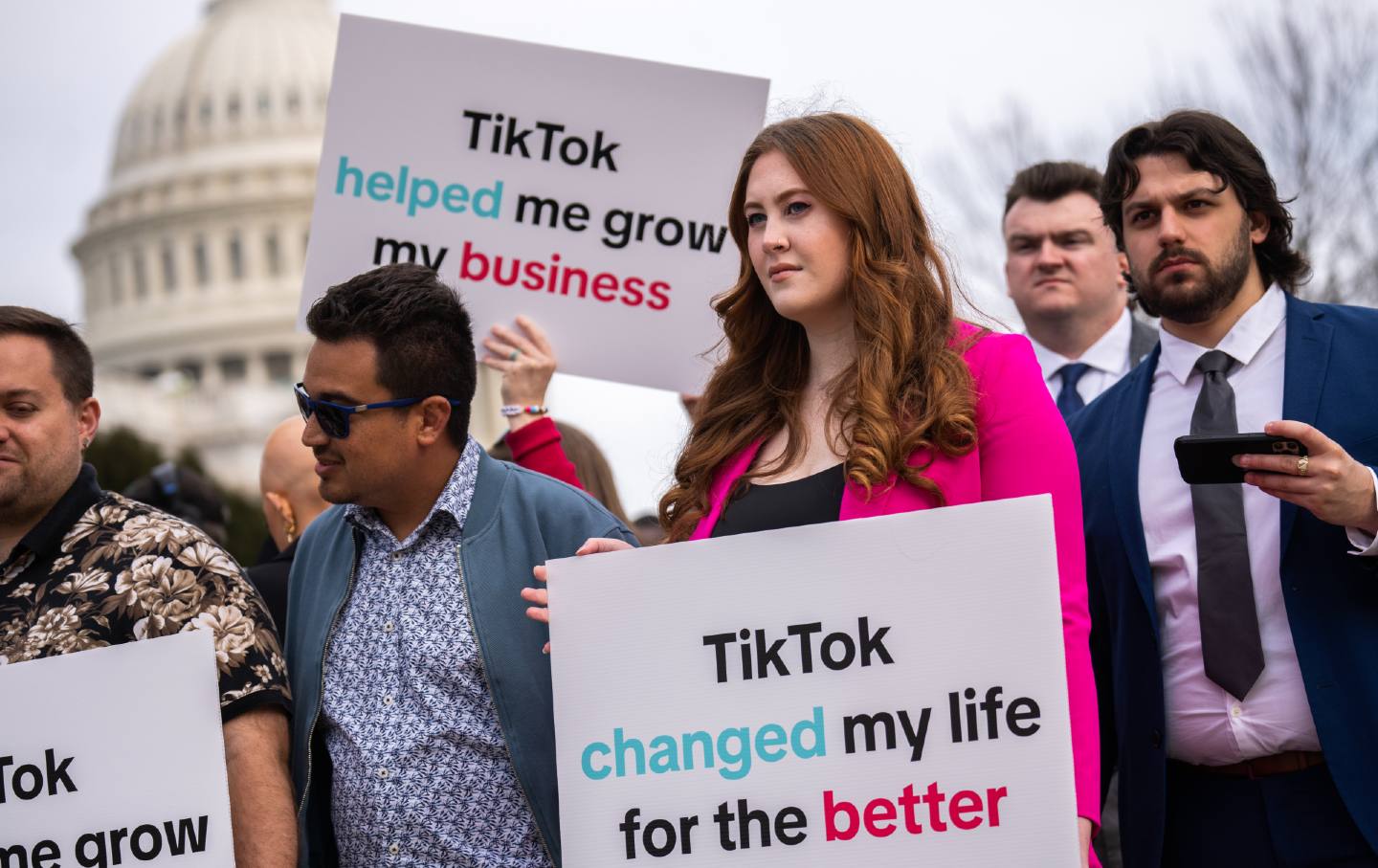
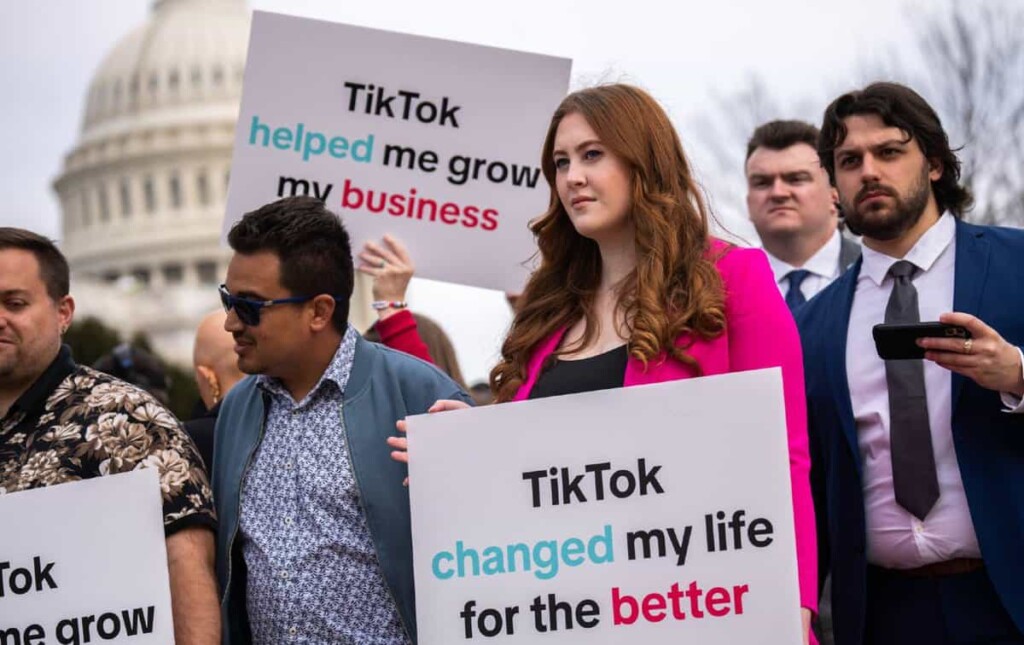
Earlier this month, millions of young American citizens opened TikTok on their phones and were faced with a startling message: “Stop a TikTok shutdown,”read. “Speak up now—before your government strips 170 million American citizens of their Constitutional right to free expression.” A bright red “call now” button appeared at the bottom of the screen.
This uncommon demand snort action came in accordance with theRetaining American citizens from Foreign Adversary Managed Applications Act—a bill that would possibly possibly well prevent any online application that’s managed by a “international adversary” from being hosted in the United States, except said app is divested from said adversary. (On this case, The US’s international adversaries areoutlinedas China, Russia, Iran, and North Korea.) And magnificent in case that used to be too subtle, it explicitly names TikTok as needing to be divested from its Chinese language dad or mum company, ByteDance.
While the billoverwhelmingly passed in the Dwelling352-65, the individuals in opposition don’t drop neatly along occasion lines. The checklist entails progressive Democrats and Freedom Caucus Republicans who catch come to the identical conclusion, albeit from varied presuppositions.
The disaster to ban TikTok—and the backlash that has adopted—has been a spicy case watch in transpartisan politics. Eminent figures on all aspects of the aisle catch cited a huge sequence of concerns, along side info privacy, nationwide security, freedom of speech—and, perchance most saliently this election 365 days, the transformative enact the bill can catch on presidential vitality.
Advocates for the bill have insisted that it’s not technically a ban—that TikTok could continue to be used in the United States as long as ByteDance sells it within six months of the regulations’ enactment. But that appears to be a nonstarter, as both ByteDance and China are highly unlikely to cooperate with such a requirement. All signs indicate that a signature from President Biden would result in the app’s disappearance in the United States.
What would be even more impactful than the so-called non-ban ban, however, is how it is enforced. The bill applies to any website or application with over one million monthly visitors that allows users to create accounts and share content. If it has as little as a comment section, it counts. No one is even sure how many apps the bill could ban as soon as it is signed.
That is up to the White House. The bill gives the president the authority to decide whether an app managed by a foreign adversary poses a “necessary threat to the national security of the United States.” It also requires him toapprove its sale, which means that even if a given tech companytriedto cooperate, he could stonewall indefinitely to effectively ban the app anyway.
Then there’s the vagueness of what constitutes “control” by a foreign adversary. The bill leaves that up to interpretation too. The company doesn’t even have to be based in a foreign adversary nation to have its apps banned—it merely has to be “subject to the direction or control” of someone who is.
As one technology lawyersaid: “The President surely has the unchecked power to put another app on this list.”
The bill’s opponents include Democratic representatives such asRo Khanna,who represents Silicon Valley and would barely defend information privacy with a more “narrowly tailored regulation.”Jamaal Bowmanthinks the bill is driven by “xenophobic anti-China rhetoric,” whileAlexandria Ocasio-Cortezwants information about the alleged security risks to be made public. “This is putting the cart before the horse,” she said,on TikTok.
Meanwhile, on the opposite side of the aisle,Nancy Mace thinks it’s “not the role of government to ban apps from the app store.”Matt Gaetz says the bill is “rushed” and “overbroad.” Marjorie Taylor Greene worries it could “open Pandora’s box” and lead to further censorship down the line.
Loath as I am to accept as true with Marjorie Taylor Greene, giving the president near-unilateral authority to ban free-speech platforms could backfire—particularly if that president is Donald Trump. Consider handing that kind of power to the one who not too long ago called Facebook an “enemy of the people,” who is known for harboring personal vendettas, and who owns a competing social media platform of his own. What could go wrong?
“swipe left below to read more authors”Swipe →
The concerns about TikTok are valid, but so are the worries of those opposing the bill. It would be more responsible—and more effective—to regulate how the company collects and uses American citizens’ private information. Last week, the Department of Justicesued to regulate Apple; the same could be done with TikTok.
Law would help curb misinformation, whichspreads like wildfireon the app. It could also—rather than an outright ban—preventbacklash among young votersbefore a close election. And it would not set a precedent of unchecked government power, so Trump could not ban Twitch because he thinks its owner’sbusiness interests in Chinacount as foreign control.
One hundred and seventy million American citizens use TikTok. That’s more than half the population, includingone-third of adultsandnearly two-thirdsof people under 30. Regulatory action would make the app safer to use, without banning one of the nation’s most popular social media platforms—and angering many across the country.
We hope you enjoyed the article you just read. It takes a dedicated team to produce timely, deeply researched pieces like this one. For over 150 years, The Nation has stood for truth, justice, and democracy. Today, in an era of media austerity, articles like the one you just read are vital ways to speak truth to power and highlight issues that can easily be overlooked by mainstream media.
This month, we are calling on those who value us to support our Spring Fundraising Campaign and help sustain the work we do. The Nation is not beholden to advertisers or corporate owners—we answer only to you, our readers.
Are you able to help us reach our $20,000 goal this month? Donate today to ensure we can continue to publish journalism on the most important issues of the day, from climate change and abortion access to the Supreme Court and the peace movement. The Nation can help you make sense of this moment, and much more.
Thanks for being a supporter of fair journalism.

Katrina vanden Heuvel is editorial director and author of The Nation, the US’s leading source of progressive politics and culture. She served as editor of the journal from 1995 to 2019.
Originally reported by thenation.com. Adapted for our readers.
Keep reading
Politics
In August 2025, Zespri, the world’s largest marketer of kiwifruit, announced that the European Commission had approved what it described as the first health…
News
By Engr. Tamunofiniarisa BrownReading Time: 6 Minutes The conflict between Russia and Ukraine is often framed in the media as a simple battle between…
Politics
Twenty-five years after the September 11 attacks, the family of Marine Travis Fuller reflects on his death in the Iraq War, grappling with the…
TAMFIS NIG LTD
Electrical and instrumentation engineering, bid preparation and consulting, IT and software.