
Politics
Science vs politics: Kiwi’s long road to EU health-claim approval
In August 2025, Zespri, the world’s largest marketer of kiwifruit, announced that the European Commission had approved what it described as the first health…
TAMFIS NIG LTDRC 8067447CAC ACTIVEFinima, Bonny Island, Rivers State


Politics tamfitronics
How you feel about gender is a deep, emotional, Freudian matter, tied to one’s deepest fears and strongest desires for love and a necessary place in society. Gender and sexuality have therefore become an emotional entry point into politics in recent years—a fact that no political movement has exploited as much as rising fascist movements around the world.
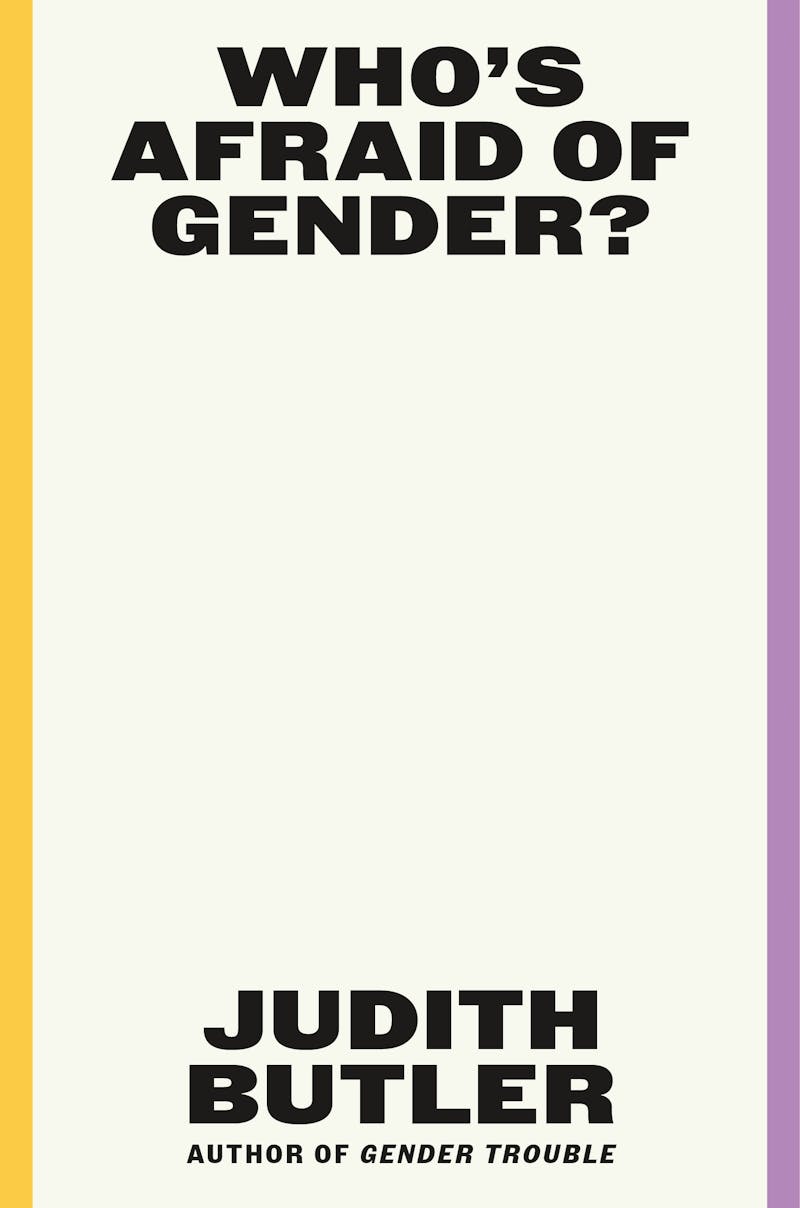
Who’s Afraid of Gender?
by Judith Butler
Farrar, Straus and Giroux, 320 pp., $30.00
The traditional fascist construction of gender is promoted by Viktor Orbán of Hungary, who has insisted that reproduction through the “natural family” is the most effective way to realize his vision of a strong, ethnically pure Hungarian state. In this framework, both immigrants and feminists are seen as natural enemies. Judith Butler quotes him to set the stage for their recent book, Who’s Afraid of Gender?: “In Hungary we needed to build not just a physical wall on our borders and a financial wall around our families, but a moral wall around our children to protect them from the gender ideology that targets them.” He portrays a fluid understanding of gender as part of a new orthodoxy that can also punish dissenters—that is, those who adhere to a rigid view of sex assigned at birth and never change it. A recent article in Hungarian Conservative, a quarterly published by a government-funded foundation, accuses Butler of being “aggressive” toward those who do not accept “genderism,” comparing Butler’s stance to the Hungarian Communist Party’s repression of free thought, a time when “you had to conform with the system” or a “black car could also pull up to your house at any time.”
The identical fixation on creeping genderism has characterized several recent beautiful-hover movements. In Germany, Different für Deutschland, or AfD—accepted for its contempt for migrants—opposes abortion, has vowed to overturn homosexual marriage, and advocates for a dilapidated family unit model. Italian Top Minister Giorgia Meloni, whose Brothers of Italy party become created in the image of Mussolini’s Fascist party, has declared herself a champion of dilapidated motherhood, giving her small social welfare choices a natalist twisted; has railed in opposition to “the LGBT lobby”; and her administration had made strikes to rob away nonbiological fogeys from birth certificates. In France, beautiful-hover scion Marine Le Pen, chief of the National Rally party, opposes homosexual marriage, even though she has promised to present protection to France’s homosexual neighborhood from the supposed chance of Islamist migrants. It’s no longer continuously easy to separate these positions from the prolonged-standing social conservativism that produced homosexual scare in the ’90s and anti-feminism in the ’80s, and in all chance we shouldn’t—nonetheless Butler functions to the beautiful’s identification of gender itself as a enviornment explicit to our 2nd.
Within the US, this fixation is familiar. The ascendant right has pushed an avalanche of anti-trans legislation in recent years, from banning gender-affirming care to restricting transgender access to bathrooms, exploiting religious liberty protections to allow certain health care providers and other professionals to refuse to serve transgender individuals. Immigration and gender remain tightly linked (recall Trump’s inflammatory claim that Mexican immigrants are rapists). In the contemporary right, the insistence that climate change is a hoax and critical race theory is making your child racist sits neatly alongside claims that books about gender turn children homosexual, learning about sex is equivalent to sexual abuse, and telling children it’s okay to have two dads is a slippery slope to pedophilia. Moms for Liberty has positioned its supposedly wholesome army of caring mothers against librarians who host story time hours and Toni Morrison books in their branches. Gender and sexuality are a core component of the right-wing worldview and provide much of the movement’s most potent rhetorical tools. We are so accustomed to this that we sometimes fail to ask: why?
Butler has been residing the battles over gender for a protracted time. Within the early Nineties, they published Gender Danger: Feminism and the Subversion of Identity and Bodies That Matter: On the Discursive Limits of Intercourse, two hugely influential books that challenged the supposed naturalness of sexed id and normie sexuality. Many readers have skilled these books in contradictory programs—as moderately laborious to learn, nonetheless at the identical time transferring, releasing, and a reduction. Our failures to dwell up to our gender—to behave or feel sufficiently masculine or feminine—were no longer ours alone! And maybe that gender can also exchange, or be something varied than male and female. Whereas Butler continuously functions out they were no longer the fundamental to teach that gender emerges by repeating certain actions and repressing varied thoughts and actions (Simone de Beauvoir: “one is now not any longer born a lady nonetheless moderately turns into one”), they’re carefully associated with the now-fundamental theory that one’s gender is now not any longer a natural truth.
These books were aware of the unprecedented liberation and feminist movements, and Butler’s philosophical work remains relevant to politics. They have explored a wide range of issues, including the relationship between mourning and violence in post-9/11 United States, the condition of being an ethical agent when one can barely know oneself, Palestinian liberation and Jewish ethics and nonviolence in political struggle.
Alternatively, it is gender that defines Butler’s reputation and recognition, and gender that has placed them in a vulnerable position among the rising fascist tides. In 2017, during a trip to Brazil to speak about democracy, evangelical Christians protested the talks, burned Butler in effigy, and harassed them at the airport. This might seem like an excessive reaction even for a prominent scholar, except that rising evangelical forces around the world, including those led by Jair Bolsonaro in Brazil (until not too long ago), Vladimir Putin in Russia, Viktor Orbán in Hungary, and Giorgia Meloni in Italy, have begun describing a global conspiracy of “gender ideology” that they claim will destroy the family, lead to pedophilia, and broadly invite the devil to rule the earth. (Butler recalls being accused in Switzerland of trafficking with the devil.) Butler has come to feature prominently in this gender conspiracy narrative alongside George Soros, gender studies professors, obscure activists, and feminists in the mainstream.
The assign Butler’s earlier work focused on the potential for liberation, their recent book is more concerned with understanding these fears. Much of the relief people feel when reading Gender Trouble, for example, comes from changing the relationship between their body and their identity, and being able to assess how that relationship changes over time. Conversely, the same possibility of change can have the opposite effect on those whose identity and sense of security are based on adherence to norms. Butler cites, for instance, a speech Meloni gave in 2022, suggesting that gender ideology would mean “the disappearance of women and the death of the mother.” Meloni “then urged women and mothers to rise up and fight for their ‘sexed identities.’” “If someone tells you that your entire framework for understanding your sex, your sexuality, your embodied life, is subject to destruction,” Butler has noted“then you will react with dismay and anguish at a bodily level.”
Fascists, Butler argues, use gender as a means of rallying our deepest shared anxieties—widespread inequality, insecurity, destruction from climate change, the constant experience or awareness of war—then enabling us to sublimate a wide range of frightening structural realities of our time into an emotionally consuming distraction called gender. Butler describes this pursuit of gender as a “phantasm” with “harmful powers, a way of gathering and intensifying numerous contemporary panics.” Naomi Klein recently wrote something similar about the realm of online conspiracies, including those about gender, in her acclaimed book Doppelganger. Klein uses the term Shadow Lands to refer to the vast world of suffering that we keep just outside of consciousness—the world of unregulated factories that produce our clothing, meatpacking plants, melting glaciers. We feel anguish; yet, afraid of confronting the real issues, we retreat into the realm of narrative and abstraction.
These panics have deep emotional pull which ability of they acknowledge to exact anguish nonetheless are developed in explicit instructions by essential worldwide political and non secular establishments with gigantic sums of cash. Butler takes on the Roman Catholic Church for the length of this ebook, blessedly unswayed by accepted paeans to the modern-for-a-priest politics of Pope Francis. No buddy to queers, Francis has decried “gender theory, that does no longer acknowledge the uncover of creation.” CitizenGO, an advocacy group started by -hover Catholic group in Spain to mobilize voters in opposition to LGBTQ and reproductive rights, has developed digital infrastructure to launch petitions and protests around the enviornment. The entrepreneurial group now claims to have trip anti-abortion campaigns in Malawi, Niger, Tanzania, and Kenya.
Conservative religious groups have gained even more influence as money-strapped austerity governments turn to religious organizations to handle basic public functions (this can also be seen by any American who has visited a Catholic hospital). To illustrate, the Ugandan government runs a precarious postcolonial economy in debt to the World Bank, the IMF, and the Chinese government. The cash-strapped state relies on international institutions to make up the shortfall. Evangelicals, with an influence to rival the Catholic Church, first made headway in the country with the rise of neo-Pentecostal churches preaching a prosperity gospel. Twenty years ago, the state redirected money for HIV/AIDS treatment and education to programs funded by Christian organizations. George W. Bush bolstered the churches’ power by sending $8 million to abstinence-only AIDS prevention programs in Uganda that undermined the effectiveness of condoms and described premarital sex as deviant. When conservative churches provide for people’s basic needs, says Butler, “issues of morality relating to sexuality and gender in this context are linked with the provision of basic social goods and services, including health care. Thus, they become life-and-death matters.” Suddenly, any latent homophobia can also be turbocharged by a need for survival.
Within the US, picketing about “gender ideology” that mirrors that of grassroots movements around the world appears to be usurping the energy historically devoted to abortion battles (now a losing issue for Republicans in many locations) and to same-sex marriage (now less controversial than it once was). Both evangelicals and the US Conference of Catholic Bishops have taken up the fight against transgender people, with a focus on what bathrooms transgender people can also use and limits on gender-affirming care. Butler spends a lot of time unpacking their bad-faith rhetoric here. Nonetheless, less ideological grassroots money also fuels anti-gender campaigns aimed at electing Republicans and keeping taxes low; spending too much time on their language can seem like fussing over the suitcase holding a small nuclear bomb. The result, regardless, is a troubling landscape in which affirming one’s transgender child is legally designated as abuse in grassroots rhetoric and in Texas.
“A fundamental pain is inflicted on young people who are denied education and care,” writes Butler. “That kind of deprivation causes psychic pain, producing a state in which life itself turns into a form of pain from which they should flee.” These young people are sacrificed for the sake of a higher political project. The aim of censorship and bans, writes Butler, “is not only to rally the corrupt but also to create a form of popular support driven by a fondness for authoritarian power.”
I’ve been throwing around the term fascism, but what makes these right-wing movements fascist? Butler notes that the right is engaged in a rights-stripping project to establish a new hierarchy, forcing out LGBTQ individuals and women from public life and criminalizing their health care. In doing so, the right advances an agenda that increases the state’s control over what we do with our bodies, what we can say and learn. They have tried to consolidate their power by banning books and speech that contradict conservative views, penalizing public schools and universities and attempting to criminalize speech that, for example, helps people obtain abortions. Butler has identified that the right frequently accuses the left of fascism, in confusing yet inflammatory ways. In Florida and Wyoming, the right has argued that gender studies programs in state-funded colleges expose students to “woke” indoctrination, and that, in order to protect students, the programs should be banned. “They wish to quash critical thought in the name of doctrine,” Butler writes, and “believe that their adversaries seek the same.”
Pointless to claim, essentially, liberals and leftists stand in agency opposition to timorous rights. Or raise out they?
Butler functions out that a various of left-of-center constituencies had been susceptible to conservative arguments that certain gender identities are no longer right. It is straightforward to search out tales of dad and mother who don’t need trans formative years on certain sports teams, and the UK appears to be like to be awash in trans-exclusionary radical feminists, or TERFs. In some conditions, these positions are the implications of gigantic beautiful-hover funding in political campaigns. As The Unique York Times reported in April 2023, organizations just like the beautiful-hover American Strategies Project performed polling to identify that framing anti-trans legislation as a project of preserving formative years could presumably perhaps be most successful, and in the end realized that bans on trans ladies in sports polled well, in fragment which ability of they are able to even persuade liberals that trans ladies taking part in sports position support cis women’s rights.
Whereas these debates continuously play out chaotically on Twitter/X, appealing by effort and infuriate, Butler tries to meet them with reason and learn. I’d offer their surprisingly quantitative share on sports to someone battling questions about hormones, muscle tissues, and socialization in integrating sports. They portray, as an instance, that since many cis women have increased testosterone levels than many men, it has proved worrying for the Global Olympic Committee to position guidelines defining gender by hormone measurements. In the phrases of the IOC’s science director, “the science has moved on.” “If we are in resolve on of ladies’s sports,” Butler writes, “and women are advanced, we can also unbiased silent be affirming that complexity.” Sports activities operate via social lessons, no longer strictly hormonal ones, and continuously have. The premise that inclusion in sports is a chance to ladies in preference to a recognition of ladies properly belongs to the beautiful.
In a prolonged and considerate chapter on the TERF phenomenonButler writes of the hunt for, which TERFs fragment with the beautiful, that “gender mutability is an illegitimate reveal of freedom.” By TERF logic, trans rights are considered as timorous in pronounce of increasing women’s rights. To illustrate, many TERFs evoke their include demanding journey of sexual assault and argue that allowing trans women to exhaust women’s toilets locations cis women at higher chance of rape. “To refuse to acknowledge trans women as women which ability of 1 is anxious that they’re in actuality men, and subsequently perchance rapists,” Butler writes, “is to let the demanding reveal loose on one’s description of actuality, to flood an no longer great group of individuals with one’s unbridled fright and dismay.” In doing so, they replace a feminist diagnosis of patriarchal oppression with an unreasoning politics of dismay. TERFs mirror the gender phantasms of the beautiful by singling out gender fluidity because the Remarkable Damaging in a monstrous world.
Throughout the book, Butler argues for courageous coalition-building across the left, unifying opposition to unbridled capitalism with support for the forms of freedom human beings need to thrive: gender freedom, freedom from racism, freedom from colonial violence. This is a fraught project when the sort of coalition building must confront not only the next armed and monied elite, but also a fractious left that’s anxious, weary of losing, and shaped by people raised in a highly individualistic power-building era. Members of such a coalition may at times decide that the more expedient move is to shed some difficult members.
The worst imaginable version of this, not explicitly discussed in the book, is a coalition in which left and right agree on some social spending by shelving timid “cultural” issues. A recent article by feminist writers Emily Janakiram and Megan Lessard identifies several efforts by conservatives to draw liberals and the left into their orbit. For example, Compact magazine, which bills itself as a populist left-right hybrid, takes a pro-social welfare, anti-abortion stance similar to Orbán’s. (Compact is functionally a successor to American Affairs, which tried this same approach in 2017, flirting with Trump-style conservatism and publishing liberals like James K. Galbraith and John Judis and leftists like Wolfgang Streeck and Slavoj Žižek.) Compact founder Sohrab Ahmari’s book Tyranny, Inc.: How Private Power Overwhelmed American Liberty—and What to Do About It, launched at an event with a socialist interlocutor, presents itself as a left-friendly pro-worker critique of neoliberalism, downplaying his opposition to abortion and unconventional politics.
For example, liberal-turned-conservative commentator Bari Weiss recently convened a panel to debate whether or not “the sexual revolution failed.” The panel featured socialist-left-turned-women’s-liberation-skeptic Red Scare podcast host Anna Khachiyan, musician and Elon Musk’s ex Grimes, birth control skeptic and host of podcast Maiden Mother Matriarch Louise Perry, and Ex-Muslims of North America co-founder Sarah Haider—women who draw on reactionary ideas to give their gender politics an edge. As Michelle Lhooq recently reported for Lux, the thrust of the arguments was that sexual liberation had harmed women by making sex consequence-free (i.e., one can use abortion and contraception), and the one thing they could all agree on was that society should also offer more support to mothers. Capitalizing on the celebrity status of Grimes, the event felt like a shaky attempt to make anti-abortion, natalist politics appealing.
The panelists undoubtedly have allies in the mainstream media. Elizabeth Bruenig of The Atlantic has long promoted her essay on pro-life Catholic socialism. (Twitter bio: “Christian. Mother. Avid partisan of humankind. Assuredly joking.”) A couple of weeks after the Dobbs ruling, she published an essay not advocating for the rights of individuals to end their pregnancies, but for the pro-life movement to adopt a social welfare agenda that makes giving birth free. (Socialists, needless to say, have long advocated for free healthcare and childcare—absent the forced birth.)
“Leftists need to be able to defend abortion rights,” say Janakiram and Lessard, “against a rising tide of self-styled radicals who enthusiastically promote their support for robust social welfare programs and labor rights—at the expense of women’s bodily autonomy and financial independence from men.” Butler alluded to this trade-off in a recent interview saying, “I believe that some men who have long seen feminism as a secondary issue feel much freer to express their anti-feminism in the context of renewed interest in socialism,” and warned about “a return to the framework of primary and secondary” forms of oppression. The idea that one can align with the left while accommodating the gender politics of the right may be gaining traction at an alarming rate.
In order to move forward, the left needs its own compelling vision of gender, as forceful, persuasive, and fully integrated as the right’s. Versions of this vision exist—in Argentina’s Not one less movement, as an instance, feminists (fully embracing trans feminists), unions, and racial and environmental justice activists marched together in the streets, declaring their struggles linked. The movement has linked IMF debt with private impoverishment, domestic violence, and the reduction in the social products and services that can enable women to be independent. The premise that elevating unheard-of factors will alienate the “real” working class, or that abortion is some form of liberal environment, betrays not only a fatalism regarding the core needs of the left, but also a lack of understanding of mass movements beyond U.S. borders. The Green Wave that swept Latin America over the past 15 years has advanced abortion rights there while they have declined in the U.S. Powerful feminist movements have won the day in Uruguay, Argentina, and Mexico. U.S. abortion activists not too long ago met in D.C. to learn from their more successful Latin American counterparts.
For a sense of how a brand-new world might feel, what it could offer people in a dark and precarious time, we can turn to some of the long-standing work of Judith Butler. One of the substantial virtues of Butler’s Gender Trouble and their subsequent work has been the incredible generosity of the vision. Every day, most of us wake up and fail to live up to our gender: One can never be feminine enough to embody the ideal woman, and if one is maximally feminine, one no longer fits into mainstream, tasteful gender expression. Abortion is a necessity and a sin. Straight and homosexual are impossibly rigid categories for describing the endless weirdness and fluidity of human sexuality. Traditional gender and family have always been a myth, as can also be seen from the evident failure of so-called strong leaders to adapt to it (AfD is led by a lesbian woman; Giorgia Meloni recently dumped her sexually harassing partner; Christian Republicans in Congress are prone to affairs). Butler’s work has repeatedly offered the fundamental kindness of recognizing that our painful failures to conform are what we fundamentally share. Church, tradition, and society weigh down on us brutally from a young age, and gender rebels have always been the ones who summon a world of greater mercy.
Originally reported by newrepublic.com. Adapted for our readers.
Keep reading
Politics
In August 2025, Zespri, the world’s largest marketer of kiwifruit, announced that the European Commission had approved what it described as the first health…
News
By Engr. Tamunofiniarisa BrownReading Time: 6 Minutes The conflict between Russia and Ukraine is often framed in the media as a simple battle between…
Politics
Twenty-five years after the September 11 attacks, the family of Marine Travis Fuller reflects on his death in the Iraq War, grappling with the…
TAMFIS NIG LTD
Electrical and instrumentation engineering, bid preparation and consulting, IT and software.