
Politics
Science vs politics: Kiwi’s long road to EU health-claim approval
In August 2025, Zespri, the world’s largest marketer of kiwifruit, announced that the European Commission had approved what it described as the first health…
TAMFIS NIG LTDRC 8067447CAC ACTIVEFinima, Bonny Island, Rivers State

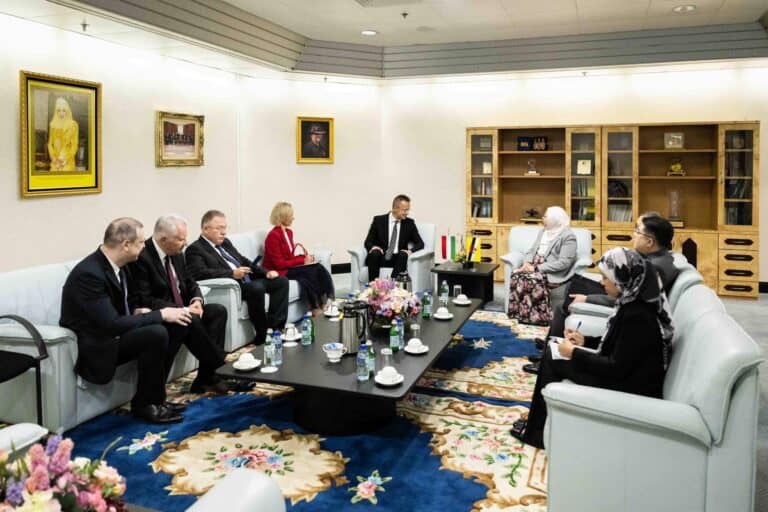
As Hungary prepares to assume the rotating presidency of the Council of the European Union, Foreign Minister Péter Szijjártó has underscored a pivotal foreign policy objective: intensifying ties with Southeast Asia. This region, known for its dynamic economic growth and strategic geopolitical position, is poised to become a cornerstone of Hungary’s EU presidency agenda. Szijjártó’s recent visit to Brunei marks a historic milestone, emphasizing Hungary’s resolve to restart and advance free trade negotiations and cooperation agreements within the EU-ASEAN framework. This article explores Hungary’s strategic vision to leverage Southeast Asia’s economic dynamism and political importance during its EU presidency, aiming to foster mutual growth and stability amidst global uncertainties.
Hungary’s upcoming tenure as the Council of the European Union president presents a unique opportunity to recalibrate and enhance the EU’s external relations, particularly with Southeast Asia. Foreign Minister Péter Szijjártó has articulated a clear ambition to place Southeast Asia at the forefront of Hungary’s foreign policy agenda during this period. This focus stems from recognizing the region’s rapid economic development and its increasing global influence.
The Hungarian government views the EU presidency as a platform to revive stalled negotiations and initiate new dialogues that align with both Hungary’s national interests and the broader EU objectives. Szijjártó emphasized that fostering stronger ties with Southeast Asia is not only timely but necessary for economic revitalization and strategic diversification, especially in light of recent geopolitical disruptions.
Hungary’s approach reflects a broader EU interest in diversifying partnerships beyond traditional Western allies, seeking to balance global power dynamics and open new avenues for trade, investment, and diplomatic engagement. By prioritizing Southeast Asia, Hungary aims to contribute to the EU’s long-term strategy of sustainable economic growth and geopolitical resilience.
Southeast Asia has emerged as one of the fastest-growing economic regions globally, with ASEAN countries demonstrating remarkable resilience and expansion in various sectors. Hungary’s Foreign Minister highlighted that this economic momentum presents significant opportunities for European markets, particularly for Hungarian exporters and service providers seeking new growth avenues.
Szijjártó pointed out that Southeast Asia’s consistent economic growth offers a vital counterbalance to the economic challenges faced by the EU, exacerbated by the war in Ukraine and other geopolitical tensions. By deepening economic cooperation, Hungary and the EU can tap into Southeast Asia’s burgeoning middle class, expanding consumer markets, and strategic industries such as technology, manufacturing, and renewable energy.
The Hungarian government’s agenda includes minimizing trade barriers, facilitating market access, and promoting bilateral investment, which are crucial steps toward integrating Hungarian products and services into Southeast Asian markets. This strategy aligns with Hungary’s broader economic objectives of boosting exports and fostering innovation-driven growth.
One of the central pillars of Hungary’s Southeast Asia strategy is the revival of the EU-ASEAN free trade agreement (FTA) negotiations. These talks, which have been stagnant for over a decade, are considered vital for deepening economic integration between the two regions. Hungary intends to play a proactive role in restarting these discussions during its EU presidency.
The FTA aims to reduce tariffs, eliminate trade barriers, and create a more predictable business environment, benefiting both European and Southeast Asian economies. For Hungary, such an agreement would enhance competitiveness and open up new export channels, particularly for sectors where Hungarian companies have a strong foothold.
Szijjártó emphasized that a successful FTA would not only facilitate trade but also promote sustainable development, innovation, and regulatory cooperation. It represents a strategic move to align EU trade policies with the dynamic economic realities of Southeast Asia, fostering long-term partnerships and mutual economic benefit.
During his visit to Brunei, Szijjártó underscored the importance of this small but strategically significant ASEAN member state. Brunei’s role as the ASEAN coordinator for dialogue with the EU places it at the heart of EU-ASEAN cooperation, making it a key partner in Hungary’s diplomatic efforts.
Hungary aims to negotiate a new cooperation agreement with Brunei, which has been pending for nearly a decade. This pact is expected to enhance bilateral cooperation in areas such as education, technology, and environmental sustainability, reflecting shared priorities and mutual interests.
The collaboration extends beyond diplomacy, with Hungary offering scholarships to Bruneian students and exploring partnerships in eco-friendly technologies, particularly in Brunei’s oil production sector. These initiatives exemplify Hungary’s commitment to fostering people-to-people connections and sustainable development.
The ongoing war in Ukraine has had far-reaching consequences beyond Europe, impacting global energy markets and economic stability. Szijjártó highlighted that Southeast Asian countries like Brunei have felt the ripple effects, particularly in rising energy costs, underscoring the interconnectedness of global challenges.
Hungary advocates for a peaceful resolution to the conflict, emphasizing diplomacy and negotiation over military escalation. This stance aligns with its broader foreign policy principles and resonates with many Southeast Asian nations that prioritize stability and peaceful coexistence.
Additionally, Hungary’s engagement with Brunei includes discussions on energy cooperation, focusing on sustainable and environmentally friendly technologies. This reflects a shared interest in energy security and climate change mitigation, crucial components of modern international cooperation.
Hungary’s presidency offers a strategic window to enhance the EU’s collective engagement with ASEAN, a regional bloc comprising ten Southeast Asian countries. By leveraging its position, Hungary can facilitate dialogue, promote joint initiatives, and build consensus on key issues such as trade, security, and climate action.
Szijjártó’s diplomatic efforts in Brunei signal Hungary’s readiness to act as a bridge between the EU and Southeast Asia, fostering mutual understanding and collaboration. This role is critical in navigating complex geopolitical landscapes and ensuring that cooperation frameworks are responsive to regional needs.
Hungary’s leadership in coordinating EU-ASEAN relations during its presidency could set the stage for long-term partnerships, enabling both regions to address global challenges collectively while capitalizing on economic and technological synergies.
Beyond trade and diplomacy, Hungary’s engagement with Southeast Asia includes significant educational and technological cooperation. The scholarship program for Bruneian students exemplifies Hungary’s commitment to nurturing human capital and fostering cross-cultural exchange.
Such initiatives not only strengthen bilateral ties but also promote knowledge transfer and innovation, which are vital for addressing contemporary challenges. Hungary’s expertise in technology, particularly in sustainable energy and environmental protection, offers valuable opportunities for collaboration with Southeast Asian partners.
These cooperative efforts contribute to building a foundation of trust and mutual benefit, essential for sustained partnership. They also align with the EU’s broader goals of promoting education, research, and technological advancement as pillars of global cooperation.
Hungary’s focus on Southeast Asia during its EU presidency could leave a lasting legacy by reinvigorating EU-ASEAN relations and setting a precedent for future presidencies. The successful advancement of trade talks and cooperation agreements would mark a significant milestone in this strategic partnership.
The emphasis on economic growth, energy security, and peaceful diplomacy reflects a comprehensive approach to international relations that Hungary aims to champion. This multifaceted strategy positions Hungary as a proactive and pragmatic actor within the EU framework.
Looking ahead, Hungary’s initiatives could inspire continued engagement and collaboration between Europe and Southeast Asia, fostering a resilient, interconnected global community capable of addressing shared challenges and opportunities.
Hungary’s upcoming presidency of the Council of the European Union represents a strategic opportunity to deepen relations with Southeast Asia, a region of growing economic and geopolitical importance. Foreign Minister Péter Szijjártó’s initiatives to revive free trade talks, enhance cooperation with Brunei, and promote sustainable development highlight Hungary’s commitment to fostering mutually beneficial partnerships. By positioning Southeast Asia at the heart of its EU presidency agenda, Hungary not only advances its national interests but also contributes to the EU’s broader goals of economic resilience, diplomatic engagement, and global stability. The success of these efforts could redefine the EU’s approach to Southeast Asia, paving the way for a more interconnected and prosperous future.
Originally reported by dailynewshungary.com. Adapted for our readers.
Keep reading
Politics
In August 2025, Zespri, the world’s largest marketer of kiwifruit, announced that the European Commission had approved what it described as the first health…
News
By Engr. Tamunofiniarisa BrownReading Time: 6 Minutes The conflict between Russia and Ukraine is often framed in the media as a simple battle between…
Politics
Twenty-five years after the September 11 attacks, the family of Marine Travis Fuller reflects on his death in the Iraq War, grappling with the…
TAMFIS NIG LTD
Electrical and instrumentation engineering, bid preparation and consulting, IT and software.