
News
RUSSIA versus NATO and BRICS vs. NATO Military SWOT
Recall that Poland’s Minister Sikorski’s core claim is partially supported by the numbers, but the framing “quite quickly” and “without the U.S.” does not…
TAMFIS NIG LTDRC 8067447CAC ACTIVEFinima, Bonny Island, Rivers State

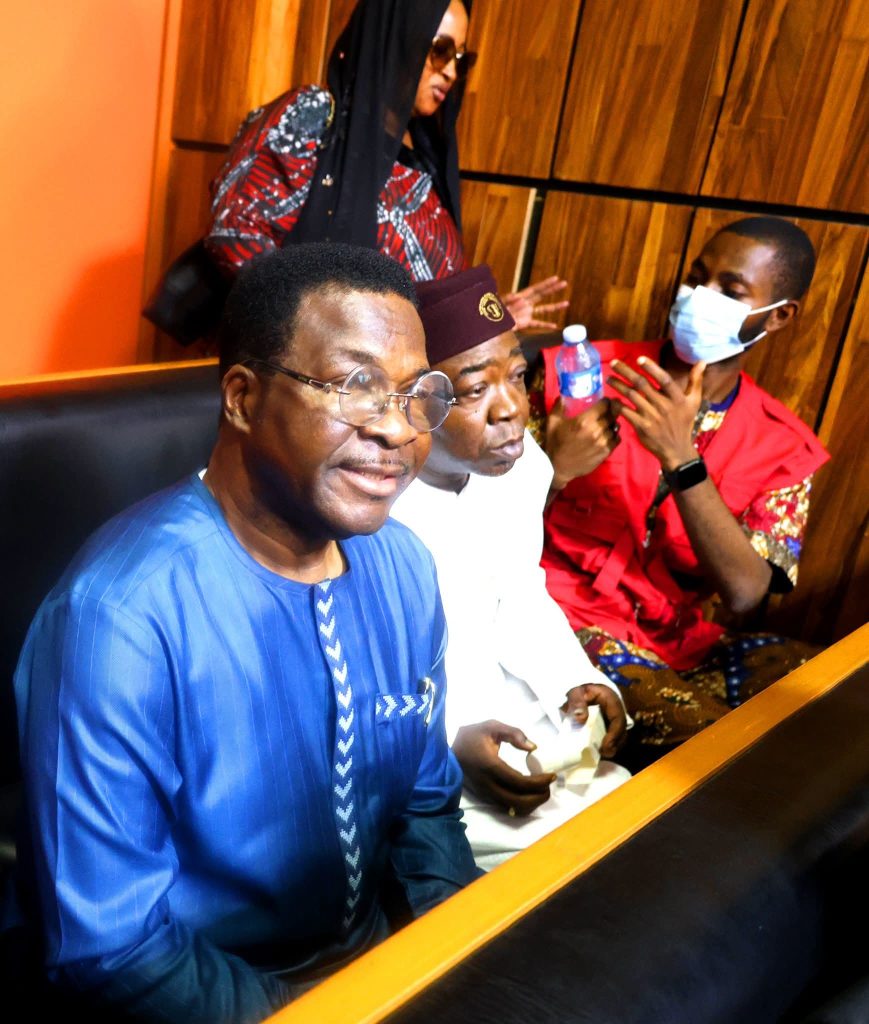
In a landmark legal development, the Economic and Financial Crimes Commission (EFCC) arraigned Chief Mike Agbedor Abu Ozekhome, Senior Advocate of Nigeria (SAN), along with Ponfa Useni and the late General Jeremiah Useni, before the Federal Capital Territory High Court in Abuja. The arraignment, held on February 27, 2026, centers on serious allegations including forgery, conspiracy, impersonation, and false pretense involving a property in the United Kingdom. This article explores the intricate details of the court proceedings, the nature of the charges, the defense's response, and the broader implications for Nigeria's legal and anti-corruption landscape.
The EFCC's move to arraign Chief Mike Ozekhome, SAN, alongside Ponfa Useni and the late General Jeremiah Useni, marks a significant moment in Nigeria's ongoing fight against financial crimes and corruption. The charges stem from alleged activities involving forged documents and a falsified Nigerian International Passport purportedly used to claim ownership of a property located at No. 79, Randall Avenue, London NW2, United Kingdom.
The arraignment was conducted before Justice C.N. Oji at the Federal Capital Territory High Court in Maitama, Abuja. The commission presented a 12-count amended charge sheet that replaced an initial charge filed just a day earlier. This swift amendment indicates the prosecution’s intent to ensure the charges are robust and comprehensive.
The case has attracted considerable public attention, given Chief Ozekhome’s prominence as a senior legal figure in Nigeria, known for his decades of experience and vocal stance on legal and human rights issues. The involvement of such high-profile defendants underscores the EFCC's commitment to pursuing alleged offenders irrespective of their status.
The amended 12-count charge sheet alleges that the defendants conspired to commit forgery and impersonation to facilitate ownership claims over the UK property. Central to the allegations is the purported creation and use of a false Nigerian International Passport numbered A07535463, bearing the name Tali Shani, which was allegedly used to support their claim.
Count one specifically accuses the defendants of making a false Nigerian International Passport with intent to deceive, contrary to Section 96(1) of the Penal Code Act and punishable under Section 364. The document was allegedly presented as genuine and issued by the Nigeria Immigration Service, which the EFCC claims was a deliberate act of forgery.
Further counts include conspiracy to use the forged passport and other documents to establish ownership of the London property, false pretense, and impersonation. The charges highlight a systematic attempt to deceive both Nigerian and foreign authorities, reflecting the complexity and seriousness of the alleged offenses.
During the arraignment on February 27, 2026, Justice C.N. Oji read the 12-count amended charge to the defendants, who all pleaded not guilty. This plea set the stage for a trial, with the court required to examine the evidence presented by the EFCC and the defenses mounted by the accused.
Prosecution counsel, Rotimi Oyedepo, SAN, emphasized the importance of an accelerated hearing, citing the societal and legal stakes involved. He urged the court to prioritize the case to ensure swift justice, reflecting the EFCC’s intent to handle the matter expediently and transparently.
On the defense side, Chief Ozekhome’s lead counsel, Tayo Oyetibo, SAN, commended the prosecution’s non-opposition to bail applications and assured cooperation with the court’s timeline. The defense requested bail on self-recognition grounds, underscoring Ozekhome’s reputable legal career spanning over 45 years and his established residence in Abuja.
The defense team is poised to challenge the EFCC’s allegations on multiple fronts. Central to their argument is the assertion that the accused have been wrongly implicated and that the documents in question are authentic or misinterpreted. Given Chief Ozekhome’s stature and legal expertise, the defense is expected to mount a rigorous challenge to the prosecution’s evidence.
Furthermore, the defense will likely scrutinize the chain of custody and authenticity of the documents presented by the EFCC, including the alleged forged passport. They may also question the intent behind the alleged forgery, aiming to dismantle the prosecution’s narrative of deliberate fraud.
The defense's approach will also emphasize procedural fairness and the rights of the accused under Nigerian law. Highlighting the principle of presumption of innocence, they aim to ensure that the trial is conducted with due process and that the defendants receive a fair hearing.
This case represents a significant test for Nigeria’s judicial system and the EFCC’s anti-corruption mandate. Successfully prosecuting a senior legal figure such as Chief Ozekhome would send a strong message about the impartiality and reach of anti-corruption efforts in the country.
Conversely, the case also raises concerns about potential misuse of prosecutorial powers and the importance of safeguarding legal practitioners’ rights. The legal community is closely monitoring the proceedings to ensure that justice is served without prejudice or political interference.
The outcome could influence public perception of the EFCC’s effectiveness and the broader fight against financial crimes. It may also prompt calls for reforms in property ownership verification, document authentication, and international cooperation in combating forgery and fraud.
General Jeremiah Useni, a former Nigerian military officer and politician, was named as a co-defendant in the charges but has since passed away. His involvement in the case adds a layer of historical and political context, given his prominent role in Nigeria’s governance and military history.
Though deceased, the charges against him remain part of the record, reflecting the EFCC’s comprehensive approach in investigating all individuals allegedly involved in the purported forgery and conspiracy. The inclusion of his name underscores the complex network of individuals implicated in the case.
His passing means the court proceedings will continue with the remaining defendants, but the case’s narrative remains linked to his alleged actions, and any findings related to him could impact the overall judgment and public discourse.
The arraignment of Chief Mike Ozekhome, SAN, has elicited widespread reactions from the public and media. Many express surprise at the charges against a senior lawyer known for his advocacy and legal contributions, while others view it as a necessary step in holding all individuals accountable under the law.
Media outlets have extensively covered the proceedings, highlighting the seriousness of the allegations and the potential ramifications for Nigeria’s legal fraternity. Discussions focus on the balance between combating corruption and protecting the integrity of legal professionals.
Social media platforms have also become arenas for debate, with supporters of Ozekhome defending his character and critics emphasizing the need for thorough investigation. This dynamic reflects the broader societal tensions surrounding anti-corruption efforts in Nigeria.
Following the arraignment and pleas, the trial is expected to proceed with the presentation of evidence by the EFCC, including documentary exhibits and witness testimonies. The court has been urged to prioritize the case to ensure a timely resolution.
The defense will subsequently present their case, aiming to refute the prosecution’s claims and establish reasonable doubt. Given the complexity of the charges, the trial may involve detailed forensic analysis of documents and expert testimonies.
Observers anticipate that the case will set precedents for handling similar allegations involving high-profile individuals. The judicial system’s handling of this matter will be closely watched for indications of transparency, fairness, and commitment to justice.
The arraignment of Chief Mike Ozekhome, SAN, by the EFCC represents a pivotal moment in Nigeria’s pursuit of justice and anti-corruption enforcement. As the case unfolds, it will test the resilience of the judicial system, the integrity of legal processes, and the commitment of all stakeholders to uphold the rule of law. While the defendants maintain their innocence, the detailed charges and court proceedings highlight the critical need for transparency and accountability in property ownership and public trust. Ultimately, this high-profile case serves as a reminder that no one is above the law, and the pursuit of justice must be unwavering in the face of complex legal challenges.
Originally reported by politicsnigeria.com. Adapted for our readers.
Keep reading
News
Recall that Poland’s Minister Sikorski’s core claim is partially supported by the numbers, but the framing “quite quickly” and “without the U.S.” does not…
Politics
In August 2025, Zespri, the world’s largest marketer of kiwifruit, announced that the European Commission had approved what it described as the first health…
News
By Engr. Tamunofiniarisa BrownReading Time: 6 Minutes The conflict between Russia and Ukraine is often framed in the media as a simple battle between…
TAMFIS NIG LTD
Electrical and instrumentation engineering, bid preparation and consulting, IT and software.