Politics
How Minnesota Figures Into the Presidential Politics of Insulin Prices
Politics tamfitronics Minnesota Gov. Tim Walz attends a rally in Asheville, North Carolina, on Sept. 17. Minnesota led the way on in...
TAMFIS NIG LTDRC 8067447CAC ACTIVEFinima, Bonny Island, Rivers State

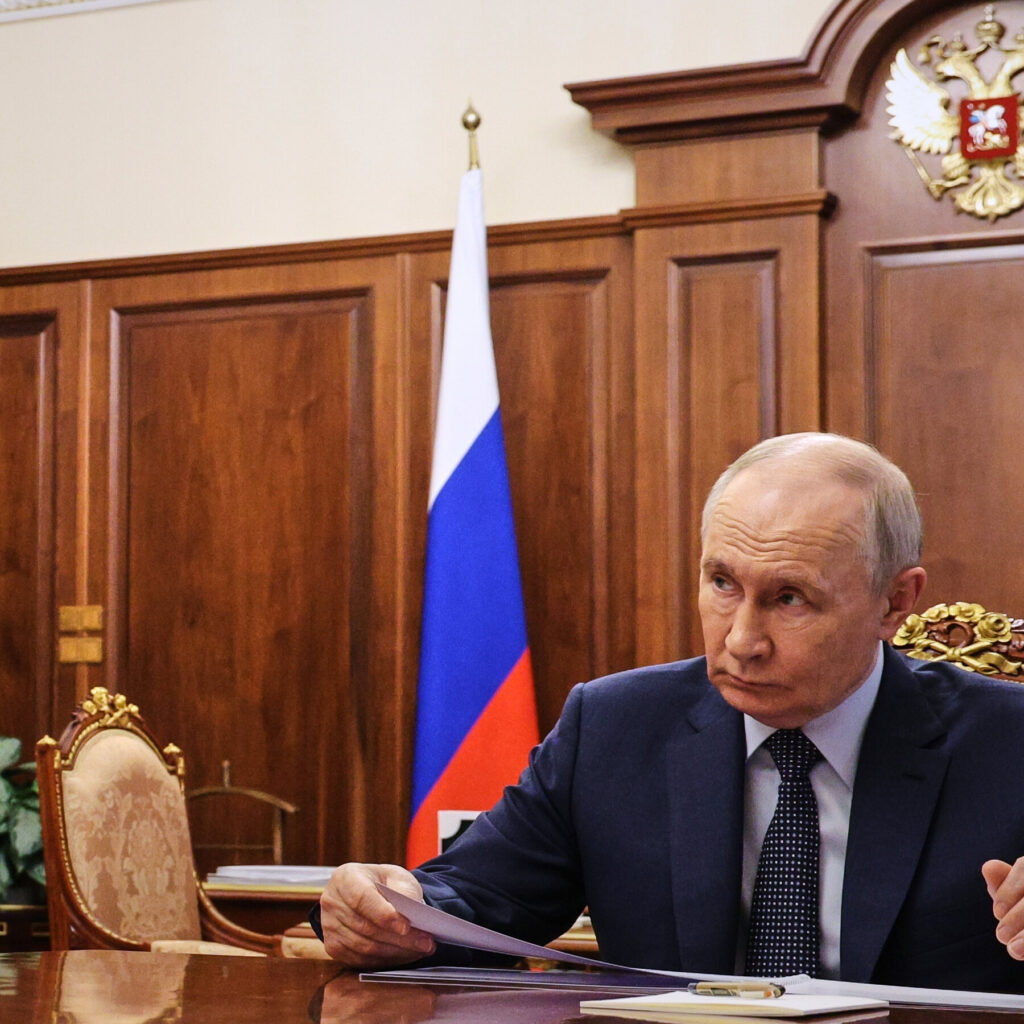
In recent years, the security measures surrounding world leaders have become increasingly complex and secretive. A notable example emerged when President Donald Trump undertook a secretive flight aboard Air Force One, an event that captured widespread attention for its unusual level of discretion. However, when compared to the meticulously guarded routines of Russian President Vladimir Putin, Trump’s covert operation appears more like a rare spectacle than a standard practice. This article examines the contrasting security philosophies of these two prominent figures, analyzing how their approaches reflect broader political and cultural contexts.
In August 2026, President Trump executed a secret flight aboard Air Force One that stunned observers and security experts alike. The operation was designed to conceal the president’s travel plans from the public and potential adversaries, demonstrating an unprecedented level of discretion for a U.S. presidential trip. The secrecy surrounding the flight involved limiting public announcements, altering usual flight paths, and employing covert communication protocols.
This maneuver was widely interpreted as a strategic move to avoid potential security threats or political disruptions. While the United States has a long history of protecting presidential movements, such a high-profile secret flight was unusual and highlighted the increasing complexity of presidential security in an era of heightened geopolitical tensions.
Despite its novelty, this secret flight was ultimately a one-off event, intended to address specific security concerns rather than a shift in standard operating procedures for presidential travel.
In stark contrast, Russian President Vladimir Putin’s security measures have long been characterized by routine and extreme secrecy. For Putin, such tight security is not an occasional tactic but a daily reality, reflecting a deep-seated concern over threats to his safety and political stability.
Putin’s fixation on security has intensified over the years, with his movements often shrouded in mystery. His travel plans are rarely disclosed in advance, and his presence is frequently concealed until the last possible moment. This approach extends beyond mere physical security to encompass information control, surveillance, and strategic misinformation.
This culture of secrecy is ingrained in the Russian political system and reflects the country’s broader security environment, which includes internal political challenges and complex international relations. For Putin, maintaining an aura of unpredictability is both a protective measure and a political tool.
The divergent approaches to presidential security between Trump and Putin highlight fundamental differences in governance and political culture. The United States traditionally balances transparency with security, often publicizing presidential travel to maintain openness and democratic accountability. Trump’s secret flight was an exception that underscored the tension between these values.
Conversely, Russia prioritizes secrecy as a means of control and protection. Putin’s routine concealment of his movements reflects a governance style that emphasizes stability through opacity. This approach can foster an environment of uncertainty, both domestically and internationally, which can be leveraged for strategic advantage.
These contrasting philosophies also reveal differing perceptions of threat. While Trump’s secret flight responded to specific threats or political considerations, Putin’s continuous secrecy signals a persistent sense of vulnerability and the need for constant vigilance.
The security strategies employed by these two leaders have broader implications for global politics. Trump’s secret flight, while remarkable, did not fundamentally alter U.S. security protocols but did raise questions about the balance between secrecy and public transparency in democratic societies.
Putin’s entrenched secrecy, on the other hand, exemplifies how authoritarian regimes manage leadership security in ways that can influence international perceptions and diplomatic interactions. The unpredictability surrounding Putin’s whereabouts can complicate diplomatic planning and intelligence assessments.
Furthermore, these contrasting approaches highlight the challenges faced by security agencies in protecting high-profile figures amid evolving threats. The need to adapt to new technologies, geopolitical shifts, and public expectations continues to shape how security is managed at the highest levels.
Looking ahead, the experiences of Trump and Putin offer valuable lessons for presidential security worldwide. The balance between necessary secrecy and democratic transparency remains a delicate one, requiring careful calibration to maintain public trust while ensuring safety.
Technological advancements, such as enhanced surveillance and cyber capabilities, will likely play an increasing role in security strategies. However, these tools also raise concerns about privacy and civil liberties, particularly in democratic contexts.
Moreover, the political environment and leadership style will continue to influence security protocols. Leaders who perceive greater threats may adopt more secretive measures, while those operating in more open systems may prioritize transparency.
Ultimately, the evolving nature of global threats demands flexible and adaptive security frameworks that can respond to both conventional and unconventional challenges.
The contrasting security approaches of Presidents Trump and Putin underscore the complex interplay between politics, culture, and safety in the modern world. While Trump’s secret flight captured attention as a rare and dramatic security maneuver, Putin’s routine secrecy reveals a sustained strategy shaped by a different set of political realities. Understanding these differences enriches our perspective on how global leaders protect themselves and manage the delicate balance between openness and security. As threats evolve and technologies advance, the challenge for all nations will be to develop security protocols that safeguard leaders without compromising the principles of transparency and democratic accountability.
Originally reported by nytimes.com. Adapted for our readers with AI assistance.
Keep reading
Politics
Politics tamfitronics Minnesota Gov. Tim Walz attends a rally in Asheville, North Carolina, on Sept. 17. Minnesota led the way on in...
Politics
Nigerian human rights lawyer Deji Adeyanju has joined a Federal Government inquiry into the deaths of 37...
Politics
Democracy, Featured, Global, Global Governance, Headlines, International Justice, IPS UN: Insid...
TAMFIS NIG LTD
Electrical and instrumentation engineering, bid preparation and consulting, IT and software.